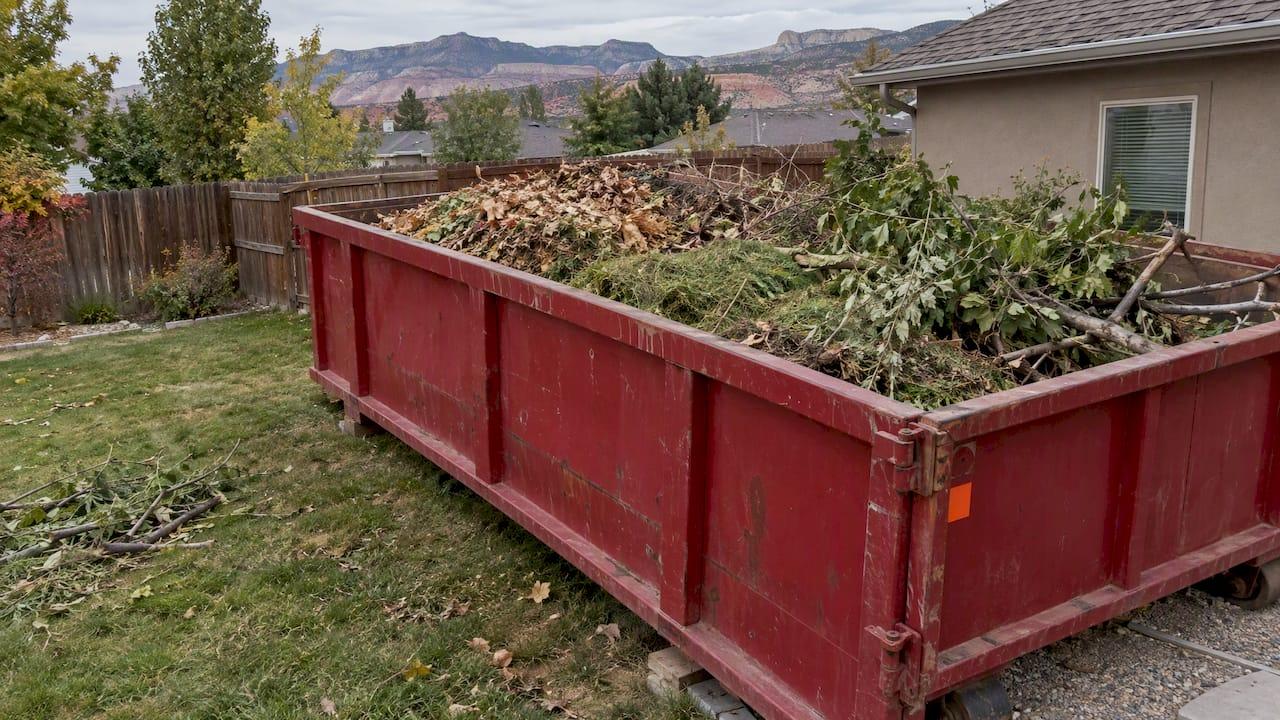
Yes, in most cases you can put yard waste in a dumpster. Grass clippings, leaves, brush and small branches are the usual loads for a roll-off rented for a yard cleanup. But there is no single nationwide rule. What counts as yard waste, how much a hauler will take and where it ends up depend on the provider, the landfill or transfer station, and your city or county. Confirm those details before the bin is dropped, not after it is full.
TL;DR
- Grass, leaves, brush and small branches generally go in a roll-off. Dirt, sod, rocks, concrete, treated lumber and hazardous items are where loads get rejected or surcharged.
- Ask the provider how it defines yard waste, whether it must be kept separate from other debris, and what the weight limit is. Wet sod and soil are far heavier than they look.
- For a small cleanup, curbside pickup, a landfill drop-off or composting may cost less than a bin. For a big landscape project, a dumpster saves trips.
- Place the bin on a driveway where possible and check city rules before putting one on a street or near a hydrant.
- If your project also includes demolition, fence tear-out or grading, plan one container for the whole job and tell the provider everything going in.
Table of Contents
- Can you put yard waste in a dumpster?
- What belongs in the bin and what doesn't
- Choosing a size for yard debris
- Questions to ask before you book
- Other ways to dispose of yard waste
- Keeping clean loads cheaper
- Our perspective: yard cleanup is rarely just yard cleanup
- Need a dumpster for a yard project in Utah?
- FAQ
- Sources
Can you put yard waste in a dumpster?
Generally yes, but "generally" is doing real work in that sentence. Roll-off dumpsters rented for cleanups routinely carry grass clippings, leaves, brush and trimmed limbs. The catches show up at the landfill, not at your curb.
Some facilities accept yard waste without trouble. Iron County's landfill system, for example, takes all waste except hazardous and liquid waste at the Cedar City landfill, and its Parowan site takes yard waste from commercial customers. Other places limit organic loads, divert them to composting, or ban them from landfills altogether. In 1994 the EPA reported that a number of U.S. communities and states had already banned yard trimmings from landfills, and many local programs still route them separately today.
So the honest answer to "can I?" is: yes, if your hauler's disposal site takes it, and if you keep the load to what you told them. A one-line call or text before delivery settles it.
How providers define yard waste
The working definition is organic material from maintaining a lawn, garden or landscape: grass, leaves, hedge trimmings, small branches, pulled weeds. Rules can exclude things homeowners assume are included. A Minnesota city's refuse guide, for instance, explicitly separates clean wood and construction or demolition material from yard waste, because those streams are processed differently.

That matters because yard projects rarely produce only leaves. Pulling out an old fence, breaking up a walkway or reshaping a bed puts wood, metal, dirt and rock in the pile. Once those are mixed in, the load is typically treated as general debris rather than clean yard waste.
What belongs in the bin and what doesn't
| Usually fine | Ask first | Usually not allowed |
|---|---|---|
| Grass clippings | Large stumps | Paint, solvents, chemicals, fuels |
| Leaves | Large volumes of dirt or sod | Batteries, tires |
| Brush and hedge trimmings | Logs and thick limbs | Asbestos |
| Small branches | Mixed loads with fence wood | Appliances with refrigerants |
| Pulled weeds and plant debris | Pressure-treated or painted wood | Liquids and household hazardous waste |
Two things sit behind that table. First, hazardous materials are excluded almost everywhere, whether or not yard waste is also in the load. A landfill can accept yard waste while separately prohibiting household hazardous and liquid waste, and that pattern is typical. Second, "ask first" items change from one provider to the next. We cover the broader list in our guide to items prohibited in dumpsters.
The yard items that surprise people
- Dirt, sod and rock. These are not light. A few cubic yards of wet sod can push a bin past its weight allowance and add overage fees. Rock and concrete are typically not yard waste at all; if your project includes concrete, see our notes on concrete disposal options.
- Old fence wood. Painted or treated boards and metal fence parts do not belong with clean brush. Tell your provider if a fence removal is part of the job.
- Stumps. Small ones are commonly fine. Large ones may need approval in advance.
- Bagged waste. Bags are handy for leaves, but some programs forbid certain bags. Virginia Beach, for example, requires clear plastic lawn bags for curbside leaves and grass but does not allow clear plastic bags in its yard-waste containers. Your dumpster provider will have its own preference. Ask.
Choosing a size for yard debris
Yard waste is bulky and light until it is wet or until soil gets involved. That makes volume the main concern for brush and leaves, and weight the main concern for dirt and sod.
- Small cleanups (a weekend of trimming, leaf cleanup, a few shrubs out): a 10-yard bin is usually plenty. A 10-yard dumpster is commonly about 12 feet long, 8 feet wide and 3.5 feet tall, which is more space than most people picture.
- Mid-size jobs (a full-yard cleanup, tree trimming across a lot, a garden overhaul): a 15 or 20-yard container gives room for brush that does not compact.
- Heavy jobs (sod removal, soil, grading spoils): go smaller on size so the weight stays in check, and ask how the provider handles heavy loads. Often it is better to haul soil separately.
Our dumpster sizes guide walks through dimensions and typical uses, and the sizing guide for remodel projects is useful if the yard work is part of a bigger build. For budget planning, see what dumpster rental costs and what drives the price.
Rental length and placement
Most yard cleanups finish in a few days, but brush piles take longer to cut and load than people expect. Check how the rental period works and what extra days cost in our rental period explainer.
Placement is the other detail. A driveway is the easiest spot. If the only option is the street, you may need a permit; our piece on street dumpster permits explains how that works. Local rules can be specific: one Minnesota suburb requires compact dumpsters to sit at least 15 feet from a hydrant and stay outdoors no more than 14 days. Your city will have its own numbers, so call the public works or code office.
Questions to ask before you book
- How do you define yard waste, and is it accepted in my area?
- Can I mix yard waste with other debris, or must it ride alone?
- What is the weight allowance, and what is the overage charge?
- Are there limits on stumps, logs or soil?
- What happens if a prohibited item is found in the load?
- How long is the rental period, and what do extra days cost?
A clear answer to these six saves the two most common surprises: a rejected load and a bill larger than the quote.
Other ways to dispose of yard waste
A dumpster is not always the best tool. A small, regular amount of yard waste has cheaper and often greener options.
Curbside collection. Many cities collect yard waste on a schedule, with rules about containers. Raleigh, North Carolina, accepts it in city carts, biodegradable paper bags or tied bundles, and does not collect plastic bags. Check your own city's schedule and container rules.
Drop-off at a landfill or compost site. In Iron County, Utah, residents can bring reasonable amounts of household yard debris from their own residence at no charge, such as a pickup load or a pickup plus a small trailer. Anything larger, or anything delivered in a commercial vehicle, is charged by weight. The same page lists ground green waste for sale as mulch.
Composting at home. The University of Delaware Cooperative Extension lists three basic choices: compost on site, take it to a landfill or composting location, or pay a hauler or landscaper to collect it. Keep meat, fish, dairy and pet waste out of a home pile to avoid odors and pests, as Michigan's environmental agency advises.
Leaving it in place. Grass clippings and leaves can stay on the lawn. Wisconsin's Department of Natural Resources lists this alongside municipal drop-off, composting and chipping as alternatives to burning.
Burning. Check local rules first, and be cautious. Wisconsin's DNR warns that outdoor burning creates smoke and air pollution and is a leading cause of wildfires. In Utah, rules vary by county and air-quality conditions; for instance, Salt Lake County does not allow residential open burning. If you are in a dry, fire-prone part of the state, a bin is the safer route.
A bag-style container. For a smaller volume, a bag service can fit. We compare the two in Bagster vs dumpster.
When a dumpster wins
A bin makes sense when:
- You are clearing a whole lot, removing many shrubs or trees, or doing a landscape rebuild.
- The material would take several trips in a truck or trailer.
- Your cleanup is mixed: brush, old fence wood, some debris. One container handles it all, as long as you tell the hauler what is going in.
- Curbside limits are too low or the next pickup is weeks away.
It costs more when you only have a few bags of leaves. Be realistic about volume.
Keeping clean loads cheaper
Providers that can route a load to composting or recycling prefer it clean. Mixed loads typically go to a construction and demolition facility and cost more to process. If you can, separate clean brush from other debris, either with two containers or by finishing the yard cleanup first and the demolition second. Even if you use one bin, load the yard waste in a way that keeps it from being buried under, and contaminated by, heavy items.
Also, keep wet material in mind. Leaves and grass gain weight with rain. If your rental will sit through a storm, a tarp is a cheap way to avoid overage.
Our perspective: yard cleanup is rarely just yard cleanup
At A to Z Construction, most of the dumpsters we rent in Cedar City and the surrounding area go to people in the middle of a project. That could be a fence replacement, a new patio, a retaining wall, a regrade or a new lawn. The yard waste is only part of the load. Old fence boards, broken concrete, sod and soil end up in the same pile as the brush.

Our advice is to plan the waste at the same time you plan the work. Before demolition starts, list what is coming out, decide what can go in one bin and what needs to be hauled separately (soil and concrete are the usual ones), and tell the hauler the truth about the contents. Rejected loads and surprise weight charges nearly always trace back to something nobody mentioned. Because we handle excavation, concrete, fencing and landscaping in-house, we can schedule the bin to land the day the work starts and leave the day it ends, rather than leaving you with a full container waiting for a pickup.
If you live in Utah, remember that local conditions matter. Dry summers, county-by-county burn rules and landfill policies all affect what is practical. Ask before assuming.
— Jake
Need a dumpster for a yard project in Utah?
If your yard cleanup is part of a bigger job, we can handle both sides: the work and the waste. A to Z Construction is a licensed general contractor in Cedar City with an in-house crew for concrete, fencing, earthwork, hardscape and landscaping, plus dumpster rental for residential and construction jobs. One point of contact means your bin, your demolition and your new build run on the same schedule.
Tell us what you are clearing and what you are building, and we will help you pick the right size and timing. Start at our main page or see our construction waste removal service for job-site containers. If you are replacing a fence, our fencing services cover vinyl, wood, and aluminum and iron, and the old fence can leave with the same crew that installs the new one.
FAQ
Can you put grass clippings and leaves in a dumpster?
Yes, in most cases. Grass and leaves are the most common yard waste loads in a roll-off. Ask your provider whether it must be kept separate from other debris, and whether the local disposal site limits organic waste.
Can I put dirt, sod or rocks in with yard waste?
Not without checking. Dirt and sod are heavy, especially wet, and can trigger overage fees. Rock and concrete are generally treated as heavy debris, not yard waste. Tell the provider in advance so it can recommend a size and allowance that fits.
Is a yard waste dumpster cheaper than hauling it myself?
It depends on volume. For a pickup load or two, a local landfill drop-off may be free or cheap for residents, as in Iron County, Utah. For large cleanups, repeated trips, fuel and your time add up, and a bin often comes out ahead. See our rental cost guide for what shapes a quote.
What should never go in a yard waste dumpster?
Hazardous materials: paint, chemicals, fuels, solvents, batteries, tires, asbestos and appliances with refrigerants. Liquids are also prohibited. Treated or painted wood and metal fencing should not be mixed in with clean yard waste either.
Do I need a permit for a dumpster for yard waste?
Usually only if the bin sits on a public street or right-of-way. On your own driveway or property, most cities do not require one, though some have placement or time limits. Call your city, or see our permit guide.
Sources
- Iron County, Utah: Solid Waste
- Unified Fire Authority: Open Burning
- EPA: Composting Yard Trimmings and Municipal Solid Waste
- City of St. Anthony Village: Guide to Rubbish, Recyclables, Yard Waste and Dumpsters
- WM: Anderson Landfill
- City of Virginia Beach: Yard Debris Pick-up
- City of Raleigh: Garbage, Recycling, and Yard Waste Preparation
- University of Delaware Cooperative Extension: Yard Waste and Composting
- Michigan EGLE: General Composting FAQ
- Wisconsin DNR: Alternatives to Burning