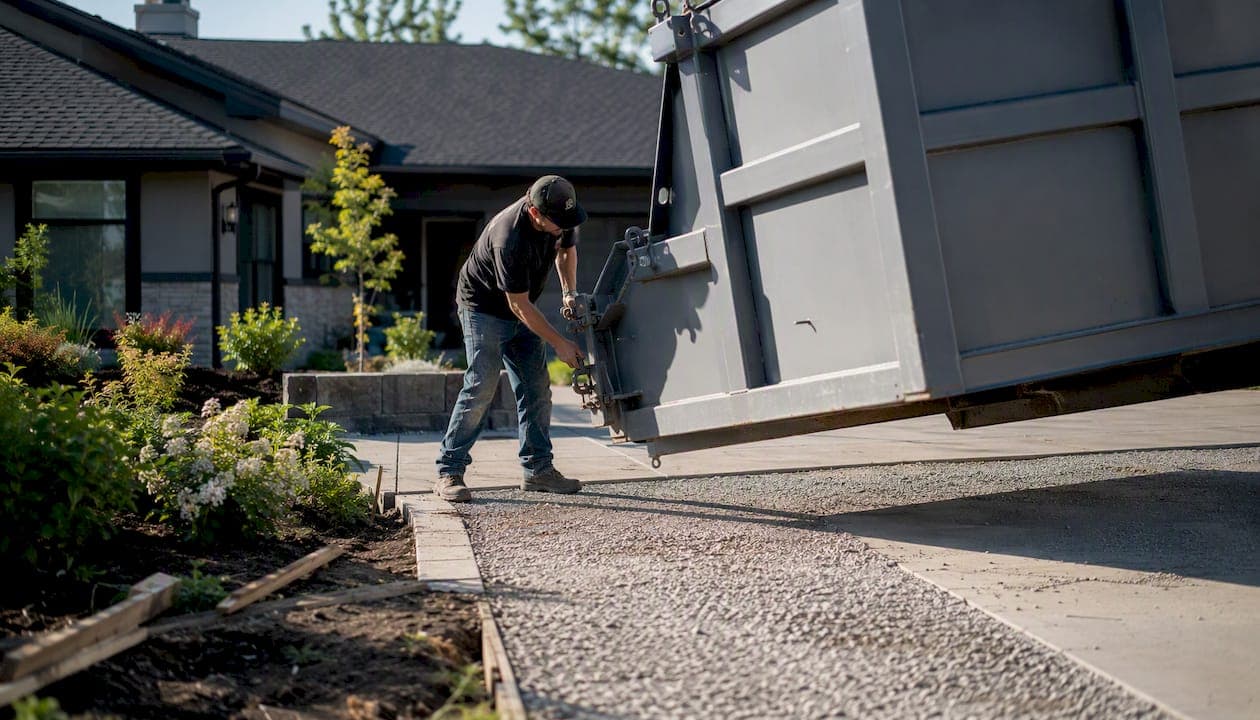
Dumpster sizes fall into two families: front-load bins from 2–8 cubic yards for ongoing commercial service, and roll-off containers from 10–40 cubic yards for temporary residential and construction jobs. Knowing which family you need takes about ten seconds; picking the exact size takes a little more thought, but not much.
Here is where most people land:
- 10-yard roll-off — small, heavy jobs: concrete removal, brick, soil, or a single-room cleanout
- 15–20-yard roll-off — the sweet spot for most home remodels, kitchen gut-outs, and whole-house cleanouts
- 30–40-yard roll-off — large construction, demolition, or estate cleanouts
- 2–6-yard front-load — retail, restaurants, and apartment complexes on a scheduled pickup plan
Two quick signals before you go further: if your debris is heavy (concrete, dirt, shingles), weight limits will cap you before volume does, so go smaller and denser rather than bigger and lighter. And measure your driveway or drop zone before ordering — most roll-offs are 7.5–8 feet wide and need at least 60 feet of clearance for the truck to maneuver.
Key Takeaways
The 20-yard roll-off covers most residential projects, but weight limits on heavy debris and driveway clearance are the two factors that most often change the right answer.
| Point | Details |
|---|---|
| Most popular size | The 20-yard roll-off suits most home remodels and whole-house cleanouts. |
| Weight beats volume for dense debris | Concrete, brick, and shingles hit weight limits before filling a bin — choose a smaller heavy-debris container. |
| Measure before ordering | Most roll-offs are 8 feet wide; confirm exact dimensions with your local hauler before delivery. |
| Check prohibited items | Hazardous waste, refrigerant appliances, tires, and batteries are typically banned — verify with your hauler. |
| A-to-zconstruction | Offers coordinated dumpster rental across Utah with sizing and scheduling tied to your project phases. |
Table of Contents
- What are the standard front-load dumpster sizes for commercial use?
- Roll-off dumpster sizes: which container fits your project?
- How to choose the right dumpster size — a checklist
- Weight limits, heavy materials, and what you cannot throw in
- Typical rental costs and what drives the price
- Project-size cheat sheet: the right bin for common jobs
- Capacity conversions: how many pickup loads fit?
- Why renting through a contractor simplifies your project
- A-to-zconstruction handles dumpster rental across Utah
- Sources
- FAQ
What are the standard front-load dumpster sizes for commercial use?
Front-load dumpsters are the rectangular steel bins you see behind strip malls and apartment complexes. A truck with front-mounted forks lifts them overhead and empties them on a scheduled route. They are not rented for a project and hauled away — they stay on-site and get emptied weekly, twice a week, or daily depending on volume.
Republic Services and most major haulers offer four standard sizes: 2, 4, 6, and 8 cubic yards. The 4-yard bin is the most popular for small businesses and light commercial service, with typical exterior dimensions of roughly 6' L × 4.2' W × 4.2' H and a capacity of about 24 standard 32-gallon bags. A 6-yard bin steps up to roughly 6' L × 6' W × 5' H and holds 36–60 bags, making it a common pick for restaurants and hospitality businesses with higher daily waste volume.
Placement notes for front-load bins:
- Concrete pads are strongly preferred; gravel or asphalt can work but may shift under repeated fork contact
- The truck needs roughly 18–20 feet of vertical clearance above the bin to tip and empty it
- Enclosures (wood or block walls with a gate) are required by many municipalities and HOAs — confirm local rules before ordering
- Pickup frequency can usually be adjusted seasonally; restaurants often add a second weekly pickup in summer
Roll-off dumpster sizes: which container fits your project?
Roll-off dumpsters are the open-top rectangular containers delivered by a truck that tilts and rolls them off the back. They sit on your driveway or job site for the rental period, then get hauled away when full or when the rental ends. Waste Management and most U.S. haulers offer six standard roll-off sizes: 10, 12, 15, 20, 30, and 40 cubic yards.
The 20-yard roll-off is a very commonly rented size for residential projects — it balances capacity, driveway fit, and cost well. Typical exterior dimensions run about 22' L × 8' W × 4.5' H, and it holds roughly 6–8 pickup-truck loads.
Quick notes on each size:
- 10-yard: Short and low-profile, fits in tight driveways. Weight limits typically 1–2 tons — ideal for concrete, brick, or soil where you will hit the weight cap before filling it volumetrically.
- 15-yard: A useful middle ground that many haulers stock; good when a 10 is too small but a 20 feels like overkill for a bathroom gut-out.
- 20-yard: The default choice for most homeowners. Fits a standard two-car driveway with room to walk around it.
- 30-yard: Needs a longer drop zone — confirm you have at least 22 feet of clear, flat space. Common on new construction sites.
- 40-yard: The largest standard size. Rarely needed for residential work; mostly used on commercial demolition and large framing jobs.
Always confirm exact dimensions with your local hauler before ordering. External dimensions vary by manufacturer, and a bin that measures 22 feet from one hauler might run 20 feet from another.
How to choose the right dumpster size — a checklist
Most people either overestimate and pay for capacity they never use, or underestimate and get hit with an overflow fee. Neither is complicated to avoid.
Step-by-step decision checklist:
- Estimate your debris volume. Walk through the project and count pickup-truck loads mentally, or use the square-footage rule: roughly 1 cubic yard per 200–300 sq ft of typical household accumulation.
- Identify heavy vs. light debris. Concrete, brick, dirt, and shingles are dense. If more than a third of your load is heavy material, weight limits will matter more than cubic yards.
- Measure your drop zone. Width matters most — most roll-offs are 8 feet wide. Length depends on the size you order. Leave at least 3 feet on each side for safe loading.
- Check the weight allowance. Ask your hauler what the included weight limit is (often 1–3 tons depending on size) and what the overage fee per ton looks like.
- Confirm permit requirements. Street placement almost always requires a permit from your city or county. Driveway placement usually does not, but check local rules — especially in Washington County or Salt Lake County, where local permit rules can vary by municipality.
- Plan your rental window. Most rentals run 7–10 days. If your project spans multiple phases, ask about extensions upfront rather than calling mid-project.
Project-to-size quick mapping:
- Bathroom remodel → 10–15 yards
- Kitchen gut-out → 15–20 yards
- Roof tear-off (average home) → 10–15 yards (shingles are heavy — weight limit applies)
- Whole-house cleanout → 20 yards
- Garage cleanout → 10–12 yards
- Landscaping / yard debris → 10–20 yards depending on volume
- New construction framing → 30 yards
- Full demolition or commercial build → 40 yards
Pro Tip: When debris is heavy, go one size smaller than volume suggests. A 10-yard bin filled halfway with concrete will often hit its weight limit before it looks full. Two smaller hauls can cost less than one overweight fee.
Weight limits, heavy materials, and what you cannot throw in
Volume is what most people focus on. Weight is what actually drives extra charges.
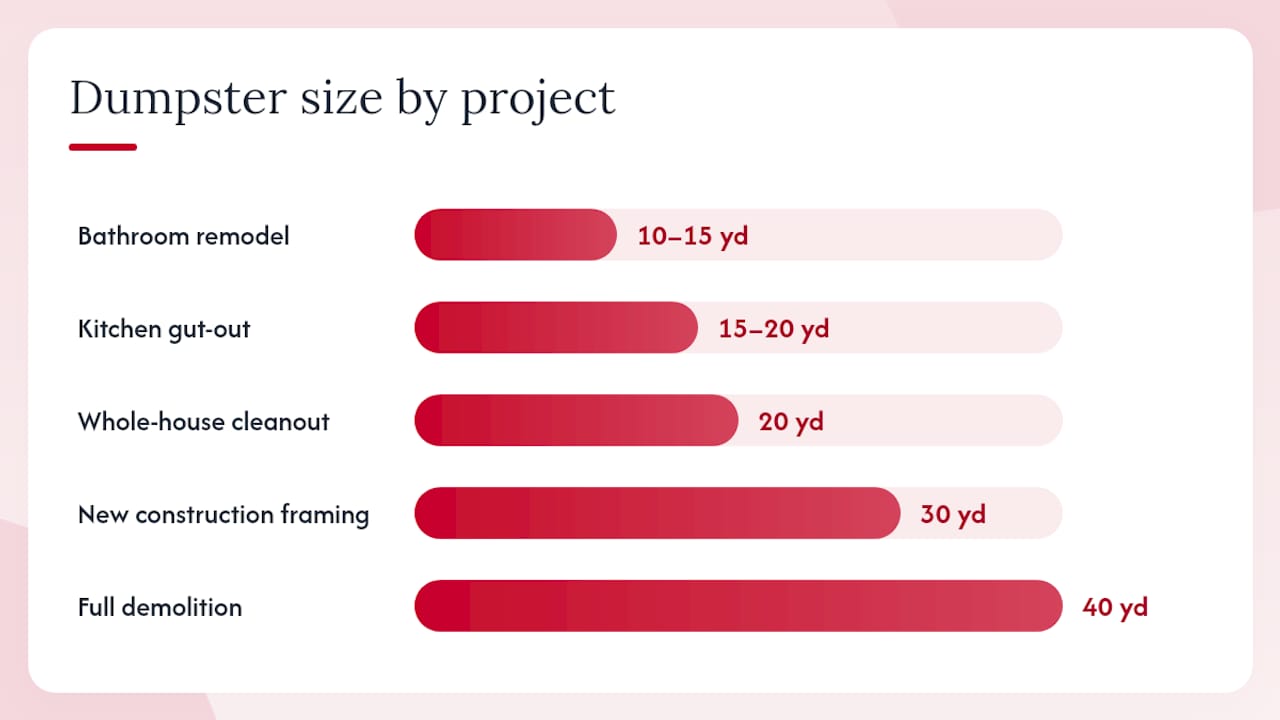
Dense materials like concrete, dirt, brick, asphalt, and shingles can hit a dumpster's weight limit long before the bin looks full. A standard 10-yard roll-off might carry a 2-ton weight allowance. A single concrete slab from a small patio can weigh more than that. Contractors who work with heavy debris regularly choose smaller "heavy-debris" bins — sometimes ordering a 10-yard specifically because it forces discipline on load weight — or they plan multiple hauls rather than one oversized container.
Common prohibited or restricted items (always verify with your specific hauler):
- Hazardous waste: paint, solvents, pesticides, motor oil, asbestos
- Batteries (lead-acid and lithium)
- Tires (some haulers accept a limited number for an extra fee)
- Appliances containing refrigerants: refrigerators, air conditioners, dehumidifiers
- Electronics (e-waste): TVs, monitors, computers
- Medical waste and sharps
- Propane tanks and other pressurized containers
- Wet concrete or liquid waste
Compliance and permit notes:
Street placement typically requires a permit from your city or county public works department. Fees and lead times vary — some municipalities issue permits same-day online, others require 3–5 business days. Overage fees for exceeding the weight limit usually run $50–$100 per ton above the included allowance, though rates differ by hauler and region. Disposal of prohibited items can result in the hauler refusing pickup or charging a hazmat removal fee.
Pro Tip: Call your hauler before loading anything you are unsure about. A two-minute call saves a rejected load and a rescheduled pickup.
Typical rental costs and what drives the price
Residential dumpster rentals often fall in the $300–$480 range for a standard roll-off, though that figure shifts considerably based on several variables. A 10-yard bin in a rural area with low disposal fees can run under $300. A 40-yard container in a metro market with high landfill tipping fees can push past $700.
What affects your quote:
- Dumpster size — larger bins cost more to deliver, haul, and dispose of
- Weight allowance and debris type — heavy debris (concrete, shingles) triggers higher disposal fees at the landfill, which haulers pass through
- Delivery distance — longer hauls from the hauler's yard add fuel and time costs
- Local disposal/tipping fees — these vary significantly by county and state
- Rental length — most base quotes cover 7–10 days; extensions typically add $5–$15 per day
- Permit fees — street placement permits are usually billed as a pass-through
What the base rental typically covers:
- Delivery and pickup (one round trip)
- A set number of rental days (usually 7–10)
- An included weight allowance (varies by size and hauler)
Common extra charges to ask about upfront:
- Overweight fees (per ton above the included limit)
- Extended rental (daily rate after the base period)
- Permit procurement (if the hauler handles it on your behalf)
- Hazardous or restricted material surcharges
Same-day and next-day delivery is available from many haulers in metro areas, though it often carries a rush fee. For projects with defined phases — say, a kitchen demo followed by a framing phase — scheduling pickup at the end of each phase and redelivery for the next keeps costs predictable and the site clear.
Project-size cheat sheet: the right bin for common jobs
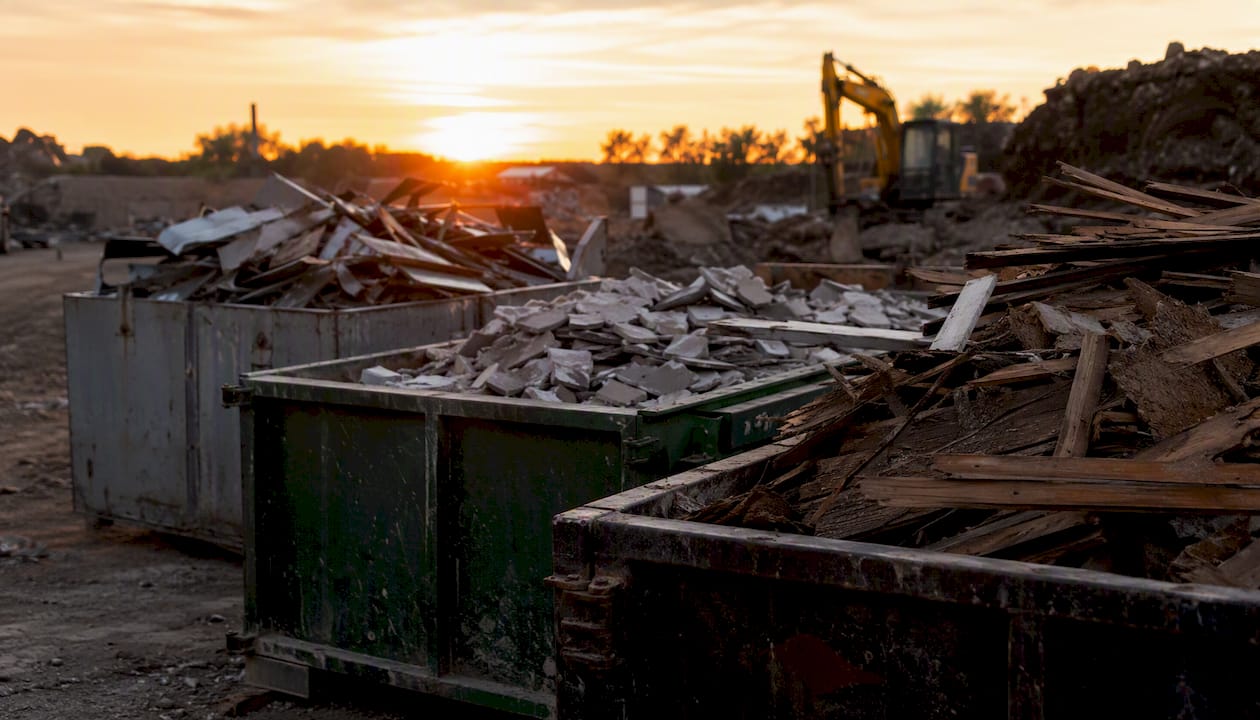
The table below maps typical U.S. residential and small commercial projects to the recommended dumpster size, with a short rationale for each.
| Project | Recommended Size | Key Reason |
|---|---|---|
| Bathroom remodel | 10–15 yards | Moderate volume, some tile/drywall weight |
| Kitchen gut-out | 15–20 yards | Cabinets, appliances, flooring add up fast |
| Roof tear-off (avg. home) | 10–15 yards | Shingles are heavy — weight limit is the constraint |
| Garage cleanout | 10–12 yards | Mixed light debris, limited volume |
| Whole-house cleanout | 20 yards | High volume, mostly light furniture and boxes |
| Landscaping / yard debris | 10–20 yards | Volume-driven; soil or rock pushes toward smaller bins |
| New construction framing | 30 yards | High volume of wood, packaging, and scrap |
| Full demolition | 40 yards | Maximum volume and weight across all material types |
| Estate cleanout | 20–30 yards | Bulky furniture and accumulated items over decades |
When to size up: multiple rooms being gutted simultaneously, bulky furniture that cannot be broken down, or a project that keeps expanding scope mid-job.
When to size down: heavy materials dominate the load, the driveway is short or narrow, or you are doing a single-trade swap (just flooring, just countertops).
Driveway and street fit reminders: most roll-offs are 8 feet wide — wider than a standard parking space. Measure before ordering, and confirm external dimensions with your hauler since they vary by manufacturer. For street drops, place cones or reflective markers at each end of the bin and check local ordinances on lighting requirements for overnight street placement.
Capacity conversions: how many pickup loads fit?
The cubic-yard label on a dumpster is not intuitive for most people. Pickup-truck loads and 32-gallon bag counts make it concrete.
A standard full-size pickup truck bed holds roughly 2–3 cubic yards of loose debris. That means a 10-yard roll-off equals about 3 truckloads, and a 20-yard holds roughly 6–8. The table below lays out the full lineup.
These figures come from Dumpster Sidekick's size guide and align with the pickup-load equivalents published by major haulers.
Square-footage rule for whole-home cleanouts: plan on roughly 1 cubic yard per 200–300 sq ft of living space for a typical household. A 1,800 sq ft home with average accumulation lands around 6–9 cubic yards — a 10-yard bin covers it with room to spare. Hoarder situations or homes with heavy furniture collections should budget toward the higher end or step up to a 15-yard.
Pro Tip: Break down bulky items — furniture frames, cabinet boxes, hollow-core doors — before loading. Flat pieces stack tighter and leave far less dead air space. Place heavy items at the bottom near the center of the bin to keep weight distribution safe for hauling.
Why renting through a contractor simplifies your project
Most people treat dumpster rental as a separate errand: call a hauler, schedule delivery, hope it shows up before demo day, figure out where to put it, and then scramble when the project runs long and the bin is full before the job is done.
A-to-zconstruction handles dumpster rental as part of its in-house general contracting service in Utah. That means the bin arrives when demo starts, gets swapped or picked up when the phase ends, and the sizing recommendation comes from a crew that has done this on hundreds of jobs — not from a hauler's website calculator. For a structural remodeling project, that coordination matters: a bin that shows up two days late or gets filled before framing starts costs real time and money.
Practical benefits of contractor-managed rental:
- Accurate size recommendation based on actual project scope, not a guess
- Delivery and pickup timed to project phases, not a fixed calendar window
- Permit and placement handled as part of the job, not a separate call
- One point of contact for the whole project, from estimate to final cleanup
A-to-zconstruction handles dumpster rental across Utah
A-to-zconstruction offers residential and construction dumpster rental across Utah, including Washington County, Salt Lake County, and Cache County. The difference from calling a national hauler: sizing and scheduling are coordinated with your actual project timeline, not booked independently and hoped for. Whether you need a 10-yard bin for a concrete removal job or a 30-yard container for a full remodel, the crew already knows what the job requires because they are often running it.
Request a quote or get a size recommendation by reaching out directly at A-to-zconstruction. If you are planning a remodel or hardscape project alongside waste removal, ask about bundling both under one contract — it cuts scheduling friction and keeps the site moving.
Sources
External dimensions vary between manufacturers and local haulers — always confirm specs directly before ordering.
- Dumpster Rental Guide | Republic Services
- Container & dumpster rental sizes — Waste Management (WM)
- Dumpsters
- Dumpster sizes — Angi (Angie's List)
FAQ
What is the most common dumpster size for residential projects?
The 20-yard roll-off is the most commonly rented size for residential use. It holds roughly 6–8 pickup-truck loads, fits most driveways, and suits projects ranging from kitchen remodels to whole-house cleanouts.
What does a 4-yard front-load dumpster look like?
A 4-yard front-load bin is roughly 6 feet long, 4.2 feet wide, and 4.2 feet tall — about the size of a large chest freezer. It holds approximately 24 standard 32-gallon trash bags and is the most popular size for small businesses and light commercial service.
What does a 2-yard dumpster look like?
A 2-yard front-load bin is compact, typically around 6 feet long, 3 feet wide, and 3.5 feet tall. It suits small offices, kiosks, and service stations with low daily waste volume.
How much does a 6-yard dumpster hold?
A 6-yard commercial front-load dumpster holds roughly 36–60 standard 32-gallon bags, depending on how the waste is packed. It is a common choice for restaurants and retail businesses that generate moderate daily waste.
How do I avoid overweight fees on a dumpster rental?
Ask your hauler for the included weight allowance before ordering, then choose a smaller bin if your debris is heavy. Concrete, dirt, brick, and shingles hit weight limits well before a bin looks full — two smaller hauls often cost less than one overweight fee.