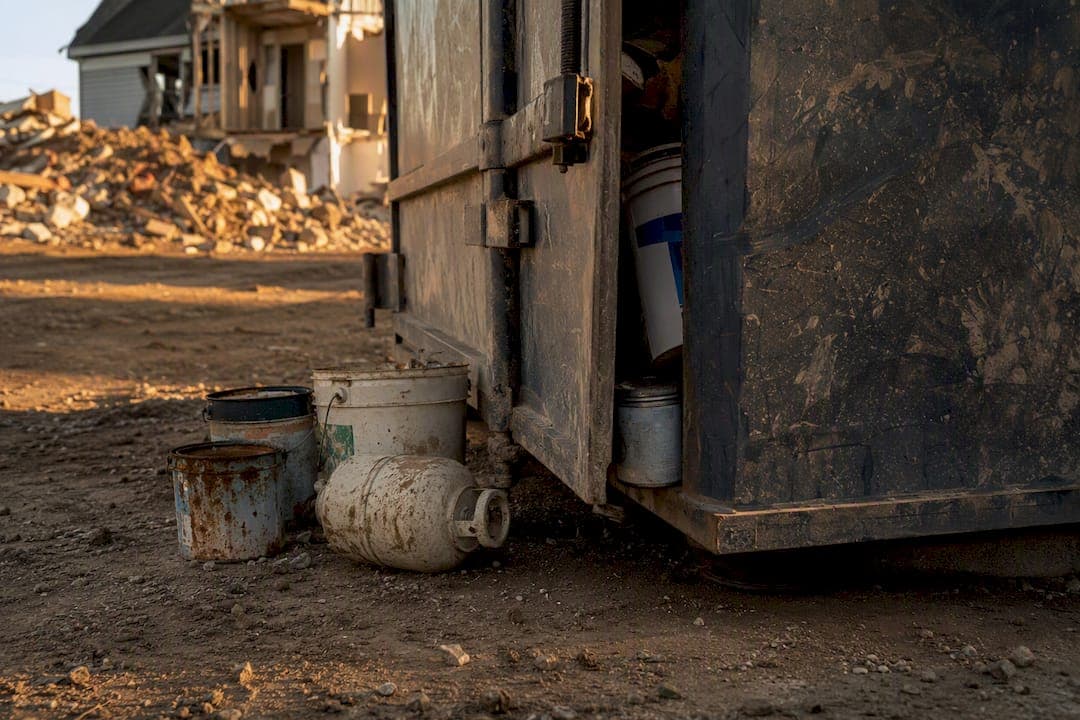
Hazardous liquids and chemicals, appliances with refrigerants, electronics and batteries, tires, asbestos, medical waste and sharps, propane and compressed gas cylinders, and dense loads like concrete or contaminated soil are the items you cannot put in a rental dumpster. Load any of these and you risk a refused pickup, a contamination surcharge, or worse.
Before you throw anything questionable in the bin, check your rental agreement or call your hauler directly. Every company's prohibited list looks slightly different, and a five-minute phone call beats a fee you didn't see coming.
- Hazardous chemicals: paint, solvents, pesticides, pool chemicals
- Appliances containing refrigerant: fridges, freezers, window AC units
- Electronics and batteries: TVs, monitors, lithium and lead-acid batteries
- Tires, propane tanks, and compressed gas cylinders
- Asbestos-containing materials
- Medical waste and sharps
- Heavy or dense loads: concrete, brick, contaminated soil
Key Takeaways
Dumpster prohibited items are banned because they pose fire, contamination, or legal risk, and each category has a specific, usually free, alternative disposal route.
| Point | Details |
|---|---|
| Know the core banned categories | Hazardous chemicals, appliances with refrigerant, electronics, tires, propane, asbestos, and medical waste top every list. |
| Check local rules for conditional items | Concrete, stumps, and treated lumber vary by hauler and municipality, so confirm before loading. |
| Use free disposal alternatives | HHW events, retailer take-backs, and auto shops handle most banned items at little or no cost. |
| Segregate to avoid fees | Staging problem items separately prevents contamination surcharges and refused pickups. |
| A-to-zconstruction manages compliance in-house | The company's crews document refrigerant recovery and HHW drop-offs as part of standard project prep. |
Table of Contents
- Why These Dumpster Prohibited Items Get Rejected
- Conditional Items: What Depends on Your Location
- Where to Take What a Dumpster Won't Accept
- What It Costs You When Prohibited Items Get Loaded Anyway
- A Prep Checklist for Loading Day
- How A-to-zconstruction Handles Prohibited Items on Job Sites
- The Gap Between a Prohibited List and Actually Solving the Problem
- Renting a Dumpster Without the Guesswork
- Sources
- FAQ
Why These Dumpster Prohibited Items Get Rejected
Every item on a prohibited list is banned for a specific, traceable reason, usually tied to fire risk, environmental contamination, or federal regulation. Knowing the "why" makes it easier to remember the rule when you're standing over a half-full paint can wondering what to do with it.
- Hazardous household chemicals. Wet paint, solvents, pesticides, and pool chemicals top nearly every banned list because they can ignite, off-gas toxic fumes, or leach into soil and groundwater once compacted with other debris. These are exactly the products household hazardous waste programs exist to handle, since landfill compaction turns a sealed container into a hazard.
- Appliances with refrigerants. Refrigerators, freezers, and window air conditioners all hold refrigerant that federal rules require a technician to recover before the unit is scrapped. EPA regulations under Section 608 make this a legal requirement, not a hauler preference, so skipping recovery can trigger fines beyond the dumpster fee itself.
- Electronics and batteries. TVs, monitors, and lithium batteries pack heavy metals and, in the case of lithium cells, a real fire risk when crushed by a compactor truck. A punctured lithium battery in a dumpster is one of the more common causes of hauler-fleet fires.
- Tires and automotive fluids. Tires trap air and resist compaction, so most haulers reject them outright. Used oil and antifreeze belong at an auto shop or recycling center, not in a construction bin.
- Propane tanks and compressed cylinders. Even a tank you think is empty can hold enough residual vapor to explode under compaction pressure. Never puncture one to check. Exchange it or return it to a certified recycler instead.
- Asbestos-containing materials. Homes built before 1980 often hide asbestos in insulation, floor tile, or textured ceilings. Disturbing these materials without licensed abatement creates a lung-disease risk for anyone nearby, which is why removal has to go through a certified contractor with documented disposal.
- Medical waste and sharps. Needles and other sharps carry infection risk for the sanitation crew who eventually handles the load by hand. Approved sharps containers and pharmacy take-back programs exist specifically to keep these out of general waste streams.
Conditional Items: What Depends on Your Location
Not every restriction is absolute. Some materials are fine in one city's dumpster program and banned outright two counties over, so it pays to check before you assume.
- Concrete, brick, and soil: these materials are so dense that a standard roll-off can hit its legal road-weight limit long before it looks full, which is why many haulers require a dedicated concrete-only container for demo debris.
- Large stumps and root balls: most standard dumpsters refuse these because the wood resists compaction and can damage equipment. Chipping the stump first or booking a dedicated hauling service usually solves it faster than fighting with a bin that won't close.
- Treated lumber and railroad ties: chemical preservatives in these materials often route them into a separate disposal category rather than general construction debris.
- Food waste: small household amounts are typically fine in regular trash, but commercial-scale food waste increasingly falls under organic diversion laws in several states, so restaurants and large renovation sites should check local rules first.
Pro Tip: If you're clearing a yard with a stump larger than about 24 inches across, call a tree removal service before you order a dumpster. Grinding it on-site is almost always cheaper than paying overage fees for wood that won't compact. A tree debris removal specialist can also handle root balls that a standard bin will reject anyway.
Where to Take What a Dumpster Won't Accept
"Prohibited" doesn't mean "nowhere to go." It means the item needs a different route than your roll-off bin, and most of those routes are free or low-cost if you know where to look.
- HHW collection events and permanent facilities take paints, solvents, pesticides, and pool chemicals, usually with no appointment needed for typical household quantities.
- Certified appliance recyclers handle refrigerant recovery and should hand you documentation proving the refrigerant was properly removed, which protects you if a hauler questions the appliance later.
- Retailer take-back programs at electronics stores and home improvement chains accept old TVs, monitors, and batteries, often at no charge.
- Auto parts stores and tire retailers recycle motor oil, car batteries, and tires, and many will take used oil even if you didn't buy it there.
- Pharmacy take-back kiosks and mail-back envelopes handle sharps and expired medications safely.
| Prohibited Item | Best Alternative |
|---|---|
| Paint, solvents, pesticides | HHW collection event or facility |
| Refrigerators, window ACs | Certified appliance recycler |
| TVs, batteries, electronics | Retailer take-back program |
| Motor oil, tires, car batteries | Auto shop or tire retailer |
| Sharps, medications | Pharmacy take-back or mail-back |
Routing items this way is almost always cheaper and faster than paying contamination fees after the fact.
What It Costs You When Prohibited Items Get Loaded Anyway
A driver who spots a banned item during pickup has two options: refuse the load entirely or charge you to sort it out. Neither is cheap, and neither is fast.
- Driver refusal: the truck leaves without emptying your dumpster, and you're rescheduled for another trip, often with a trip fee attached.
- Contamination surcharges: haulers and landfills routinely pass along disposal surcharges when prohibited materials turn up in an otherwise standard load.
- Legal exposure: in severe cases, improperly discarded hazardous waste can trigger environmental fines that land on the property owner, not just the hauler.
- The fix is simple: stage a separate pile for anything questionable before the truck ever shows up.
Segregating problem items up front is the single cheapest insurance policy on a demo day.
A Prep Checklist for Loading Day
Getting this right isn't complicated. It just requires doing a few things in order, before the dumpster fills up around you.
- Dry out paint first. Mix latex paint with kitty litter or a commercial hardener until it's solid; many jurisdictions then allow it in regular trash, though some still require HHW handling for any paint product. Oil-based paint almost always needs an HHW facility regardless.
- Drain and document appliance fluids. Get a refrigerant recovery certificate from whoever services the unit. Keep it. You may need to show it if a hauler asks.
- Pull batteries and small electronics and drop them at a retailer take-back point before the appliance or device goes in the bin.
- Handle propane and compressed cylinders separately. Exchange or return them. Never puncture a tank to see if it's empty.
- Estimate weight before you load dense material. If you're demoing a concrete patio or hauling out contaminated soil, order a concrete-only container sized for the tonnage rather than guessing with a general debris bin.
Pro Tip: Stage heavier material at the bottom and spread it evenly across the floor of the bin. An uneven load can shift during transport and cause the truck to reject it even if every individual item is allowed.
How A-to-zconstruction Handles Prohibited Items on Job Sites
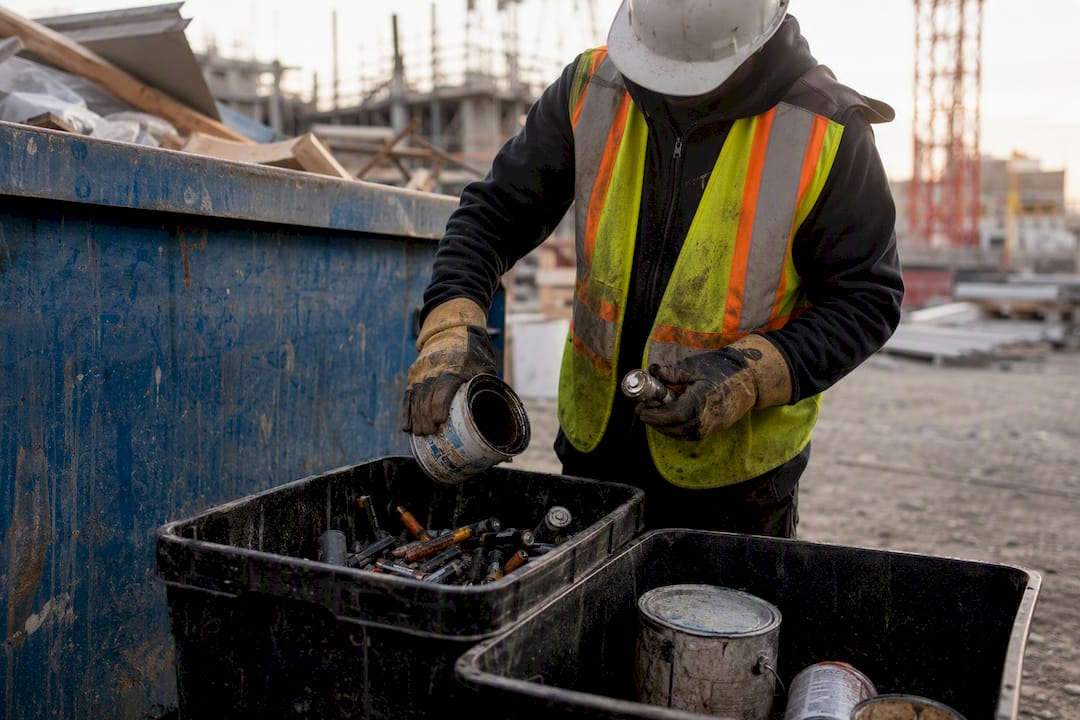
As a licensed general contractor with more than 500 completed projects, A-to-zconstruction runs into these prohibited-item mistakes constantly, usually from well-meaning homeowners doing their first demo. Mixed loads, wet paint tossed in at the last minute, and forgotten propane tanks under a deck are the three that cause the most delays.
Because A-to-zconstruction coordinates concrete work, remodeling, and dumpster rental under one crew, the same team that pours your slab is the one flagging a leaking appliance before it ever reaches the bin.
On a typical remodel, we walk the site before the dumpster even arrives and pull anything regulated into its own pile. Paint, batteries, old propane tanks, whatever it is, it gets tagged and routed separately. That one step saves the client a refused pickup almost every time.
- Refrigerant recovery receipts, kept on file for every appliance removed
- HHW drop-off receipts for paint, solvents, and chemicals
- A walk-through checklist before the bin gets its first load
The Gap Between a Prohibited List and Actually Solving the Problem
Most guides stop at the list. They tell you paint and propane tanks are banned, then leave you to figure out what happens next. That's the part that actually costs homeowners money, because knowing something is prohibited doesn't tell you where to put it, and the search for an answer usually happens on demo day, under time pressure, with a dumpster rental clock already running.
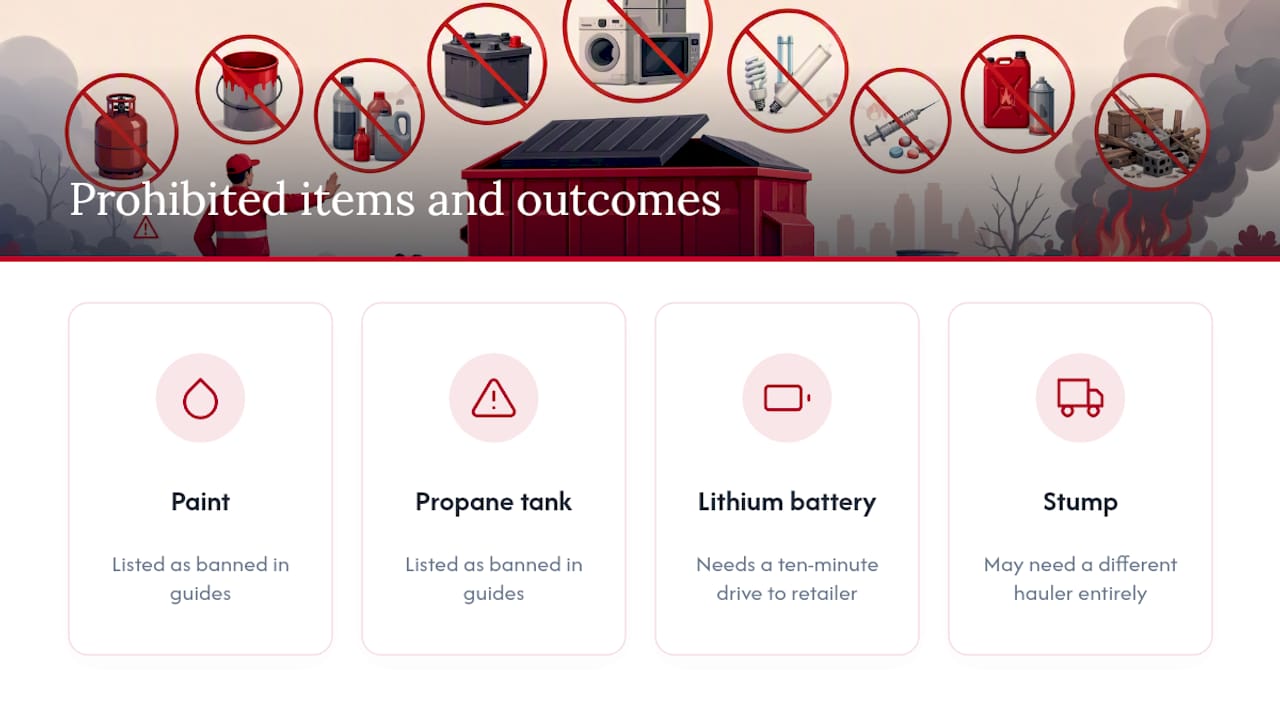
The conventional advice treats every prohibited item the same way: don't put it in the bin. But a lithium battery and a stump aren't the same problem. One needs a ten-minute drive to a retailer. The other might need a different hauler entirely. Readers who prioritize sorting before the dumpster arrives, not during pickup, save themselves the fees and the second trip.
If there's one thing worth doing differently, it's staging a separate pile for anything questionable before the truck shows up. That single habit prevents most of the expensive mistakes covered here.
— Jake
Renting a Dumpster Without the Guesswork
A-to-zconstruction handles dumpster rental as part of the same crew that runs your concrete, remodeling, or hardscape project, so there's no separate vendor to coordinate and no guessing about what your bin can hold. That matters most on renovation jobs, where prohibited items like old appliances, paint, and demo debris tend to pile up fast and unsorted.

Because the same team handles the structural remodeling and the waste removal, prep issues like refrigerant recovery or dense concrete loads get flagged before the bin arrives rather than after a driver refuses pickup. If you're planning a cleanout or remodel in Utah, get a quote on dumpster rental through A-to-zconstruction and ask about bin sizing for your specific debris mix before you book.
Sources
- Appliance disposal | Section 608 | US EPA
- Household hazardous waste (HHW) | US EPA
- Dumpsters
- Disposal guidance for latex paint | UC San Diego Safety & Environmental Policy
FAQ
What Items Are Not Allowed in Dumpsters?
Hazardous chemicals, appliances with refrigerants, electronics and batteries, tires, propane tanks, asbestos, and medical waste or sharps are the standard prohibited categories across most haulers.
What Can You Legally Put in a Dumpster?
General construction debris, drywall, dried paint, furniture, and non-hazardous household junk are typically accepted, though rules vary by hauler and local solid-waste authority.
What Can I Not Throw in My Garbage Can?
Wet paint, motor oil, batteries, sharps, and pesticides are banned from regular household trash in most areas for the same contamination reasons they're banned from dumpsters.
What Can't You Put in a Dumpster Bag?
Bagged dumpster services follow the same restrictions as roll-off bins: no hazardous chemicals, refrigerant-containing appliances, tires, or propane tanks, and most also cap how much dense material like concrete they'll accept.
Can You Put Concrete in a Dumpster?
Small amounts of concrete are often accepted, but larger quantities usually require a dedicated concrete-only container because the material's density can exceed a standard roll-off's legal weight limit before the bin looks full.