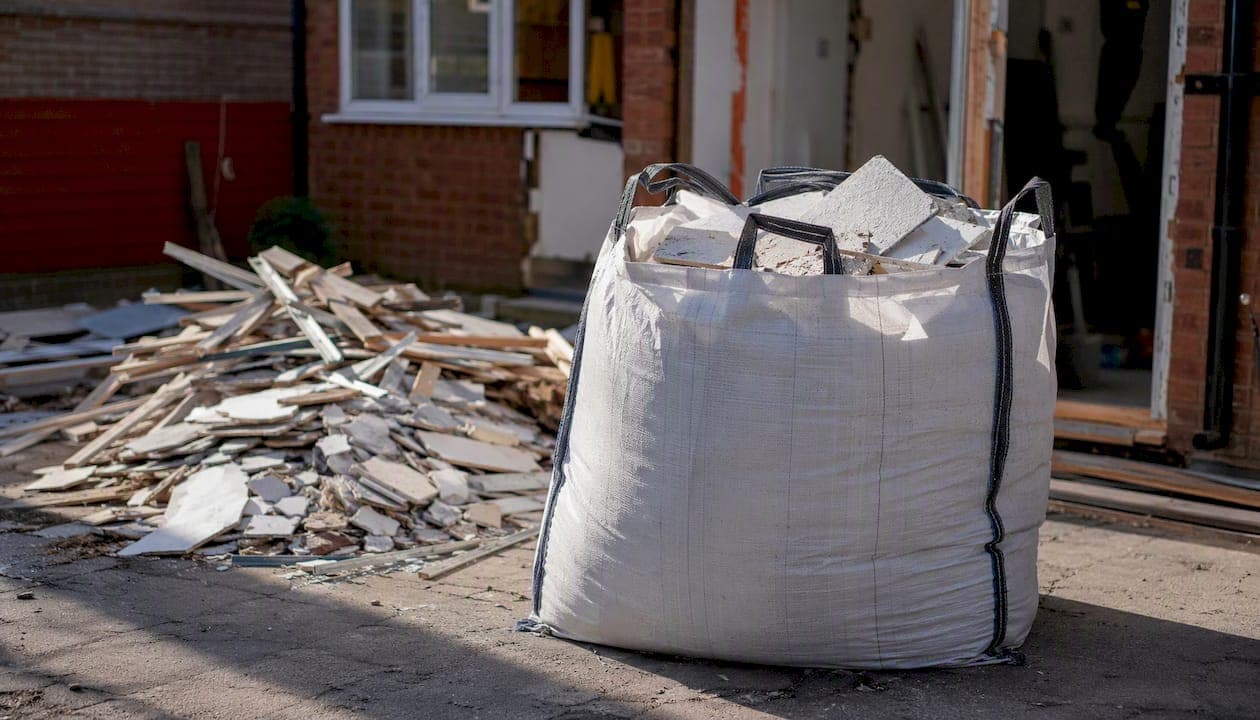
For a small, lightweight cleanout — one closet, a few boxes, some light yard debris — a dumpster bag gets the job done without scheduling a truck. For anything bigger than about 3 cubic yards, or anything heavy like concrete, shingles, or drywall, a roll-off dumpster is almost always the smarter call.
- Pick a dumpster bag when your project fits under 3 cubic yards, materials are light (no concrete, tile, or roofing), and you need a flexible, low-commitment option.
- Pick a roll-off dumpster when you're doing a remodel, roof tear-off, garage cleanout, or generating heavy debris over multiple days.
- Borderline rule of thumb: If you're unsure whether you need one bag or two, price out a 10-yard roll-off first. Once you're buying two or more bags, a small roll-off typically costs less per cubic yard.
Key Takeaways
A dumpster bag makes financial sense only for projects under 3 cubic yards of light debris; beyond that threshold, a roll-off dumpster costs less per cubic yard and handles the job in one trip.
| Point | Details |
|---|---|
| Volume threshold | At 3+ cubic yards, a 10-yard roll-off typically costs $25–$40 per cubic yard vs. $60–$127 for bags. |
| Weight limit matters | Dumpster bags cap at ~3,300 lbs; heavy materials like tile or concrete hit that limit fast. |
| Access and permits | Bags fit tighter spaces; roll-offs may need a street permit ($20–$100) for non-driveway placement. |
| Pickup timing risk | Bag pickup windows can run several days; roll-off rentals offer confirmed delivery and pickup dates. |
| A-to-zconstruction option | A-to-zconstruction offers residential dumpster rental in Utah with confirmed pickup dates and driver placement included. |
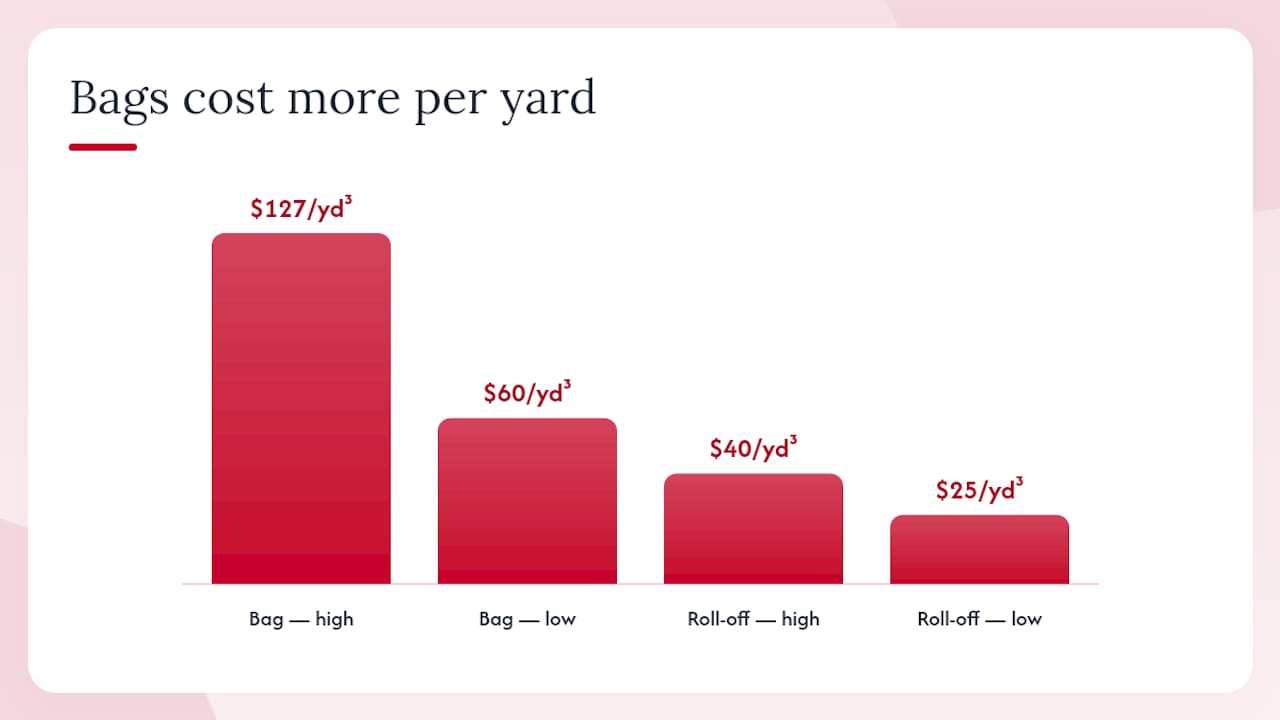
Table of Contents
- What is a dumpster bag and how does it work?
- What is a roll-off dumpster rental and what should you expect?
- How do the costs actually compare?
- What questions should you answer before you choose?
- What can't you put in either option?
- The case for skipping the bag sooner than you think
- Dumpster rental in Utah, done right by A-to-zconstruction
- Useful sources
- FAQ
What is a dumpster bag and how does it work?
A dumpster bag, most commonly sold under the Bagster® brand by Waste Management, is a heavy-duty woven polypropylene bag you buy at a home improvement store, fill on your own schedule, then pay separately to have picked up. The process has three steps: buy the bag, fill it, schedule pickup online or by phone.
Standard specs for a typical dumpster bag:
| Spec | Detail |
|---|---|
| Dimensions | approximately 8 ft × 4 ft × 2.5 ft (L × W × H) |
| Capacity | about 3 cubic yards |
| Weight limit | about 3,300 lbs |
| Bag purchase price | about $30 at retail |
| Pickup fee range | pickup fees vary widely depending on market |
| Typical total cost | $180–$380 per bag |
The low sticker price on the bag itself can be misleading. Pickup fees are where the real cost lands, and they vary significantly by ZIP code. Some markets charge closer to $150; others push past $300 for a single pickup.
The 2.5-foot height is a genuine constraint. Bulky items — a sofa, a water heater, a full sheet of drywall — either won't fit flat or require you to break them down first. That extra labor adds up fast on a remodel. According to Eagle Dumpster Rental, roll-off dumpsters run 3.5–7 feet tall depending on size, which means most whole appliances and furniture pieces drop straight in.
A few other practical limits worth knowing:
- Bags are not available in every market. Service coverage depends on Waste Management's local pickup network.
- The bag must be placed where a pickup truck can access it — typically within a few feet of the curb with overhead clearance for the crane arm.
- Pickup is not guaranteed on a specific date. Scheduling windows can run several days out, and customer reviews on Trustpilot show variability in responsiveness depending on the local provider.
What is a roll-off dumpster rental and what should you expect?
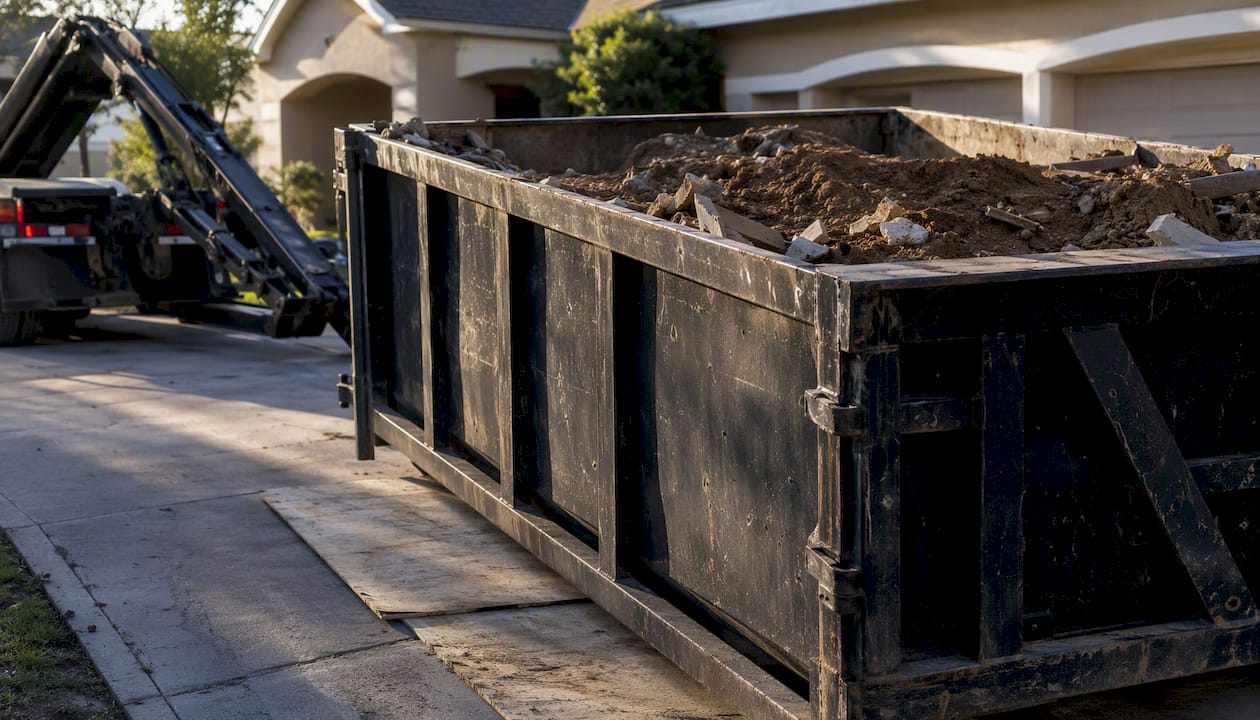
A roll-off dumpster is a large open-top steel container delivered by a specialized truck, left at your property for a set rental period, then picked up when you call. Sizes typically run from 10 to 40 cubic yards, with 10- and 20-yard containers covering most residential projects.
Common roll-off sizes and typical use cases:
| Size | Typical Dimensions | Best For |
|---|---|---|
| 10 yd | — | Small remodels, bathroom gut, large cleanouts |
| 15 yd | — | Kitchen remodel, deck removal |
| 20 yd | — | Full room addition, roofing, large garage |
| 30 yd | — | Whole-home remodel, commercial cleanout |
| 40 yd | — | Major construction, large demolition |
Rental periods typically run 7–14 days, with daily overage fees if you keep it longer. Most rentals include a set tonnage allowance — commonly 1–3 tons for a 10-yard container — and charge per ton beyond that. Heavy materials like concrete, brick, or tile eat through that allowance fast, so it's worth asking your hauler about weight caps before you load.
Placement matters. The truck needs a flat, accessible surface and enough overhead clearance to swing the container off the back. If you need it on the street, many municipalities require a permit, which typically runs $20–$100 and takes a day or two to process. Driveway placement avoids that entirely, though you'll want to protect the surface with plywood under the container's feet if you have a newer concrete or asphalt driveway.
The driver positions the container — you don't have to guide it yourself. That's real convenience on tight residential lots where precision matters.
How do the costs actually compare?
The per-cubic-yard math is where the dumpster bag vs dumpster rental decision gets clear. According to RightDumpster, a 10-yard roll-off typically runs $300–$500 total, putting the cost per cubic yard at roughly $25–$40. A single dumpster bag, once you add the pickup fee, typically costs between $180 and $380 for just 3 cubic yards.
Cost per cubic yard: Dumpster bag $60–$127 vs. 10-yard roll-off $25–$40. Once your project exceeds 3 cubic yards, a small roll-off almost always costs less per yard.
Three real-world scenarios:
Scenario 1 — Closet cleanout (~1 cubic yard of light debris): One bag at $30 plus a $175 pickup fee totals about $205. A 10-yard roll-off would be overkill at $300–$500. The bag wins here.
Scenario 2 — Bathroom remodel (~4–6 cubic yards of tile, drywall, fixtures): You'd need two bags minimum, likely three — that's $540–$1,140 in bag costs alone, before any overweight fees. A 10-yard roll-off at $300–$500 all-in is the obvious choice.
Scenario 3 — Garage cleanout (~8–10 cubic yards of mixed junk and furniture): Three to four bags at $180–$380 each puts you at $540–$1,520. A 15- or 20-yard roll-off at $300–$600 handles it in one shot, with room to spare.
Urban markets often carry surcharges of $50–$150 on roll-off rentals due to permitting and fuel costs. Some bag pickup services offer a guaranteed pickup date for an additional fee — worth considering if your project has a hard deadline.
What questions should you answer before you choose?
Work through these before you commit to either option. The answers will make the right choice obvious.
- How much volume are you generating? Estimate in cubic yards. A standard pickup truck bed holds about 2 cubic yards. If you're filling more than one truck load, you're likely past bag territory.
- What materials are you tossing? Concrete, brick, roofing shingles, and tile are heavy. A single layer of old tile from a bathroom floor can push a bag past its 3,300-lb limit.
- Where will the container sit? Narrow driveway, low-hanging branches, or a gated community can rule out a roll-off entirely. A bag fits almost anywhere a pickup truck can reach.
- Do HOA rules or permits apply? Some HOAs prohibit roll-off containers outright. Street placement almost always needs a permit. Check both before you book.
- What's your timeline? If you need it gone by a specific date, a roll-off with a confirmed pickup date is more reliable. Bag pickup windows can stretch several days.
- Is bag pickup available in your area? Not every ZIP code has coverage. Confirm before you buy the bag.
Red flags that force a roll-off:
- Heavy materials (concrete, roofing, masonry)
- Bulky items you can't or won't break down
- More than 3 cubic yards of debris
- Tight project deadline with no flexibility
Pro Tip: When your volume estimate puts you right at the edge of a bag's capacity, go with the next size up on a roll-off instead. Overfilling a bag risks refusal of service or an overweight fee that wipes out any savings.
For a deeper look at sizing a container for a specific remodel, the dumpster rental sizing guide at A-to-zconstruction walks through the math by room type.
What can't you put in either option?
Both dumpster bags and roll-off dumpsters prohibit hazardous materials. The list is similar across providers:
- Paints, solvents, and chemicals
- Batteries (especially lithium-ion)
- Refrigerants and appliances containing Freon
- Asbestos-containing materials
- Tires (some haulers accept a limited number for a fee)
- Medical or biohazardous waste
The difference is in how each handles borderline items. Roll-off haulers often have more flexibility on mixed loads and can sometimes accept electronics or appliances for an added fee. Bag pickup services tend to be stricter because the load goes directly onto a standard collection truck.
Pre-sorting pays off with either option. Pulling out metal, cardboard, and clean wood before loading lets you divert those materials to recycling drop-offs, which reduces your disposal weight and can lower overage fees. Waste Management's sustainability guidance recommends maximizing source separation to reduce landfill impact — and that applies whether you're using a bag or a roll-off.
The environmental trade-off between the two options is real but manageable. Single-use woven polypropylene bags create material waste that a reusable steel container does not. On the other hand, a roll-off requires a dedicated truck trip for delivery and pickup, which adds to the carbon footprint. The most practical mitigation for either: sort before you load, and keep recyclables out of the landfill stream.
The case for skipping the bag sooner than you think
Most homeowners underestimate their project volume by at least one bag. The closet cleanout that "should be one bag" turns into two once the old carpet, the broken shelving, and the mystery boxes from 2014 all go in. That second bag purchase plus a second pickup fee puts you at $360–$760 for 6 cubic yards — well past what a 10-yard roll-off would have cost.
The bag's appeal is the low entry price. Thirty dollars at the hardware store feels like nothing. But the pickup fee is where the math turns, and most people don't think about it until they're scheduling. A roll-off rental, by contrast, is a single transaction with a known total cost upfront.
There's also the height issue that rarely gets discussed. At 2.5 feet tall, a dumpster bag forces you to break down almost everything before it goes in. A sofa, a water heater, a stack of drywall — all of it needs to be cut or disassembled. That's an hour of extra work per item, and on a full bathroom remodel, those hours add up to a real cost that never shows up in the bag-vs-dumpster price comparison. Dignified Dumpsters notes that roll-offs provide better value and convenience for most medium-to-large residential projects, and from a contractor's standpoint, that tracks.
The one scenario where a bag genuinely wins: a small, staged cleanout where you're filling it over a few weekends and a roll-off delivery truck simply can't reach your property. Narrow driveways, HOA restrictions, and overhead obstructions are real constraints. In those cases, the bag isn't just cheaper — it's the only option that works. Discount Dumpster frames it well: bags are best for small, lightweight, staged cleanups; roll-offs are built for continuous debris and anything heavy or bulky.
Dumpster rental in Utah, done right by A-to-zconstruction
Choosing the right container is half the decision. The other half is finding a hauler who shows up when they say they will, places the container where you need it, and doesn't hit you with surprise fees at pickup.
A-to-zconstruction offers residential dumpster rental across Utah with confirmed delivery dates, driver-positioned placement, and transparent pricing on included tonnage. No guessing whether the truck will show up this week. Whether you're doing a bathroom gut, a garage cleanout, or a full structural remodel, the right size container gets delivered on your schedule and picked up when you're done. Request a quote directly at A-to-zconstruction.com to get a firm price before you commit.
Useful sources
- Bagster vs Dumpster (2026): Which Wins? | RightDumpster
- BAGSTER BAG OR DUMPSTER? — thebagster.com
- Dumpster Bag vs Dumpster Rental: Which Is Better? | Discount Dumpster
- Dumpster Rental vs Bagster: Which Is Better for Your Cleanup? | Dignified Dumpsters
- Dumpster Bag vs Dumpster: The Complete Contractor Guide | JunksterBag
- Roll-Off Dumpster vs. Dumpster Bag: a Comparison - Eagle Dumpster Rental
- Sustainability — Waste Management
- Review — Trustpilot
FAQ
Are dumpster bags cheaper than renting a dumpster?
For a single small cleanout under 3 cubic yards, a bag can cost less. Once you need two or more bags, a 10-yard roll-off at $300–$500 typically beats the combined bag-plus-pickup cost of $360–$760 for the same volume.
What dumpster size is comparable to a Bagster?
A standard dumpster bag holds about 3 cubic yards, which is smaller than the smallest common roll-off. A 10-yard roll-off is the closest practical step up, offering more than three times the capacity at a lower cost per cubic yard.
What will a dumpster bag service not accept?
Most bag pickup services prohibit hazardous materials including paints, solvents, batteries, refrigerants, asbestos, tires, and medical waste. Some providers also restrict electronics and appliances — check with your local pickup service before loading.
What is the main difference between a dumpster bag and a roll-off dumpster?
A dumpster bag is a small, single-use woven container you buy at retail and fill at your own pace, with pickup scheduled separately. A roll-off dumpster is a large reusable steel container delivered and picked up by a hauler on confirmed dates, with significantly more capacity and higher weight limits.