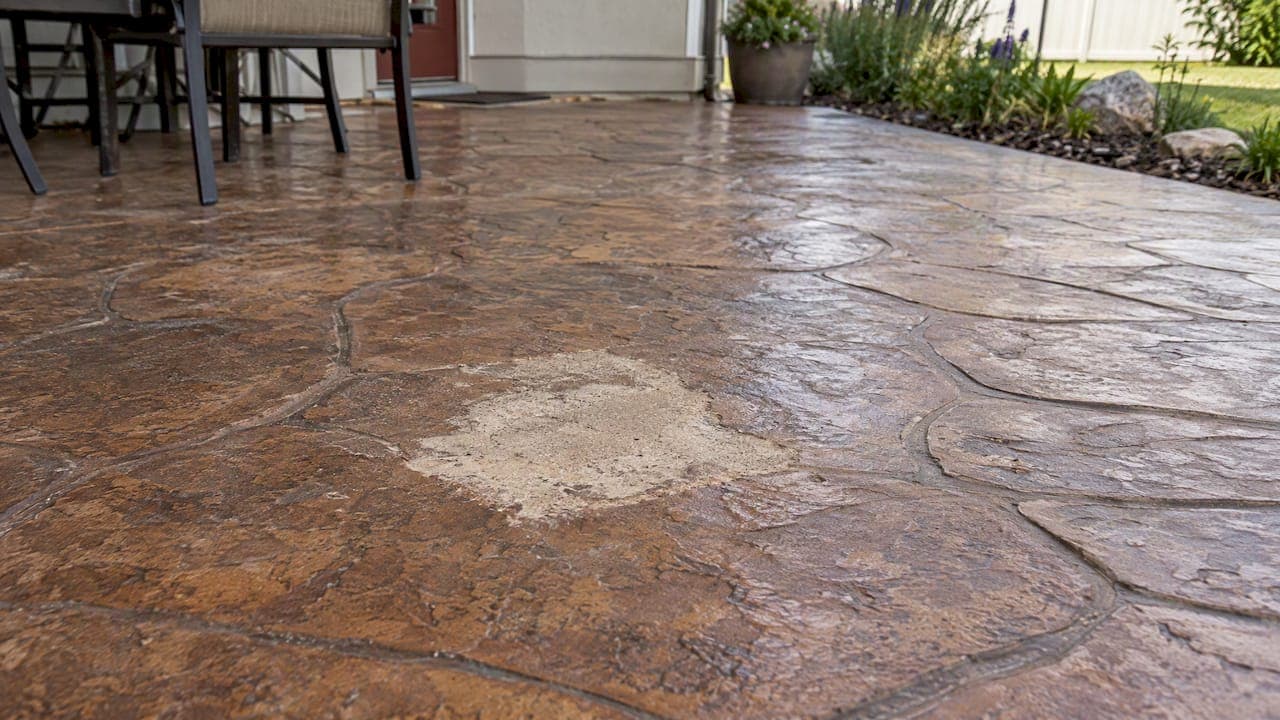
Sweep weekly, wash with mild soap twice a year, and follow residential guidance to reseal every 2 to 3 years, sooner in harsh climates, and your stamped concrete will keep its color and resist wear. The sealer is a sacrificial skin that protects the finish, so renew it before it wears through. Skip acid, vinegar and bleach. For complex jobs, our crew at A to Z Construction is a local call away.
TL;DR:
- Check the sealer each spring by sprinkling water; if it soaks in rather than beads, or the finish looks dull or patchy, plan resealing.
- Test a power washer on a hidden spot, keep pressure low, and move the wand constantly; high pressure can etch color and strip sealer.
- Match the new sealer to the old chemistry or strip the coating; after the slab dries for 24 to 72 hours, test a small patch.
- Use sand instead of salt for winter traction, clear snow with a plastic edged shovel or rubber edged plow blade, and rinse tracked deicer off in spring.
- Have a contractor assess cracks wider than about 3/8 inch, shifting slabs, or spalling deeper than the slab’s top third, which needs deeper repair.
Table of Contents
- What does a stamped concrete maintenance schedule look like?
- How do you clean stamped concrete safely?
- How do you remove oil, rust and organic stains?
- When and how should you reseal stamped concrete?
- How do you protect stamped concrete in winter?
- When is damage a job for a contractor?
- What resealing mistakes do pros avoid?
- How does Utah's climate affect your stamped concrete?
- Why I tell homeowners to stay on top of maintenance
- How we can help with resealing and repairs
- FAQ
- Sources
What does a stamped concrete maintenance schedule look like?
Think of upkeep as a rhythm that runs from weekly chores to multi-year projects. Homeowner guides suggest sweeping weekly and washing with mild detergent twice a year, and that cadence works well for most patios and driveways.
- Weekly: Sweep or blow off the surface. Grit acts like sandpaper under foot and tires, and it wears down the sealer first.
- Spring and fall: Wash with mild soap and warm water, and check for stains while the surface is wet.
- Once a year: Walk the surface and look for cracks, dull patches and worn spots. Sprinkle water on it. If it soaks in instead of beading, the sealer is thinning.
- Reseal season: Pick a dry, mild stretch, typically late spring or early fall, so the sealer cures without rain or frost.
If your slab sees heavy sun or vehicle traffic, shorten every interval a little.
How do you clean stamped concrete safely?
Cleaning is where most homeowners do the most accidental harm. The goal is to lift dirt without stripping the sealer or etching the pigment. You need a broom, a medium-bristle brush, a garden hose, a pump sprayer and rubber gloves.
- Sweep the whole surface to remove loose grit and leaves.
- Wet the concrete with the hose so the cleaner stays on the surface.
- Mix a few squirts of mild dish soap into a bucket of warm water and apply it with the pump sprayer.
- Let it sit briefly, then scrub the textured areas with the medium-bristle brush.
- Rinse thoroughly, working from the highest point to the lowest so soap does not dry on the surface.
- Let the slab dry fully, usually 24 to 72 hours depending on weather and sealer, before any resealing.
Pro Tip: Test any power washer on a hidden corner first and keep the pressure low; high settings can etch color and tear up the sealer, and the Angi guide also cautions against harsh chemicals or high-power washing without care.
Low-pressure washing suits a periodic deep clean, and the Highlands maintenance manual lists periodic power washing alongside routine spot removal. Keep the wand moving and a safe distance from the surface. Vinegar and muriatic acid can etch the surface and destroy the color, so leave them in the garage.
How do you remove oil, rust and organic stains?
Act fast, because fresh stains lift far more easily than set ones. Work gently so you do not damage the sealer or pigment.
- Oil and grease: Cover the spot with kitty litter or another absorbent and let it draw out the oil. Sweep it up, scrub with a degreaser or laundry detergent and warm water, rinse, and repeat if needed.
- Rust: Use a rust remover made for concrete, and test it on an inconspicuous patch first. Avoid muriatic acid and vinegar, which can etch the surface and lift color.
- Algae, mold and leaf stains: Scrub with a soft brush and mild detergent, then find the moisture source, such as a clogged gutter or a sprinkler spraying the slab, so it does not return. Our patio drainage guide covers common pooling fixes.
- Stubborn stains: Photograph them and note what you tried. If a stain survives two rounds, stripping and resealing, or a pro visit, is the next move.
When and how should you reseal stamped concrete?
Your slab tells you when it is time. Look for water soaking in instead of beading, a dull or patchy finish, stains that are harder to remove than they used to be, and visible wear on high-traffic spots. Many residential guides recommend resealing every 2 to 3 years. A municipal maintenance manual suggests roughly every two years for high-exposure surfaces.
Sealers come in two broad families. Acrylic film-formers enrich color and are friendlier to DIY, but glossy finishes can get slick when wet. Penetrating sealers last longer and leave a low sheen. Our sealer type guide walks through the choice.
Compatibility matters most. Match the previous chemistry or fully remove the old coating, because solvent-based sealer over water-based often fails. Test a small patch before committing.
- Remove dirt, oil and loose sealer, then clean as described above.
- Strip failing coatings if needed. Efficient removal generally calls for a stronger washer than routine cleaning.
- Let the slab dry completely, typically 24 to 72 hours.
- Spray the sealer and back-roll it into the texture.
- Apply thin, even coats and let each cure as directed.
Why timing matters: the sealer is a sacrificial skin, and once the color or texture is worn through, resealing alone will not restore the original look.
How do you protect stamped concrete in winter?
Freeze-thaw cycles are the biggest seasonal threat. Water slips into pores, freezes, expands and pops off the surface. A sound sealer keeps water out, and ASCC guidance warns that salt and harsh deicing chemicals speed scaling and spalling.
- Use sand for traction instead of rock salt, especially on newer installations, as the Highlands manual advises.
- Shovel with a plastic-edged shovel or a rubber-edged plow blade. Metal scraping gouges the surface.
- Check your sealer in fall, before the first hard freeze.
- If deicers did touch the slab, rinse it in spring and inspect for flaking.
When is damage a job for a contractor?
Hairline cracks are common and usually cosmetic. Cracks wider than about 3/8 inch deserve a professional look, as do spalling and scaling, which often point to deeper problems. Partial-depth repairs work for shallow spalls, but damage deeper than the top third of the slab needs deeper remediation. Our spalling primer shows how to check for hollow spots before patching.
- Wide or growing cracks, or cracks that shift one side of the slab higher than the other.
- Flaking, scaling or pitting across a large area.
- Problems that keep returning at the same joint. Our control joint guide explains why joints matter.
- Any time you are unsure: photograph the damage and get a licensed estimate.
Small gravel-edge repairs are a separate matter; for a simple example of weighing DIY against a pro, see this driveway entrance repair article.
What resealing mistakes do pros avoid?
The most common error is too much sealer. Heavy coats lead to buildup, peeling and a cloudy finish known as blushing, a risk the ASCC brief highlights. Thin coats that cure properly outperform one thick pass every time.
The second mistake is mixing chemistries. When the old coating is unknown, a test patch tells you whether the new sealer bonds or clouds. Sometimes full removal is the only fix.
The third is following the calendar instead of the surface. Reseal when water stops beading, not because a date arrived. For repairs beyond a patch, call a licensed contractor.
Pro Tip: Run the water test every spring. A quick check with a cup of water tells you more than any schedule.

How does Utah's climate affect your stamped concrete?
Utah is hard on exterior concrete, and the sealer carries most of the load. Intense high-elevation sun breaks down sealer from above, so south-facing patios and driveways often dull before shaded ones. Cold winters bring repeated freeze-thaw cycles, and the FHWA technical brief ties freeze-thaw damage and deicer scaling to moisture ingress, which is why a sealer barrier and good drainage help so much.

Winter road treatments tracked onto driveways add salt exposure, so wipe or rinse entryway slabs in spring. Dry summers make stains and dust easy to spot, but they are good for resealing, since slabs dry fast and cure well. Irrigation matters too: overspray from sprinklers leaves mineral deposits and feeds algae in shady corners, so adjust heads away from the slab.
Sun, cold and moisture all point to the same habit: inspect in spring and fall, wash gently, and renew the sealer when it stops repelling water. If your property sits at higher elevation with harder winters, inspect the surface more often and reseal when water stops repelling. Before the first freeze, confirm that downspouts and grading carry water away from the slab, because standing water is what freeze-thaw damage feeds on.
Why I tell homeowners to stay on top of maintenance
Small habits can help determine whether a stamped slab keeps looking good or needs expensive repair. A weekly sweep, a gentle wash and a timely reseal cost far less than stripping a failed coating or patching spalled concrete. Keep the sealer healthy and your curb appeal follows. For complex jobs, bring in a licensed pro rather than guessing.
— Jake
How we can help with resealing and repairs

If you would rather hand off the heavy lifting, we handle it from the first estimate to the finished surface, with one crew and one point of contact. Our concrete services cover decorative concrete, and for stamped surfaces we can help with:
- Sealing and resealing of decorative concrete
- Stripping failed coatings and re-coating
- Partial-depth repairs for spalls and surface damage
- Surface prep, including cleaning and drying
Hiring us makes sense when the old sealer is unknown, the slab is large, or damage goes beyond a patch. You can hand off the work to us. Request an estimate through our stamped driveway page and we will take a look.
FAQ
How often should you reseal stamped concrete?
Many residential guides recommend resealing stamped concrete every 2 to 3 years, depending on sun, traffic and weather. Reseal when water stops beading, not just by date.
Is stamped concrete high maintenance?
Not really. It needs weekly sweeping, a gentle wash twice a year and a periodic reseal. Skipping the sealer is what makes upkeep expensive.
Can you pressure wash stamped concrete?
Yes, at low pressure and after a test spot. High pressure can etch the color and strip the sealer. Keep the wand moving and at a safe distance.
What cleaners should you avoid on stamped concrete?
Avoid acid, vinegar, bleach and harsh degreasers, which can etch the surface and fade the color. Mild dish soap and warm water handle routine cleaning.
Can you reseal over old sealer?
Sometimes, if the new sealer matches the old chemistry and the surface is clean and dry. Otherwise strip the old coating first, since mismatched sealers often fail.
Sources
- Sealing Stamped Concrete: How to Keep It Looking Great for Years - Concrete Network
- SEALING STAMPLED CONCRETE
- Highlands Stamped Concrete Maintenance Manual (first submittal) 4-16
- 7 Stamped Concrete Maintenance Tips | Angi