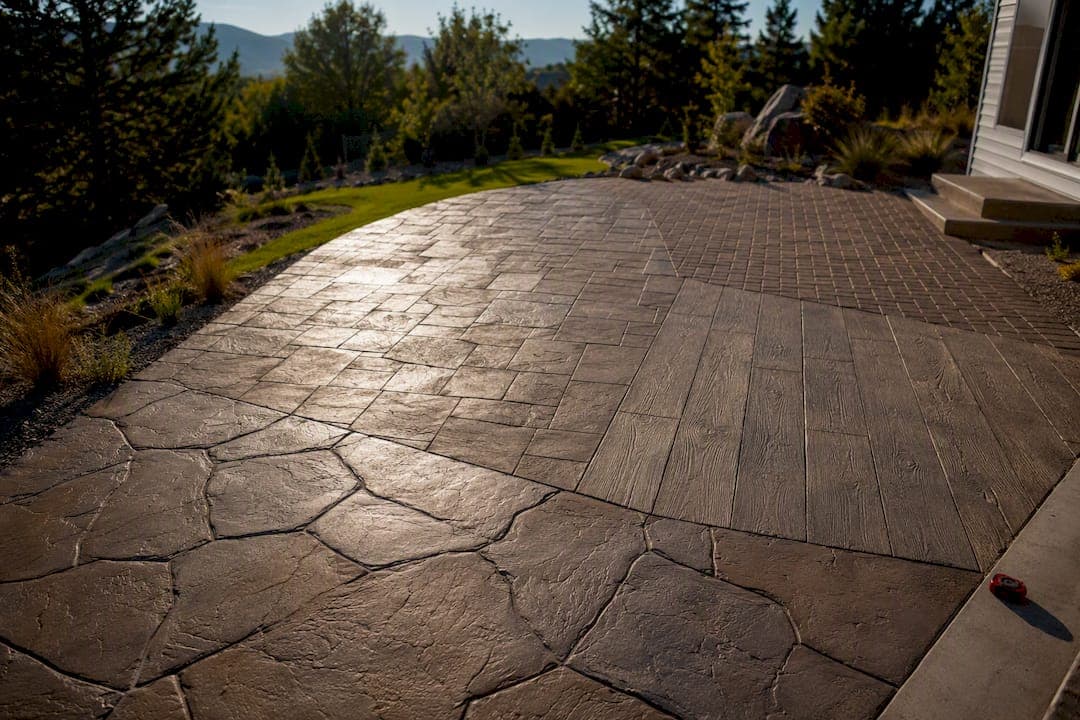
The fastest way to sort through stamped concrete patterns is by family: stone, slate, brick, wood, and seamless textures. From there, the right pick comes down to scale, how the space is used, and the finish you choose. Supplier catalogs often list 70 to 130 or more patterns, so narrowing to a family first saves hours of scrolling through look-alike options.
TL;DR:
- Larger patterns like slate or seamless textures are better suited for big surfaces, as small detailed stamps can appear busy or noisy at scale.
- For driveways and pool decks, textured stone or slate patterns with deeper traction tend to last longer and require resealing every two to three years.
- Coordinating pattern size with the actual space and matching pattern seams with natural break points helps achieve a balanced and professional appearance.
- Color depth relies on a combination of integral colors and release agents, which create shadowing and the illusion of mortar joints for realism.
- Maintaining stamped concrete involves regular cleaning, resealing on schedule, and adding slip-resistant additives to prolong pattern life and ensure safety.
Table of Contents
- Stamped Concrete Patterns by Family: Stone, Slate, Brick, Wood, and Texture
- How to Choose the Right Stamped Concrete Pattern for Your Space
- Color, Antiquing, and Sealer Choices That Make Patterns Look Real
- Borders, Bands, and Focal Panels That Break Up the Pattern
- Maintenance, Traction, and How Long Stamped Patterns Last
- What A-to-zconstruction Checks Before Stamping a Single Square Foot
- When Stamped Concrete Beats Pavers or Natural Stone
- Get a Free Estimate for Your Stamped Concrete Project
- Pattern Guides Worth Bookmarking
- Sources
- FAQ
Stamped Concrete Patterns by Family: Stone, Slate, Brick, Wood, and Texture
Most homeowners land on one of five pattern families, and each one behaves differently depending on where you put it.
Stone patterns mimic irregular flagstone or fieldstone, with organic, non-repeating shapes. Random stone works well on patios and pool surrounds where you want a natural, unstructured look. Because the stone shapes vary, seams are less noticeable on curved or irregularly shaped slabs.
Slate patterns, sometimes called ashlar cut slate, use rectangular or fractured shapes arranged in a tighter grid. This is one of the most requested looks in the industry, largely because it reads as upscale without the cost of real quarried slate. It suits larger patios and entryways where a clean, structured texture fits a more formal home.
Brick and cobble patterns replicate running-bond brick or old-world cobblestone, including the popular London cobblestone layout. These work best on walkways, driveway aprons, and smaller accent areas, since the repeating unit size is small enough to stay proportional even in tight spaces.
Wood plank patterns stamp in linear board textures, complete with grain lines, and have become a favorite for pool decks where homeowners want a boardwalk look without the rot, splintering, or staining that comes with real lumber.
Seamless textures, sometimes called skins, create a uniform texture (slate, stone, or leather-like finishes) without hard grout lines. They're a strong option for modern homes or for anyone who wants texture without a busy, segmented look.
- Stone: best for organic, curved patios and pool decks
- Slate: best for formal entries and larger rectangular patios
- Brick/cobble: best for walkways, driveway borders, and smaller footprints
- Wood plank: best for pool decks and covered porches
- Seamless texture: best for modern homes and minimalist landscaping
A quick way to visualize scale before committing: snap a photo of the stamp tool laid on your actual slab footprint, or ask your contractor for local project photos in a similar square footage. Patterns photograph very differently on a 12 by 12 foot patio than they do on a 40-foot driveway.
How to Choose the Right Stamped Concrete Pattern for Your Space
Pattern selection isn't just about which texture looks best in a brochure. It's about how that pattern behaves at your actual scale, on your actual house.
Small, highly detailed stamps, like tight cobblestone, can start to look busy or "noisy" once you spread them across a 600 square foot driveway. Larger-format patterns, like broad ashlar slate, read cleaner from a distance and tend to age better visually on big surfaces. Design guidance from concrete contractors consistently points to matching stamp scale to the size of the space, not just personal preference.
Coordination with your home's existing materials matters too. A brick-front colonial generally pairs better with brick or slate patterns than with a rustic wood plank look. Function should drive the decision as much as style: pool decks need traction-friendly textures, while driveways need a pattern and sealer combination that can handle vehicle abrasion and de-icing salt without flaking.
Budget follows complexity. A single-pattern slab with a plain edge costs less than a design with a contrasting border, a stamped band, and a color-matched release, since each of those steps adds labor time.
Before you sign a contract, ask your contractor:
- Which pattern scale do you recommend for this exact square footage?
- What base color and release color combination have you used successfully before?
- What sealer do you recommend for this pattern and application (patio, pool deck, driveway)?
- How will control joints be placed relative to the pattern lines?
- What's your plan for slope and drainage before stamping begins?
- How soon after pouring will the surface be ready for foot or vehicle traffic?
Pro Tip: Ask to see a sample board stamped and colored in your actual chosen combination, not just a catalog photo. Lighting, local aggregate, and your specific concrete mix can all shift the final color slightly from what's pictured.
Color, Antiquing, and Sealer Choices That Make Patterns Look Real
Depth is what separates a convincing stamped stone patio from one that looks like a flat gray parking lot with grooves in it. That depth comes from a two-color approach: a base color plus a release or antiquing color layered on top.
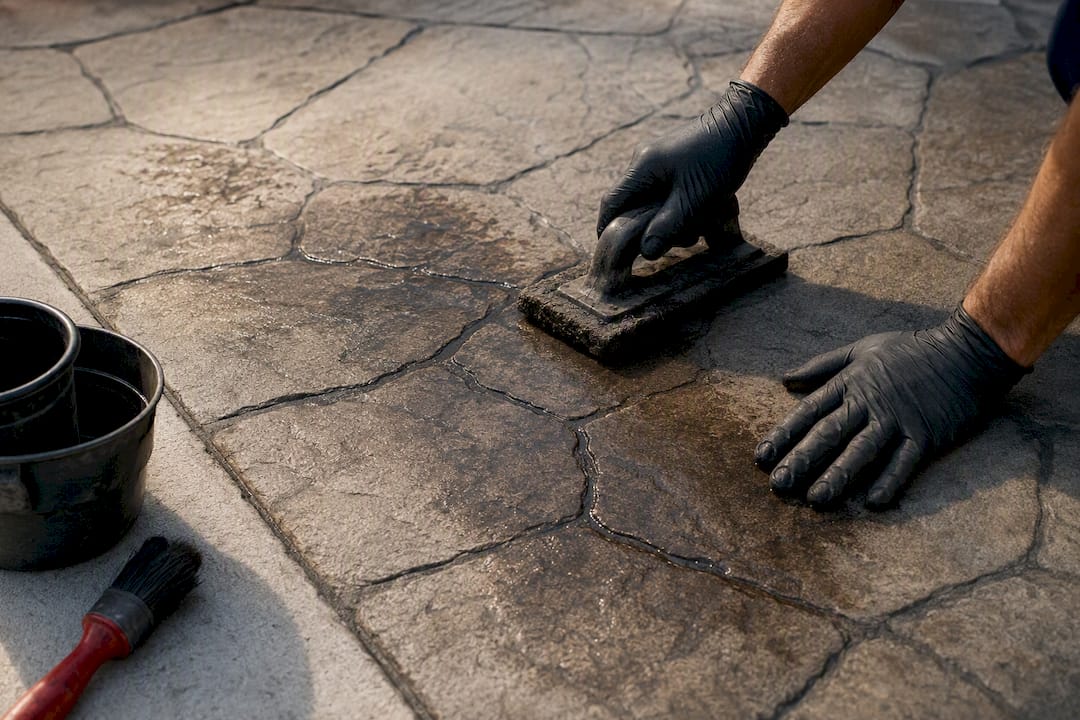
Base color comes from either integral color mixed directly into the concrete, or a color hardener broadcast onto the surface before stamping. Integral color tends to hold up more consistently in harsh climates, while color hardener creates a denser, more abrasion-resistant surface, according to the SikaStamp pattern guide.
The release agent, dusted or sprayed on before the stamps go down, does two jobs: it keeps the stamping tools from sticking, and it settles into the texture lines to create shadowing and depth. This is what makes a stamped stone pattern look like it has actual mortar joints instead of just grooves.
- Integral color: consistent tone throughout the slab, good for high UV or freeze-thaw regions
- Color hardener: denser surface, richer color options, more labor-intensive to apply
- Gloss sealer: deepens color and shine, but increases slip risk without an additive
- Matte sealer: more subtle, often preferred for driveways and high-traffic areas
Sealer sheen has a bigger visual impact than most homeowners expect. Gloss sealers deepen the base and release colors dramatically, but on a pool deck, that same gloss can turn dangerous without a slip-resistant additive mixed into the topcoat. Most exterior stamped surfaces need resealing every two to three years, depending on sun exposure and foot traffic.
Borders, Bands, and Focal Panels That Break Up the Pattern
A slab stamped edge to edge in the same pattern can start to look flat, even when the pattern itself is a good one. Borders and contrasting bands fix that.
A simple soldier-course brick border around a stone field patio, or a scored band separating a driveway from its apron, adds visual structure and reads as a custom design decision rather than a default install. Contractor design guides recommend using focal panels, like a compass rose or contrasting insert, at natural gathering points such as a fire pit area or entryway, rather than scattering them randomly.
- Frame the main field with a contrasting border pattern or color
- Use a focal panel to mark entry points, fire pits, or seating areas
- Align pattern seams and control joints so they follow natural break lines, not cut through the middle of a stamp
- Transition gradually into planting beds or turf rather than stopping the pattern abruptly at a hard edge
Getting control joints to land in the grout lines of the pattern, instead of slicing across a stamped stone, is one of those details that separates an experienced crew from a rushed one.
Maintenance, Traction, and How Long Stamped Patterns Last
Stamped concrete holds up well, but the pattern and sealer combination you choose directly affects how much upkeep it needs.
Sealed surfaces generally need resealing every two to three years, with earlier signs including color fading, water no longer beading on the surface, or a slightly chalky texture underfoot. Driveways see more wear than patios because tires and de-icing chemicals stress the sealer faster than foot traffic does.
- Rinse debris and dirt off regularly to prevent grit from scratching the sealer
- Reseal on schedule rather than waiting for visible wear
- Choose deeper-textured patterns like stone or slate for pool decks, since texture adds natural traction
- Add a slip-resistant additive to the sealer on any wet-use surface
Pro Tip: If you're resealing a driveway yourself, check the spring maintenance checklist for hardscape and concrete before you start. Sealing over trapped moisture or debris is one of the most common DIY mistakes.
What A-to-zconstruction Checks Before Stamping a Single Square Foot
Site conditions decide more about the final pattern than most homeowners realize. A-to-zconstruction runs drainage, slope, and substrate checks before recommending a pattern, since a slab that puddles will show it fastest in a textured stone or slate finish where shadows collect water.
Color and release coordination happens on-site with a crew that handles the entire job, from forming to stamping to sealing, rather than passing the slab between separate concrete and finishing subcontractors. That in-house coordination matters most on tight schedules, since concrete has a narrow working window between pouring and stamping, and an even narrower one before curing affects color uptake. For driveway-specific timelines and prep steps, the homeowner's guide to concrete driveway installation walks through what to expect before a crew ever shows up.
When Stamped Concrete Beats Pavers or Natural Stone
Stamped concrete wins when you want one continuous surface with tight color control, since it skips the joints and shifting that come with pavers or natural stone. For large patios or driveways, hire a professional. Save DIY attempts for small accent areas or overlays, where a mistake costs a weekend, not a driveway.
— Jake
Get a Free Estimate for Your Stamped Concrete Project
A-to-zconstruction handles stamped concrete design, color selection, stamping, and sealing under one crew, so you're not coordinating separately with a concrete pourer, a colorist, and a sealing contractor on three different schedules. That single point of contact means fewer scheduling gaps and one team accountable for how the base color, release, and final sealer all come together.
The company's concrete services cover everything from driveways to decorative flatwork, and its stamped and standard driveway page breaks down what a typical project looks like from estimate to finished slab. Concrete driveways and approaches run $4,000 to $15,000 depending on size and pattern complexity. If you're closer to planning a patio project, the hardscape team can walk you through stamped concrete versus paver options side by side.
Ready to see numbers for your specific space? Request a free concrete estimate and ask to see local project photos in the pattern family you're considering.
Pattern Guides Worth Bookmarking
Sources
- SikaStamp® PATTERN SELECTION GUIDE
- Stamped Concrete Patterns and Designs
- How to Design Custom Stamped Concrete in Bakersfield - National Concrete
FAQ
What Is the Most Popular Stamped Concrete Pattern?
Ashlar cut slate and random stone patterns consistently rank among the most requested styles because they suit a wide range of home exteriors and yard sizes. London cobblestone is also a common favorite for walkways and smaller accent areas.
Is Stamped Concrete Outdated?
No. The pattern families themselves (stone, slate, brick, wood, seamless texture) have stayed popular for decades because they mimic materials that never go out of style. What changes is the finish trend, with matte sealers and seamless textures currently favored over the high-gloss look common in older installations.
How Much Does Stamped Concrete Cost?
Cost depends on pattern complexity, color layering, and border details, since each added step increases labor time. A-to-zconstruction's concrete driveway projects typically run $4,000 to $15,000, and patio-focused hardscape work falls in a separate pricing range based on square footage.
How Do I Choose a Pattern for a Small Patio?
Favor larger-format patterns like broad ashlar slate or seamless texture, since small repeating shapes like tight cobblestone can look cluttered on a compact footprint. Matching the pattern to your home's existing materials, brick, stone, or siding, also helps a small space feel intentional rather than mismatched.
How Long Does a Stamped Concrete Pattern Last?
The concrete itself can last decades, but the sealed finish that keeps the pattern looking sharp typically needs resealing every two to three years. Driveways wear faster than patios because of vehicle traffic and de-icing salt exposure.