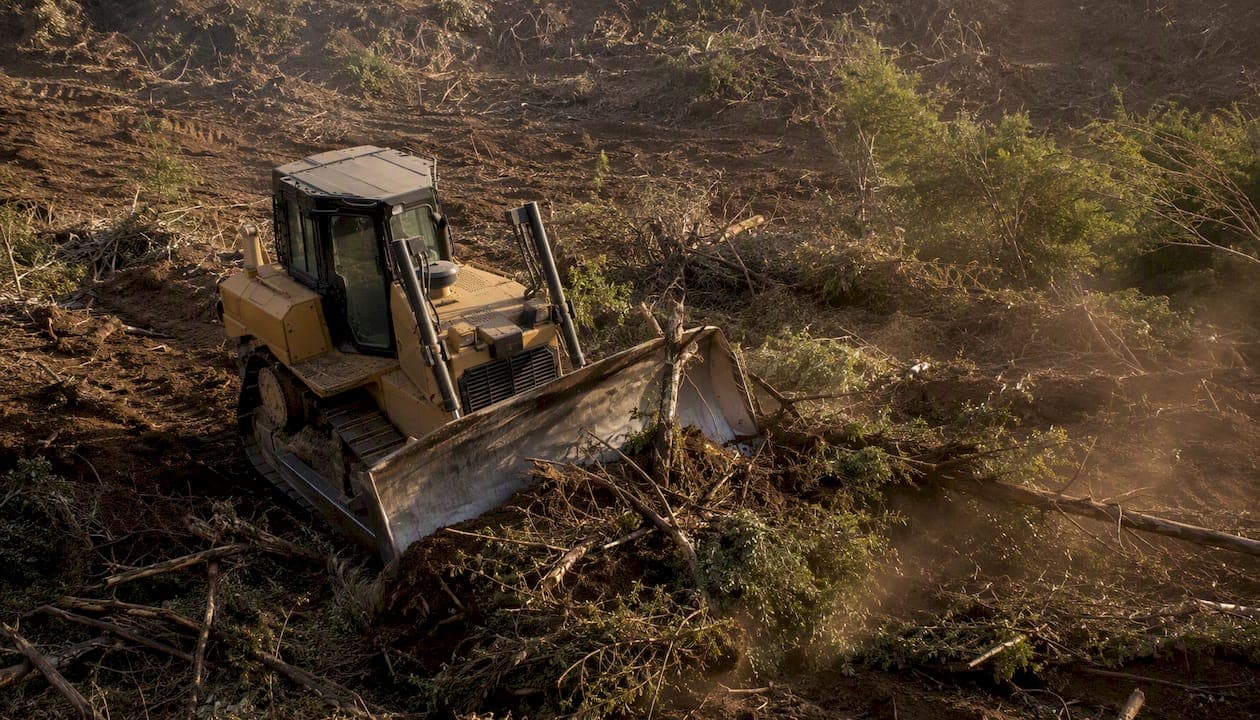
Land clearing costs run roughly $1,000 to $6,000 per acre, with light brush at the low end and heavy timber pushing well past the top. A quarter-acre suburban lot with scattered brush typically lands between $1,000 and $3,000 total, while a full acre of mixed trees and undergrowth often runs $3,000 to $9,000 once you factor in disposal.
The national midrange for a moderately wooded acre sits close to $3,000, though vegetation density, terrain, and how you dispose of debris can swing that number in either direction by thousands of dollars.
Tree size, stump removal, slope, soil conditions, and accessibility all move the needle. So does your disposal method: mulching in place is cheap, hauling everything away is not. This guide walks through the real numbers, what drives them up or down, and how to build a budget that won't blow up mid-project.
Key Takeaways
Land clearing costs depend far more on vegetation density, disposal method, and site access than on acreage alone, and a written itemized quote is the only reliable way to confirm a fair price.
| Point | Details |
|---|---|
| Know your baseline range | Expect $1,000 to $6,000 per acre depending on vegetation density and terrain. |
| Small lots cost more per acre | Mobilization fees mean a 0.25-acre lot often runs $2,000 to $5,000 total. |
| Disposal method swings the price | Haul-off can add $1,000 to $4,000 per acre versus mulching in place. |
| Budget for permits and contingency | Add 10 to 20 percent contingency plus permit and erosion control fees. |
| Combine clearing with grading | A-to-zconstruction manages clearing and earthwork under one contract to cut coordination delays. |
Table of Contents
- Land Clearing Cost by Acreage and Site Condition
- What Raises or Lowers Your Land Clearing Price
- Clearing Methods, Equipment, and What They Cost
- Permits and Environmental Costs to Factor In
- How Long Land Clearing Takes
- Sample Budgets You Can Adapt
- Getting Accurate Quotes From Contractors
- Why Contractor Experience Changes the Numbers
- What Owners Get Wrong About Clearing Costs
- Ready to Clear and Prep Your Site the Right Way
- Where These Numbers Come From
- Sources
- FAQ
Land Clearing Cost by Acreage and Site Condition
Price per acre isn't fixed. It drops as the job gets bigger and rises sharply on tiny lots, mostly because mobilization and equipment setup cost the same whether you're clearing a quarter acre or five.
For light clearing (grass, small brush, few trees), expect $1,200 to $2,500 per acre. Medium density, meaning a mix of brush and mid-size trees, runs $2,000 to $4,500 per acre.
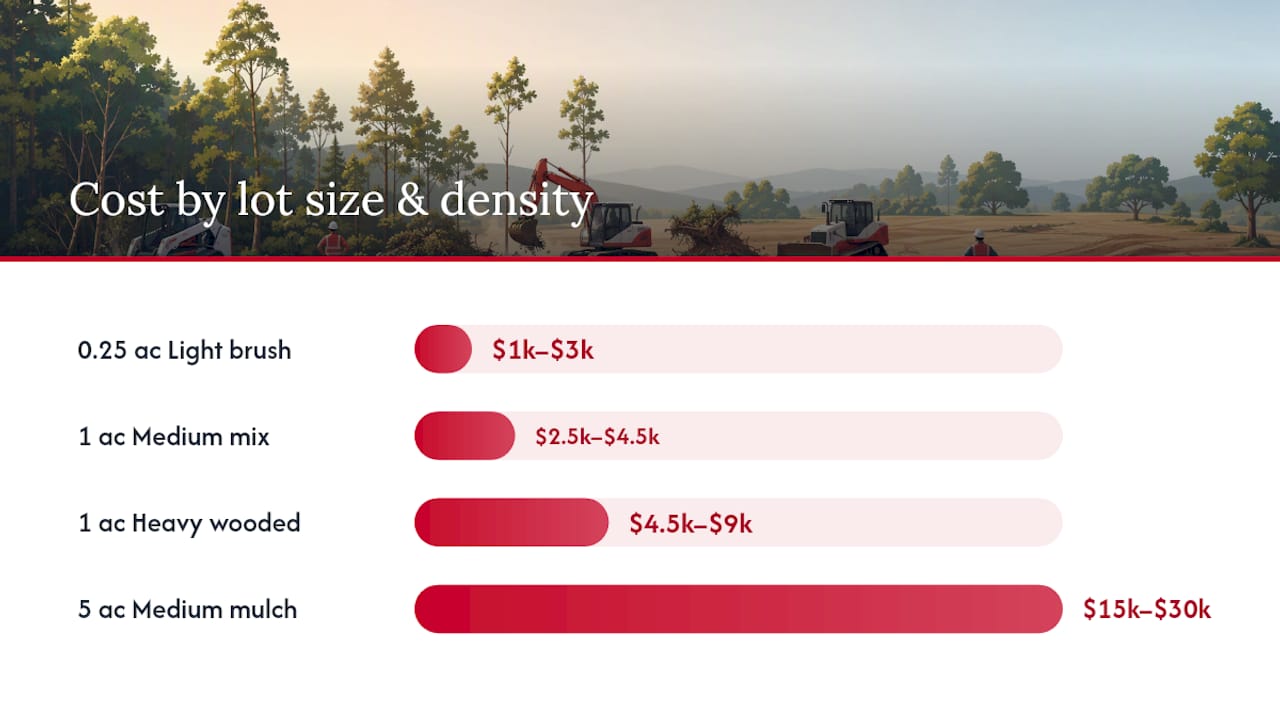
Small parcels often carry a higher effective rate because mobilization and minimum job charges dominate the bill when there's less acreage to spread them across. A 0.25-acre lot might cost a few thousand dollars total, with the effective per-acre cost higher due to mobilization and setup fees. Larger lots benefit from lower per-acre rates since mobilization costs spread over more acreage.
| Lot Size | Vegetation Density | Estimated Total Cost |
|---|---|---|
| 0.25 acre | Light brush | $1,000–$3,000 |
| 1 acre | Medium (mixed brush/trees) | $2,500–$4,500 |
| 1 acre | Heavy wooded | $4,500–$9,000 |
| 5 acres | Medium, mulch-in-place | $15,000 to $30,000 |
A quick sample calculation: if a contractor quotes $3,200 per acre for medium clearing on a 1-acre lot, that's your base. Add stump grinding at roughly $200 to $500 per stump for a handful of larger trees, and you're looking at a realistic total closer to $4,000 to $5,000 once the crew leaves the site clean.
What Raises or Lowers Your Land Clearing Price
Every bid you receive is really just a response to a handful of variables. Know them, and you can predict roughly where your project will land before a contractor ever walks the site.
- Vegetation type and tree size: Mature hardwoods take longer to fell and process than scrub pine or brush, and larger trunks mean more chainsaw time or heavier equipment.
- Stump removal: Leaving stumps in place is far cheaper than grinding or pulling them; stump work is often priced separately and can add hundreds of dollars per stump.
- Terrain and slope: Steep or uneven ground slows machinery and sometimes rules out certain equipment entirely, driving labor hours up.
- Soil and rock: Rocky or heavily compacted soil wears down equipment faster and can require specialized attachments.
- Access and staging: A lot with no road frontage or a tight driveway means smaller machines, more trips, or manual labor, all of which cost more.
- Disposal method: Hauling debris off-site can add $1,000 to $4,000 per acre depending on distance and tipping fees, while mulching in place skips that cost entirely.
- Permits and erosion control: Land-disturbance permits and silt fencing show up as separate line items in many bids.
- Region and season: Labor rates, dump fees, and demand shift the same job's price by 20 to 40 percent from one area to the next.
Pro Tip: If you have merchantable timber on your lot, some contractors may coordinate with local firewood dealers or sawmills to haul logs, which can reduce costs somewhat.
Clearing Methods, Equipment, and What They Cost
The method a contractor chooses shapes both your timeline and your final bill more than almost anything else. Matching the right equipment to your site avoids paying for capability you don't need.
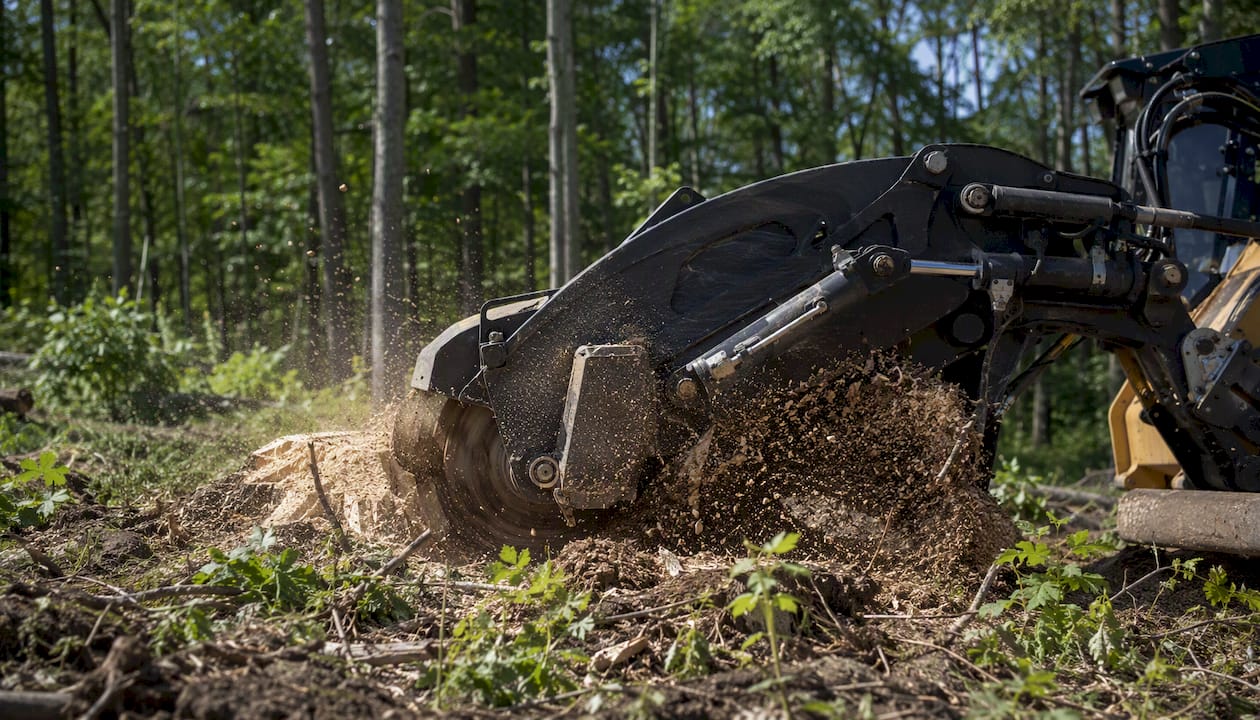
- Forestry mulching: A single machine grinds brush and small trees into mulch that stays on-site. This is usually the cheapest route because it eliminates haul-off and tipping fees, and it doubles as erosion control on sites with light to medium vegetation.
- Excavator with skid steer and haul-off: Better suited for large trunks, extensive stump removal, and sites headed for construction, since it fully removes material rather than leaving it ground up in place. Expect higher costs from disposal fees and truck trips.
- Dozer or push clearing: Fast for flattening large areas but tends to disturb topsoil more than other methods, which can trigger additional erosion control requirements.
- Selective thinning or manual chainsaw work: Slower and more labor-intensive, but it's the only practical option when you want to preserve specific trees or work in tight, obstacle-heavy spaces.
- Controlled burning: Cheap where legal and permitted, but heavily restricted by season, region, and local fire codes, and rarely an option near structures.
If your scope includes grading after clearing, that's almost always a separate line item, and combining the two under one contractor, rather than hiring separately for each phase, tends to shave time off the schedule and reduce coordination headaches.
Permits and Environmental Costs to Factor In
Permit fees rarely make headlines in a cost estimate, but they show up on nearly every bid once a project crosses a certain size or disturbs a certain amount of ground.
Common items include land-disturbance or grading permits, erosion control measures like silt fencing and stabilized construction entrances, burn permits where open burning is allowed, and, in some jurisdictions, protective reviews for specific tree species or wetland areas.
- Land-disturbance and grading permits, often required above a set acreage threshold
- Erosion and sediment control installation (silt fence, stabilized entrances)
- Burn permits, seasonal and jurisdiction-dependent
- Environmental or tree-protection reviews in certain counties or near water sources
Permitting adds both direct fees and indirect costs. Inspection delays can push your schedule back by days or weeks, and if a site requires an environmental study or mitigation plan, that's an added expense most homeowners don't budget for upfront.
Pro Tip: Call your county planning or building department before you get quotes, not after. Requirements vary enough by jurisdiction that a contractor's standard bid may not include a permit your specific lot actually needs.
How Long Land Clearing Takes
Timelines depend heavily on density and acreage, but a few benchmarks hold up across most projects:
- A quarter acre of light brush: Often finished in a few hours with the right equipment.
- One acre of moderate brush: Commonly cleared in a single day using a mulcher or excavator crew.
- Five acres, mixed density: Typically two to four days, depending on stump work and haul-off requirements.
- Heavily wooded acreage: Can drop below one acre per day once large trees, stump grinding, and chipping enter the equation.
Add mobilization time and permit waiting periods as separate schedule items, since they often add more delay than the actual clearing work. Wet seasons slow machinery and can make some sites inaccessible entirely, while dry conditions in fire-prone regions may restrict burning as a disposal option. For a detailed look at scheduling logic across a full build, this construction project timeline guide breaks down phase sequencing in more depth.
Sample Budgets You Can Adapt
Real numbers help more than abstract ranges, so here are three scenarios built from typical line items.
Scenario 1: Quarter-acre suburban lot, light brush. Clearing runs $800 to $1,800, with minimal stump work adding another $200 to $400. Add a 10 percent contingency and you're at roughly $1,100 to $2,400 total.
Scenario 2: One-acre lot, mixed brush and trees. Base clearing costs $2,500 to $4,000. Stump grinding for five to eight stumps adds $1,000 to $2,000. Haul-off, if needed instead of mulching, tacks on another $500 to $1,500. With a 15 percent contingency, plan for $4,600 to $8,700.
Scenario 3: Five-acre heavily wooded parcel. Clearing alone runs $15,000 to $30,000. Stump removal across a dense lot can add $3,000 to $6,000. Grading afterward, if part of the scope, adds $2,000 to $5,000 more. Permits and erosion control typically run $500 to $1,500. Total with a 15 to 20 percent contingency: roughly $24,000 to $50,000.
$1,100–$2,400 | | 1 acre, mixed brush/trees | $2,500–$4,000 | $1,000 to $2,000 | $500 to $1,500 | $4,600–$8,700 | | 5 acres, heavy wooded | $15,000–$30,000 | $3,000 to $6,000 | ~$3,000–$6,000 | $24,000–$50,000 |
Pro Tip: Always build in a 10 to 20 percent contingency, especially on wooded lots. Buried debris, unexpected rock, or a stump field larger than the initial walkthrough revealed are the most common reasons budgets run over.
Getting Accurate Quotes From Contractors
A vague estimate is how homeowners end up with surprise invoices. Here's how to make sure the bids you collect are actually comparable.
- Request a written scope that names the clearing method, disposal plan, stump treatment, and whether grading is included.
- Ask which pricing structure applies. Per-acre pricing works well for uniform, open sites; per-hour billing protects both parties when the site has unknowns like buried debris or unclear boundaries; lump-sum pricing suits well-defined commercial scopes, according to contractor pricing guidance.
- Confirm insurance and licensing before signing anything.
- Get the payment schedule in writing, including deposit amount, progress payment triggers, and final payment terms.
- Collect at least three quotes. Online calculators are a useful starting baseline, but they can't replace an actual site walk, so use them to sanity-check bids rather than as a final number.
Watch for these warning signs before you sign:
- A single lump-sum price with no breakdown for disposal, stumps, or grading
- No mention of insurance or licensing
- A deposit request above 30 to 50 percent of the total job cost
- Verbal-only agreements with nothing in writing
For a look at how vague scopes cause budget overruns on related projects, this rundown of site prep mistakes covers several avoidable examples.
Why Contractor Experience Changes the Numbers
A-to-zconstruction has completed over 500 projects across Utah, and lot clearing paired with grading comes up often enough to spot the same budget surprises repeatedly. On one recent site prep job, buried construction debris under what looked like simple pasture added a full day to the schedule, the kind of thing a walkthrough alone won't catch. On another, a client saved real money by leaving rootballs in place for a later phase instead of paying to grind them immediately.
- Licensed general contractor with in-house crews across earthwork and grading
- Integrated landscape earthwork services that combine clearing and site prep under one contract
- Over 500 completed projects, verifiable through the company's service pages
Grinding stumps immediately only makes sense if you're building on that exact footprint soon. If your timeline is flexible, leaving rootballs and revisiting them later often saves money without costing you anything.
What Owners Get Wrong About Clearing Costs
Homeowners tend to treat "per acre" as the whole story, but it rarely is. Stump removal alone can double a job's cost if the lot has more mature trees than expected, and permit timelines get overlooked until they've already delayed a project by weeks.
The other misconception is around payment. Reasonable contracts ask for a modest deposit, progress payments tied to milestones, and a final payment on completion, not a large sum upfront before equipment ever arrives. Plan your schedule around permit approval times, not just the clearing work itself, and you'll avoid the two mistakes that trip up most first-time owners.
Ready to Clear and Prep Your Site the Right Way
A-to-zconstruction handles clearing, grading, and site prep as one coordinated job instead of three separate contracts, which means fewer scheduling gaps and no finger-pointing between crews when something needs adjusting mid-project.
Our in-house earthwork team manages everything from initial clearing through final grading, so debris removal, stump work, and soil prep happen under a single point of contact rather than juggling multiple subcontractors' schedules. If your project involves construction debris beyond vegetation, our construction waste removal service handles that too. And if clearing is step one toward a bigger build, our structural remodeling and hardscape teams can carry the project forward without a handoff delay.
Request a site visit and get a written, itemized quote for your lot. Most homeowners hear back within a few business days with a scope that spells out method, disposal, and timeline before any equipment shows up.
Where These Numbers Come From
Cost ranges in this guide draw from The Land Geek's 2026 cost breakdown, HomeServiceDirect's contractor pricing methodology, OWNR OPS's regional pricing data, a land clearing cost calculator, and Clarke's Tree Express's residential lot examples. For broader budgeting frameworks, see this prime cost versus provisional sum guide and practical clearing methods from Ivan's Landscaping.
Sources
- Cost To Clear Land: Complete Buyer’s Guide (2026) - The Land Geek
- How to Price Land Clearing Jobs: Per-Acre Guide | HSD
- Land Clearing Cost Per Acre Calculator - ToolcR
- Land Clearing Cost Per Acre in 2026: Complete Price Guide | OWNR OPS
- What’s the Cost to Clear a Lot for Construction - Clarke's Tree Express
FAQ
What is the cheapest way to clear land?
Forestry mulching is typically the most affordable method since it grinds vegetation in place and avoids haul-off and tipping fees entirely.
How much does it cost to remove a 100-year-old tree?
Individual large tree removal isn't broken out separately in most per-acre clearing bids, but mature trees drive up stump grinding costs significantly, often several hundred dollars per stump depending on trunk diameter and root spread.
How long does it take to clear one acre?
With professional equipment, one acre of moderate brush is often cleared in a single day, though heavily wooded acreage with extensive stump work can take longer.
Does A-to-zconstruction handle land clearing and grading together?
Yes, A-to-zconstruction's in-house earthwork team manages clearing and grading under one contract, which reduces mobilization costs and scheduling delays compared to hiring separate contractors.
What should I ask for in a written land clearing quote?
Request a breakdown covering clearing method, disposal plan, stump treatment, grading, permit line items, and payment schedule, since a vague single-price quote often hides costs that surface later.