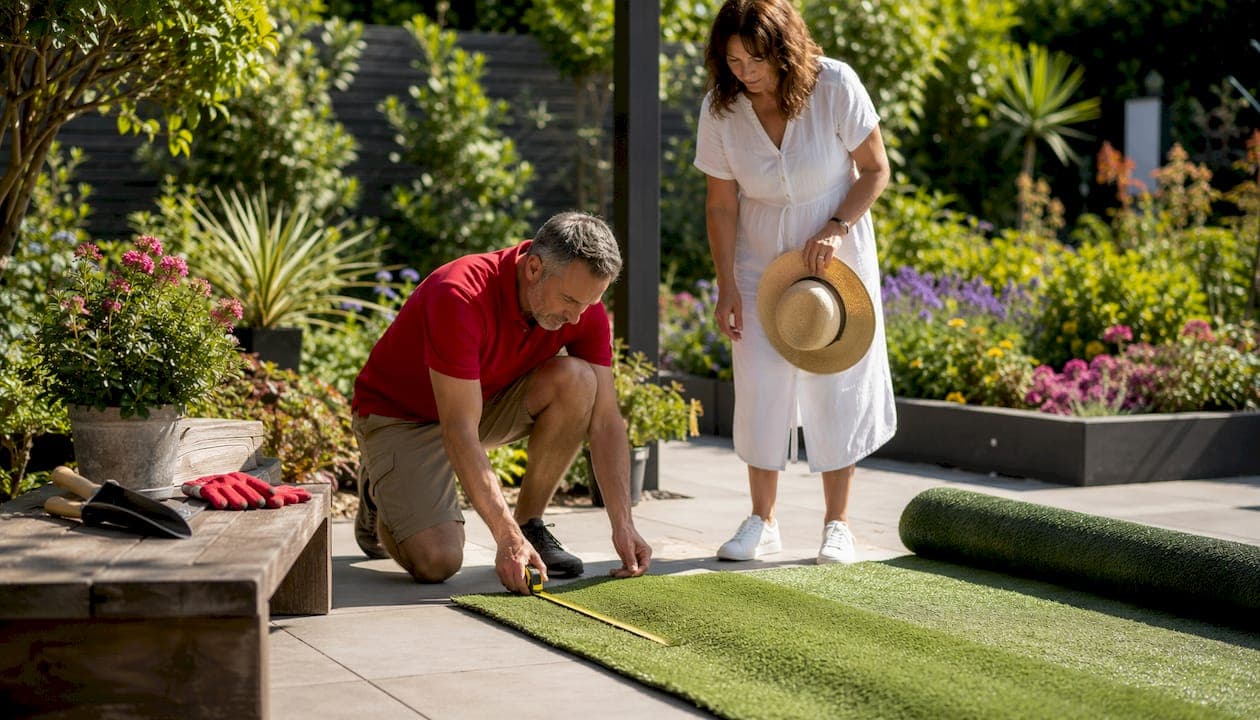
Professionally installed artificial turf for backyard cost runs $5.50 to $19.75 per square foot in 2026, all-in. That range covers turf material, base prep, infill, labor, and debris disposal. Here is what that looks like by yard size:
- 500 sq ft: $2,750–$7,875 (budget to premium)
- 1,000 sq ft: $5,200–$14,500, with a typical mid-grade project landing in the lower to mid five-figure range
- 2,000 sq ft: $9,000–$25,500
Larger projects cost less per square foot. Small projects under 500 sq ft often hit $14–$20 per square foot because mobilization and crew minimums get spread across fewer square feet. Once you cross 1,500 sq ft, per-foot costs drop noticeably as bulk turf pricing kicks in.
How much does artificial turf for a backyard cost by turf type?
The single biggest price variable is the turf product itself. Face weight (ounces per square yard), pile height, and fiber type all move the number.
Various turf grades exist, from budget nylon suited for utility areas with shorter lifespans, to entry and mid-grade polyethylene for light and standard residential use lasting over a decade, to pet-specific turf with antimicrobial features and tighter drainage, and premium or sports-grade products that serve luxury or athletic areas with longer durability, sometimes up to around 20 to 25 years.
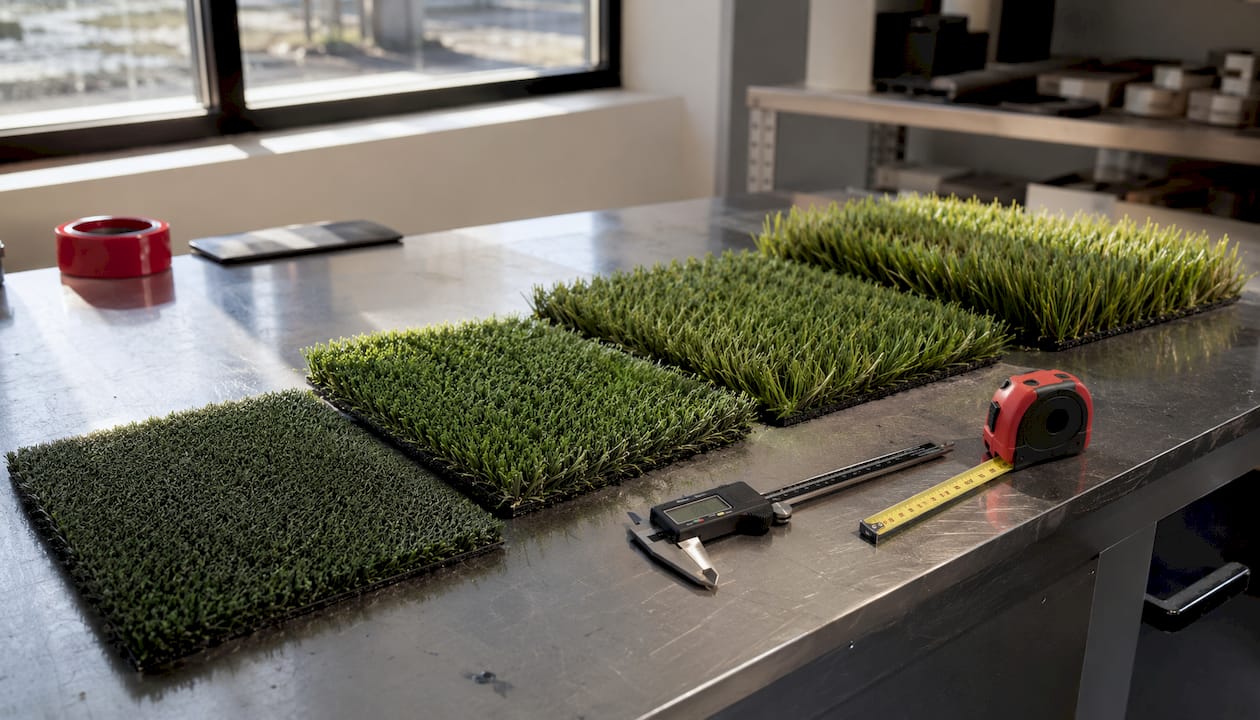
Higher face weight turf can last closer to 20 years, which often justifies the upfront premium over a 15-year horizon.
What do labor and installation actually cost?
Labor accounts for 25%–35% of total installation cost. Professionals handle base compaction, seam alignment, and drainage grading — work that directly determines how long the turf performs. A flat rectangular yard is the cheapest scenario. Complexity adds cost fast.
- Flat, easy-access yard: baseline, no premium
- Moderate slope (under 10%): adds $0.30–$0.60/sq ft
- Irregular shape or landscaping obstacles: adds $0.40–$0.80/sq ft
- Existing sod removal: adds $0.50–$1.00/sq ft
- Steep slope or terraced yard: adds $1.00–$2.00/sq ft
DIY installation cuts upfront cost but creates real risk. Base preparation, drainage grading, and seaming take years of practice to do correctly. Poor execution voids most manufacturer warranties and produces drainage failures that cost more to fix than the original labor savings.
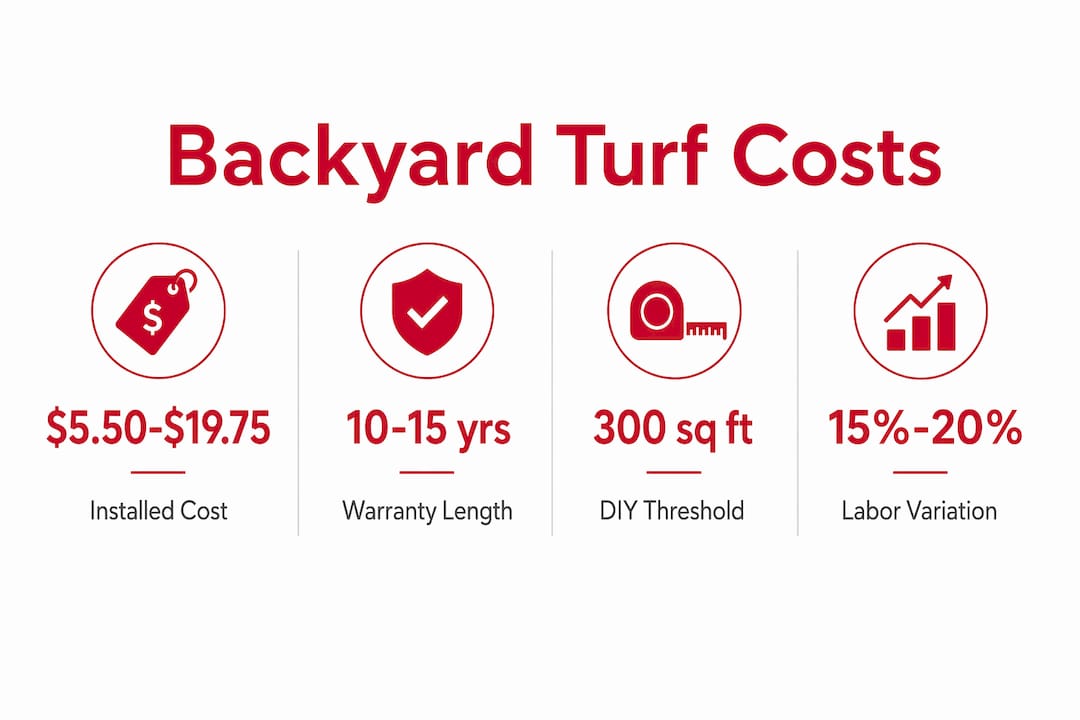
Pro Tip: If your yard is under 300 sq ft and perfectly flat, DIY is manageable. Above that, the base compaction alone typically requires plate compactor equipment most homeowners do not own.
How yard shape, slope, and site conditions affect your price
Curved or irregularly shaped yards add 15%–20% to labor cost because installers must cut and fit turf around contours rather than rolling straight lines. Slopes are steeper: expect a 50%–60% price increase for genuinely sloped terrain, since anchoring turf and grading the base both take significantly more time.
Soil type matters too. Expansive clay soils common in parts of Utah and the Southwest require deeper base preparation, adding $1.50–$2.50 per square foot compared to sandy soils. Tree roots requiring removal add $0.75–$1.50/sq ft. Heavy clay with drainage installation needed can push the labor multiplier to 1.5x the baseline rate.
What additional costs should you budget for?
Beyond turf and labor, several line items regularly expand the final bill.
- Infill: Silica sand runs about $0.40/sq ft; crumb rubber around $0.50/sq ft. Pet-friendly installations pair antimicrobial turf with zeolite deodorizing infill at roughly $0.70/sq ft, which controls odor far better than standard sand.
- Weed barrier: Standard component of any base package; typically bundled into base prep pricing.
- Landscape edging: Bender board runs about $2/linear foot; concrete curb around $5/linear foot. Perimeter length adds up quickly on larger yards.
- Drainage installation: Formal drainage systems cost $2,100–$7,000 depending on scope, per HomeAdvisor data.
- Old grass removal: Typically $0.88–$1.84/sq ft as a separate line item.
Grouping multiple small turf areas into one installation visit reduces fixed mobilization costs per square foot, a worthwhile move if you are doing a side yard and backyard simultaneously.
How does artificial turf compare to natural grass over time?
Natural grass costs $1,800–$3,200 per year in water, fertilizer, mowing, and seasonal repair for a typical residential lawn. Artificial turf eliminates nearly all of that. Most homeowners recover their installation investment in 6–10 years, and faster in high water-cost markets. After break-even, the savings compound. A 20-year turf lifespan in a drought-prone region can represent $15,000–$40,000 in avoided lawn care costs over the product's life.
How does your region affect the price?
Labor markets and climate drive meaningful regional variation. West Coast states like California and Oregon run $12–$22/sq ft installed, partly due to higher labor rates and partly because drought rebate programs (worth $1–$3/sq ft in some municipalities) offset a portion of the cost. The Southwest (Arizona, Nevada, New Mexico) runs $8–$16/sq ft with similar rebate availability. Texas is among the most competitive markets at $8–$15/sq ft. The Northeast (New York, New Jersey, Pennsylvania) matches the West Coast at $12–$22/sq ft, driven by labor costs and drainage requirements. The Midwest and Southeast generally fall in the $10–$18/sq ft range.
What does proper drainage and underlayment actually cost?
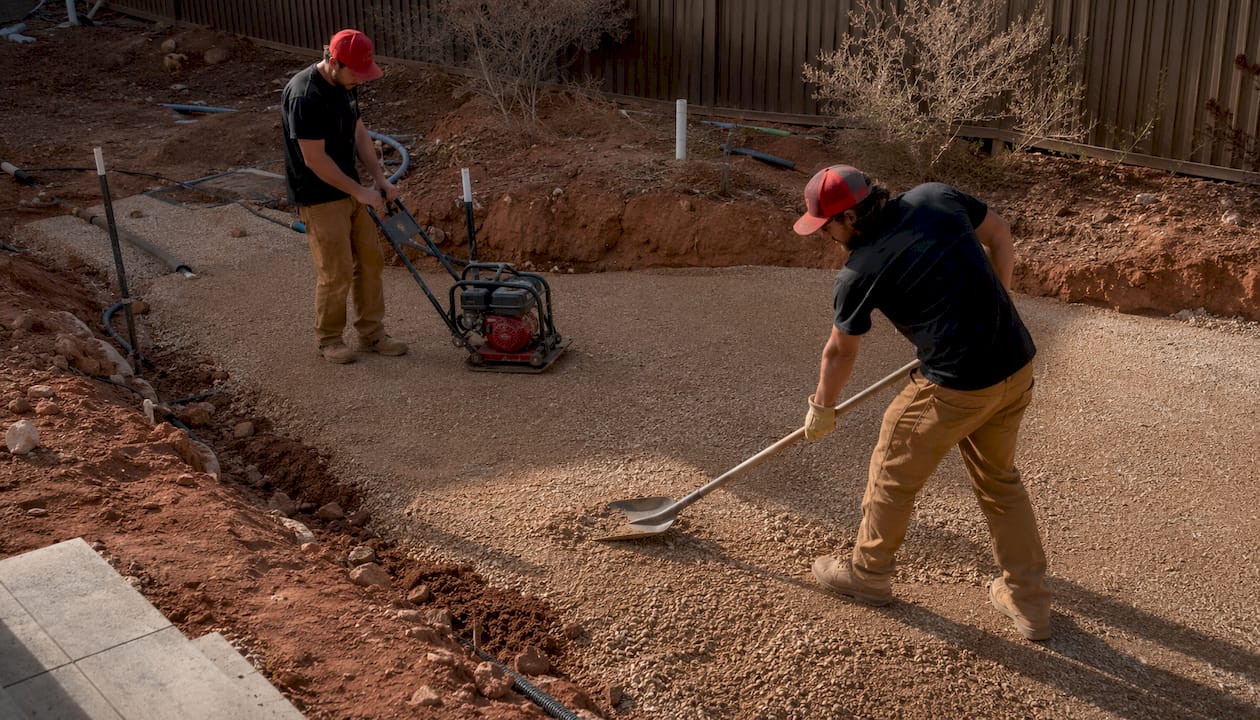
Base preparation involves removing organic soil and installing 3–4 inches of crushed granite or aggregate, compacted precisely to prevent turf ripples and water pooling. Skipping this step shortens turf lifespan and causes uneven surfaces. Basic compacted gravel runs about $1.50/sq ft; standard gravel plus weed barrier around $2.50/sq ft; full excavation with engineered base up to $3.99/sq ft. For yards with drainage problems, a formal drainage system adds $2,100–$7,000 to the project. Paired with proper landscape earthwork, a well-built base is what separates a 10-year installation from a 20-year one.
How does warranty coverage affect long-term value?
Most residential turf carries a 10–15 year manufacturer warranty on budget and mid-grade products. Premium and ultra-premium lines often extend to 20–25 years. The catch: warranties typically require professional installation and proper base construction. A DIY install or skipped base prep usually voids coverage on day one. Paying more for a longer warranty only makes sense when the installation underneath it is done correctly. A 15-year warranty on a poorly compacted base is worth nothing.
Planning a backyard turf project in Utah? A-to-zconstruction handles artificial turf installation from base prep through final seaming, with no subcontractors and no coordination gaps. Get a free hardscape estimate and know your number before you commit.
Key Takeaways
Artificial turf for a backyard costs $5.50–$19.75 per square foot installed in 2026, with most 1,000 sq ft projects landing between $8,000 and $15,000 all-in.
| Point | Details |
|---|---|
| Installed cost range | $5.50–$19.75 per sq ft covers turf, base, infill, labor, and disposal. |
| Project size matters | Small projects under 500 sq ft cost $14–$20/sq ft; larger jobs drop below $10/sq ft. |
| Labor share | Labor accounts for 25%–35% of total cost; complexity multiplies it fast. |
| Long-term savings | Natural grass costs $1,800–$3,200/year; most homeowners break even in 6–10 years. |
| Warranty requires pro install | Most warranties require professional installation; DIY typically voids coverage. |
FAQ
Is artificial turf cheaper than laying sod upfront?
Sod costs $2–$8 per square foot installed versus $5.50–$19.75 for artificial turf, so natural grass wins on day-one cost. Artificial turf typically pays back the difference within 6–10 years through eliminated water, mowing, and maintenance expenses.
Can I install artificial turf myself?
DIY is feasible for small, flat areas under 300 sq ft, but base compaction and seaming require specialized equipment and skill. Poor installation voids most manufacturer warranties and often creates drainage failures that cost more to fix than the original labor savings.
How much does it cost to lay artificial grass in a typical backyard?
A 1,000 sq ft backyard runs $8,000–$15,000 fully installed, including turf, base prep, infill, and labor. Smaller yards cost more per square foot; larger projects over 2,000 sq ft often come in below $10/sq ft.
How long does artificial turf last in a backyard?
Residential artificial turf typically lasts 10–25 years depending on quality and usage. Mid-grade products professionally installed last 12–16 years; premium and ultra-premium lines can reach 20–25 years with proper maintenance.