Artificial turf installation cost runs from $8 to $22 per square foot nationally, with most homeowners spending $8,000 to $15,000 for a standard 1,000 sq ft backyard project. The industry term for this work is "synthetic turf installation," though "artificial turf" is the phrase most homeowners use when budgeting. Three factors drive the final number: material grade, site preparation, and labor. Labor alone accounts for 25–35% of total cost. Understanding how these components interact helps you get accurate quotes, avoid surprises, and make a confident decision before the first shovel hits the ground.
What makes up the artificial turf installation cost?
The total price breaks down into four distinct buckets: materials, base preparation, labor, and contractor overhead. Each one carries real weight in the final number.
Material wholesale prices run $1.50 to $4 per square foot depending on turf grade. Budget polypropylene sits at the low end, while premium nylon products push toward the top. Base preparation and infill add another $1.50 to $3 per square foot. Labor ranges from $3 to $6 per square foot on top of that. Contractor overhead and profit margins typically layer on an additional percentage, which is why the installed price always exceeds the sum of raw material costs.
The table below shows typical cost ranges for each component on a 1,000 sq ft project.
| Cost component | Price per sq ft | Estimated total (1,000 sq ft) |
|---|---|---|
| Turf material | $1.50–$4.00 | $1,500–$4,000 |
| Base prep and infill | $1.50–$3.00 | $1,500–$3,000 |
| Labor | $3.00–$6.00 | $3,000–$6,000 |
| Overhead and profit | Variable | $1,000–$2,000 |
| Total installed | $8–$22 | $8,000–$15,000 |
Pro Tip: Get an itemized quote that separates material, base prep, and labor costs. A single lump-sum number makes it impossible to compare bids accurately or identify where a contractor is cutting corners.
How do project size and site conditions affect the total price?
Project size has a direct and often underestimated effect on the cost of artificial turf installation per sq ft. Smaller jobs carry the same mobilization costs as larger ones, spread across fewer square feet.
Projects under 500 sq ft cost more per square foot because fixed mobilization expenses do not scale down with the job size. Projects over 2,000 sq ft can drop below $10 per square foot as volume discounts on materials and more efficient labor deployment kick in. A 200 sq ft side yard and a 2,500 sq ft backyard use the same crew, the same equipment, and the same setup time.
Site conditions add another layer of complexity. Here are the most common factors that push costs higher:
- Existing lawn removal: Stripping sod and hauling it away adds $0.50 to $1.84 per square foot to the base price.
- Slopes and uneven terrain: Grading and leveling work on sloped yards increases labor time and cost.
- Tree roots and obstructions: Removing large roots or concrete can increase labor costs by 25–75%, or add $2 to $4 per square foot.
- Drainage needs: Poor-draining soil requires additional drainage infrastructure before turf goes down.
- Access restrictions: Narrow gates or limited equipment access slow the crew and add hours to the job.
Pro Tip: Walk your yard before getting quotes and note any slopes, drainage low spots, or large tree roots near the installation area. Sharing that information upfront gets you a more accurate bid and avoids change orders mid-project.
What turf types are available and what do they cost?
Not all synthetic grass is the same material, and the differences matter for both price and performance. The four main categories are polypropylene, polyethylene, pet-friendly blends, and premium nylon.
Polypropylene is the most affordable option. It works for low-traffic decorative areas but degrades faster under heavy foot traffic or direct sun. Polyethylene is the standard residential choice, offering a natural look and good durability for most backyards. Pet-friendly turf uses antimicrobial fibers and enhanced drainage backing to handle waste and odor. Premium nylon handles the highest traffic and heat but carries the steepest price.
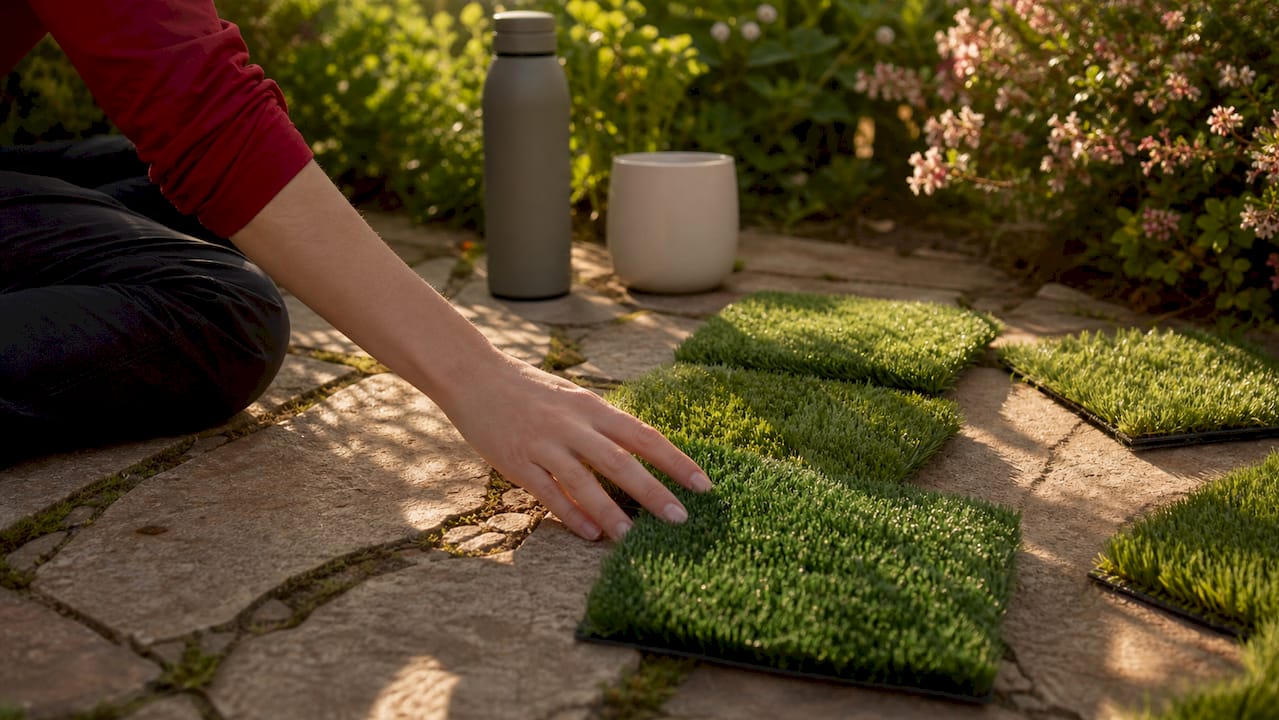
The table below summarizes installed cost ranges by turf type, along with durability and best use cases.
| Turf type | Installed cost per sq ft | Durability | Best use |
|---|---|---|---|
| Budget polypropylene | $8–$10 | Low to moderate | Decorative, low traffic |
| Standard polyethylene | $8–$14 | Moderate to high | Residential lawns |
| Pet-friendly blend | $10–$16 | High | Yards with dogs or cats |
| Premium nylon | $14–$20 | Very high | High-traffic areas |
| Putting greens / sport turf | $14–$22 | Specialized | Golf, sports courts |
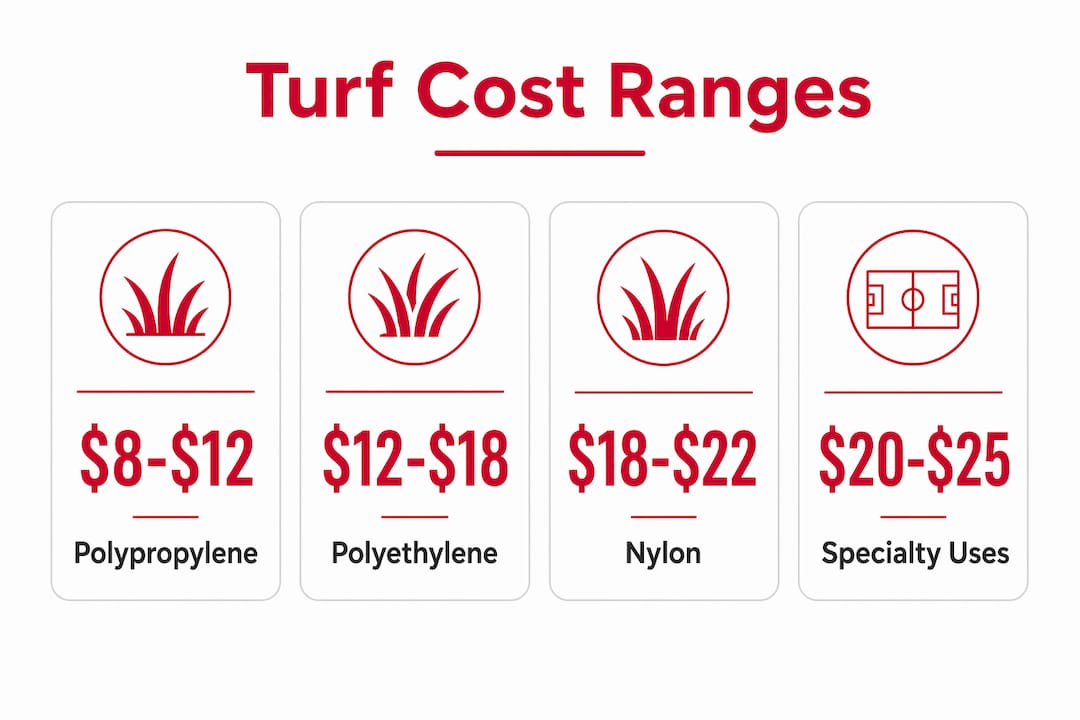
Specialty applications like backyard putting greens and sport courts sit at the top of the price range. They require precise base construction and specific pile heights, which drives both material and labor costs up significantly.
What add-ons and features affect the price for artificial turf installation?
Several common add-ons increase the total price but also improve the installation's long-term performance. Skipping them to save money upfront often leads to higher repair costs later.
Here are the most common add-ons and their typical cost impacts:
- Perimeter edging: Plastic edging is the most affordable option. Concrete or metal bender board costs more per linear foot but holds shape better over time. Perimeter edging typically runs around $4.99 per linear foot installed.
- Drainage systems: Basic drainage upgrades add $2 to $7 per square foot. Complex solutions for clay soil or high-water-table sites can reach $6 to $20 per square foot.
- Infill materials: Standard silica sand is the base option. Crumb rubber adds cushion for play areas. Antimicrobial infills, which are common in pet turf applications, add $0.50 to $1 per square foot to the total.
- Weed barrier fabric: A quality weed barrier under the base layer prevents breakthrough growth and extends the life of the installation.
- Seaming and pattern work: Complex shapes, multiple seams, or decorative patterns require more labor time and increase the installation price.
Drainage is the add-on most homeowners underestimate. Proper drainage is the single biggest factor in how long an installation lasts. A turf surface that holds water will develop odor, mold, and structural problems within a few years.
How to manage installation costs without sacrificing quality
The biggest mistake homeowners make is treating turf material as the primary cost lever. Material quality is rarely the largest cost driver. Labor and base preparation define whether the installation holds up for 15 years or starts failing in five.
Investing in proper base compaction and drainage costs more upfront but prevents expensive repairs down the line. A well-built crushed aggregate base with adequate drainage can add $1 to $2 per square foot to the project. That investment pays back many times over in avoided repairs and extended turf life. Reviewing site prep mistakes before your project starts is one of the best ways to protect your budget.
DIY installation looks attractive on paper. DIY installations cost $3.50 to $6.50 per square foot excluding labor, but they carry real risks. Poor base preparation voids most manufacturer warranties and leads to uneven surfaces, drainage failures, and premature turf degradation. Professional installation costs more upfront and reduces long-term repair risk substantially.
Artificial turf pays for itself in 5 to 8 years through savings on mowing, watering, and lawn care averaging $1,200 to $2,500 annually. That math makes the upfront investment look very different when you factor in the full ownership period.
Pro Tip: Get at least three itemized quotes and ask each contractor specifically what their base preparation process includes. The contractor who explains their base work in detail is almost always the one doing it correctly.
Geographic location also affects pricing. Northeast markets carry higher labor and drainage costs than most other regions. Utah and the Mountain West generally fall in the mid-range nationally, though local soil conditions and water drainage requirements vary by site.
Key Takeaways
Artificial turf installation cost is determined primarily by base preparation and labor quality, not turf material alone.
| Point | Details |
|---|---|
| National cost range | Installed prices run $8 to $22 per sq ft, with most 1,000 sq ft projects totaling $8,000 to $15,000. |
| Labor is a major cost driver | Labor accounts for 25–35% of total cost and directly determines installation quality. |
| Project size changes unit cost | Projects under 500 sq ft cost more per sq ft; projects over 2,000 sq ft can drop below $10 per sq ft. |
| Base prep determines longevity | Proper compaction and drainage prevent failures and protect the full investment over time. |
| Turf pays for itself | Annual savings of $1,200 to $2,500 on lawn care mean most installations break even in 5 to 8 years. |
What I've learned after watching hundreds of turf projects go right and wrong
The homeowners who get the best results share one habit: they ask about the base before they ask about the turf. Every time I see a failed installation, the problem is almost never the grass itself. It is a base that was rushed, a drainage layer that was skipped, or a compaction step that got cut to save a few hundred dollars.
The cheapest quote is almost never the best value. A contractor who bids $8 per square foot on a site that clearly needs drainage work is either planning to skip the drainage or planning to add it back as a change order after you have already signed. Neither outcome is good for you.
I also see homeowners focus too much on pile height and color when selecting turf. Those details matter for aesthetics, but they do not determine whether the installation lasts 8 years or 18 years. The base does. The drainage does. Ask your contractor to walk you through their base preparation process step by step. If they cannot explain it clearly, that tells you something important.
Regional pricing differences are real. A project in Cedar City, Utah will price differently than the same project in Boston or Los Angeles. Get local quotes from contractors who know your soil conditions and drainage requirements. A contractor familiar with your region will build the right base for your specific site, not a generic one.
— Jake
A-to-zconstruction handles turf installation from base to finish
A-to-zconstruction is a licensed general contractor based in Cedar City, Utah, with over 500 completed projects across residential and commercial properties. The team handles every phase of artificial turf installation in-house, from site preparation and base building to final turf placement, without relying on subcontractors.
That single-contractor approach means faster scheduling, clearer pricing, and no finger-pointing between crews when questions come up. A-to-zconstruction provides itemized quotes within 24 hours and covers all related landscaping and hardscape services so your full outdoor project stays on track. Contact A-to-zconstruction for a free estimate and get a transparent, itemized breakdown before any work begins.
FAQ
What is the average cost for artificial turf installation per sq ft?
The national average runs $8 to $22 per square foot installed, with most residential projects landing between $10 and $16 per square foot depending on turf grade and site conditions.
Is DIY artificial turf installation worth it?
DIY installation costs $3.50 to $6.50 per square foot in materials but carries significant risk. Poor base preparation voids most manufacturer warranties and leads to drainage failures and uneven surfaces.
How long does artificial turf take to pay for itself?
Most installations break even in 5 to 8 years through annual savings of $1,200 to $2,500 on mowing, watering, and lawn care costs.
What adds the most cost to a turf installation project?
Site complexity is the biggest cost multiplier. Removing concrete, large tree roots, or grading a sloped yard can increase labor costs by 25–75% or add $2 to $4 per square foot to the total.
Does drainage really matter that much for artificial turf?
Drainage is the most critical factor for long-term performance. Basic drainage upgrades add $2 to $7 per square foot, but skipping them leads to odor, mold, and structural failures within a few years.