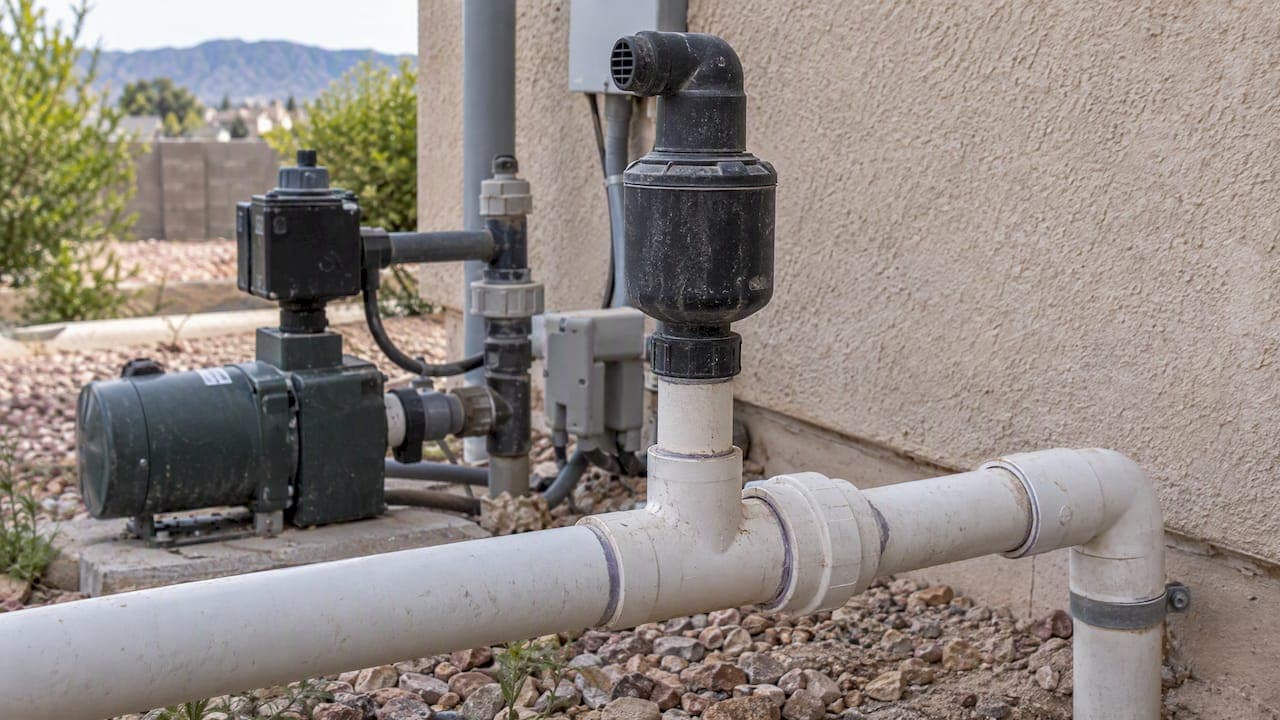
That loud bang when a sprinkler zone shuts off is irrigation water hammer: a pressure surge caused by a sudden change in flow. Slow the valve action, bleed out trapped air, and add a surge arrestor if the bang persists. Keep water velocity under about 5 feet per second in your mains and laterals to stay on the safe side.
TL;DR:
- A bang after the system sits idle points to trapped air; test one zone at a time and note which zone produces the sound.
- Keep water moving below about 5 feet per second in mains and laterals; undersized pipe raises velocity and increases surge risk.
- Measure solenoid voltage under load before replacing valves, since low voltage can cause chatter that mimics a hydraulic surge in the line.
- Close manual valves over at least 10 seconds, preferably 30 seconds or longer, and consider slower closing valves before adding surge protection.
- Call a licensed irrigation contractor for visible pipe damage, repeated joint failures, possible pressure beyond pipe ratings, or pump and variable frequency drive work.
Table of Contents
- How do you know the banging is water hammer?
- What causes water hammer in a sprinkler system?
- What checks can you run right now?
- How do you fix and prevent water hammer?
- When should you call a licensed irrigation pro?
- What we have learned from fixing these systems
- Let us diagnose and correct your sprinkler hammering
- FAQ
- Sources
How do you know the banging is water hammer?
Water hammer has a signature: it follows a flow change. Listen for these clues:
- A single loud bang the moment a zone shuts off
- Repeated chatter or rattling while a zone cycles
- Vibration you can feel at valve boxes or along lateral piping
- Leaking joints, loose fittings, or torn valve diaphragms after an event
- A pressure gauge that jumps when a valve closes
Run one zone at a time and listen. Put a hand on the valve box lid and feel for a thump. If the noise shows up mostly after the system has sat idle for days, trapped air is a likely suspect.
Pro Tip: Write down which zone banged, what time it happened, and whether the pump had just stopped or started. Those notes will save you hours of guessing.
What causes water hammer in a sprinkler system?
Water hammer happens when moving water has to stop or turn around fast. The column of water has momentum, and that energy turns into a pressure spike. Common culprits in sprinkler systems:
- Fast-closing valves. Solenoid and quarter-turn valves can halt flow abruptly, and the sudden velocity change creates the surge.
- Pump starts and stops. Technical district irrigation reports point to sudden valve shutoff and pump stops as major sources of surge.
- Trapped air. Air pockets compress and release, amplifying pressure swings.
- Undersized pipe. Smaller pipe forces water to move faster, and faster water hits harder when it stops.
- Check valve slam. A poorly placed check valve snaps shut when flow reverses.
- Low voltage at the valve. On 24VAC systems, under-voltage can make a solenoid chatter and mimic a hydraulic problem.
The velocity benchmark: Extension guidance says velocities above about 5.0 feet per second in mainlines and laterals significantly raise the risk of surges that damage PVC fittings and valve diaphragms.
What checks can you run right now?
Work through these in order before you replace any parts:
- Run a single zone and see whether the bang happens at that zone's shutoff.
- Repeat zone by zone to find where the surge starts.
- Inspect fittings and valve boxes for loose hardware or fresh leaks after an event.
- Measure solenoid voltage under load. A low reading points to electrical chatter, not hydraulics.
- Estimate velocity: divide the zone's flow in gallons per minute by the pipe's internal cross-section to see if you are above the 5 ft/s guideline.
- Open high-point bleeders while filling lines slowly, and note any hammering that returns after the system sits unused.
Pro Tip: Fix the cheapest explanation first. A weak transformer or a stuck bleeder costs far less than new valves.
How do you fix and prevent water hammer?
Start with the easy changes and move up only if the noise continues.
- Slow the closing. Use flow-control stems, or swap quarter-turn valves for multi-turn valves. Close manual valves slowly, taking at least 10 seconds, with 30 seconds or more preferable.
- Check your electrical supply. Make sure the transformer delivers correct voltage to the solenoids.
- Add automatic air-relief valves at high points. Practitioner guidance says these are far more reliable than static air chambers, which can become waterlogged. Include them in seasonal maintenance.
- Install surge arrestors. Engineering literature on hydraulic transients recommends longer valve closure times, silent check valves, and surge arresters placed close to the source. A common rule of thumb is within about 10 pipe diameters.
- Use pressure relief where surges could exceed pipe ratings. Relief devices should discharge to atmosphere per local district guidance.
- Ramp your pump. A VFD or ramp controller starts and stops gradually. This is a professional install.
- Fill lines slowly. Never slam an empty line full, and avoid abrupt restarts.
Design fix: Larger pipe lowers velocity. The WSU water hammer calculator estimates surge pressure from operating pressure and water velocity, so you can see what a sudden shutoff might do before you size protections.
Pro Tip: Check air-relief valves when you winterize. Our sprinkler winterization checklist is a good moment to do it.

When should you call a licensed irrigation pro?
Some jobs go beyond a weekend fix. Call a licensed contractor when you see:
- Visible damage such as leaks, deformed pipe, or repeated joint failures
- Surge pressures that may exceed your pipe's rating
- Plans for pump and VFD integration, pilot-operated relief valves, or large surge tanks
- A need for permanent pipe re-sizing
A contractor can run surge calculations and recommend pipe class and protective devices with a proper safety margin. If you are weighing DIY against hiring out, our overview of irrigation system types and costs helps frame the decision.
What we have learned from fixing these systems
Prevention at the design stage beats every reactive fix. Correct pipe sizing, air management, and slow valve actuation save more money than any device bolted on later. Band-aids come back when air relief and velocity are ignored, so we start by inspecting both. If you call us, bring your notes from the diagnostic checklist. A focused visit with timing and zone details helps with diagnosis.
— Jake
Let us diagnose and correct your sprinkler hammering
We handle irrigation work:
- Irrigation system diagnosis
- Valve and piping repairs
- Installation of air-relief and surge-protection devices
If you have persistent hammering or visible damage, schedule a diagnostic visit through our irrigation and landscaping page and we will track down the cause.

FAQ
How do you stop water hammer in an irrigation system?
Slow down whatever stops the flow. Use slower-closing valves, bleed trapped air, and add a surge arrestor or air-relief valve near the source. If your pipes run faster than about 5 feet per second, larger pipe may be the permanent fix.
What causes water hammer in an irrigation system?
Sudden flow changes cause it, usually a fast-closing valve or a pump that starts or stops abruptly. Trapped air, undersized pipe, and slamming check valves make the surge worse.
Why does my irrigation system bang when it turns off?
The valve closes faster than the moving water can slow down, so the water column's momentum becomes a pressure spike. Slower valve closure and removing air from the line usually reduce the bang.
Can a sprinkler timer cause water hammer?
Not directly, but it can trigger it. A timer opens and closes valves, so abrupt shutoffs happen on its schedule. Low solenoid voltage can also cause chatter that sounds like water hammer, so check voltage before blaming the valve.
Sources
- CIR828/AE066: Water Hammer In Irrigation Systems
- Water Hammer Protection for Pumped
- Water Hammer Calculator