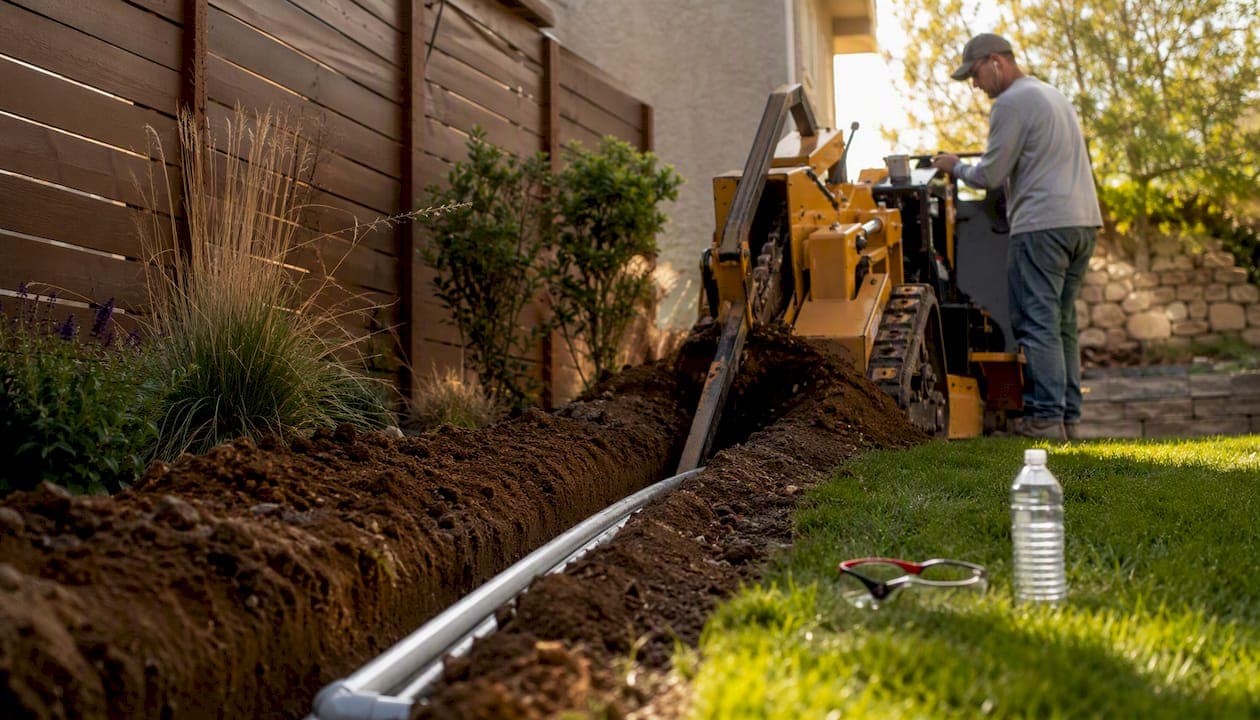
Most residential irrigation systems in the U.S. generally cost several thousand dollars installed, with a national average near typical midrange figures according to CostToRenovate's calculator. If you want a faster anchor, HomeWyse models a national baseline of roughly $1.54–$2.45 per square foot for professional lawn irrigation, and LawnBySeason estimates per-zone installed cost as a moderate range with variability depending on system type and local labor rates depending on system type and local labor rates.
Here is what that looks like at a glance before you dig into the details:
- Low end: $1,800–$2,500 (small yard, 3–4 zones, basic spray heads, simple soil)
- Typical mid-range: $3,000–$5,000 (average suburban lot, 5–8 zones, mix of rotors and spray)
- High end: $6,000–$10,000+ (large property, 10+ zones, smart controller, drip integration, rocky or sloped terrain)
- Per-zone quick figure: $350–$600 per zone installed
- Per-square-foot quick figure: $1.54–$2.45/sq ft (professional install, standard conditions)
The verdict: for most single-family homes with medium to larger lawns, professional installation pays for itself in avoided rework, proper zone design, and warranty coverage. DIY makes sense only on small, flat, straightforward lots.
Key Takeaways
A professionally installed irrigation system costs $1,800–$7,000 for most U.S. residential properties, with per-zone pricing of $350–$600 and a per-square-foot baseline of $1.54–$2.45 as the most reliable budget anchors.
| Point | Details |
|---|---|
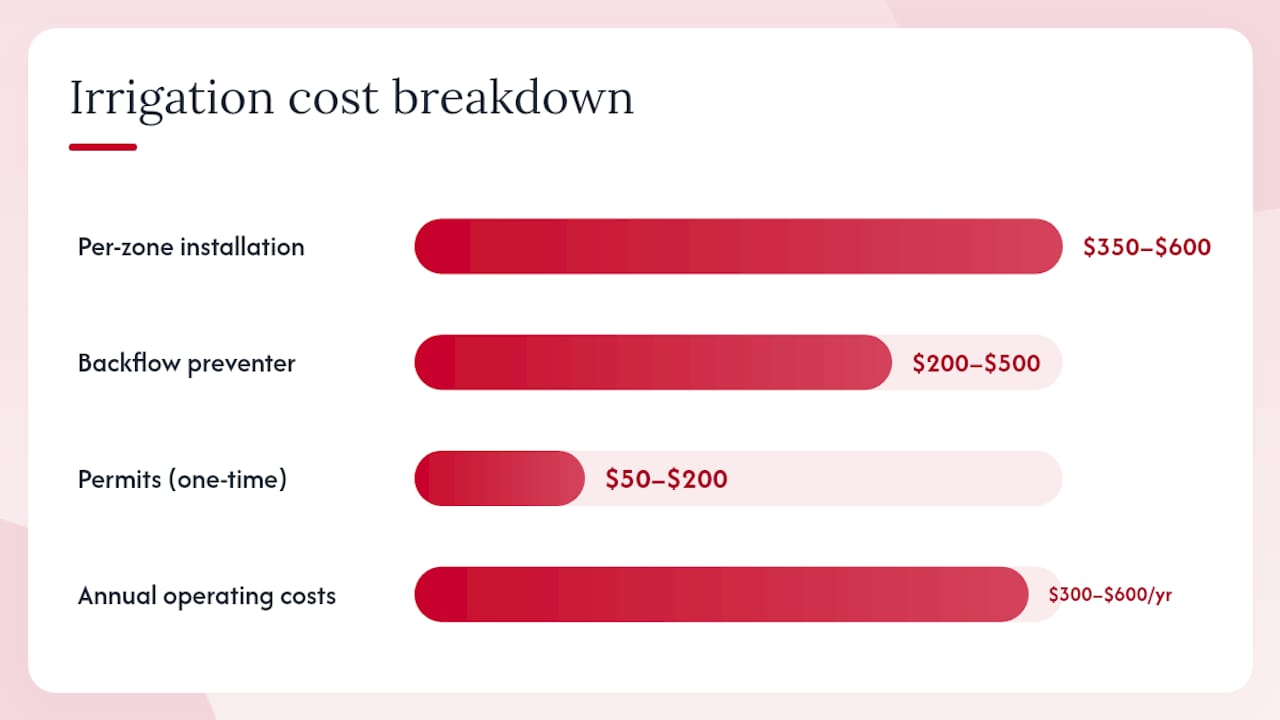
| Use per-zone math first | Budget $350–$600 per zone installed, then add $200–$500 for backflow and $50–$200 for permits. |
| Annual operating costs are real | Plan $300–$600/year in freeze climates for winterization, backflow testing, and minor repairs. |
| Smart controllers pay back quickly | A $100–$300 upgrade can cut water use by an estimated 20–40%, often recovering the cost in one or two seasons. |
| Get itemized bids only | Require zone count, head count, backflow type, permit handling, and warranty terms in writing before signing. |
| A-to-zconstruction bundles site work | Coordinating irrigation with earthwork and hardscape through one contractor prevents rework and hidden costs. |
Table of Contents
- How much does an irrigation system cost by yard size?
- What are you actually paying for? A cost breakdown
- What factors raise or lower your sprinkler system quote?
- DIY vs. hiring a pro: what the real cost difference looks like
- What does an irrigation system cost to run each year?
- How do contractors price irrigation jobs, and what should you ask?
- A quick estimator you can run yourself
- What homeowners are usually surprised by (a contractor's perspective)
- A-to-zconstruction handles irrigation and the site work around it
- Sources
- FAQ
How much does an irrigation system cost by yard size?
The fastest way to reality-check a quote is to match your yard size to a realistic zone count, then multiply. The table below uses a mid-range per-zone figure of $475 (the midpoint of the $350–$600 band) and adds fixed costs of roughly $300 for a backflow preventer and $150 for permits, which most jurisdictions require.
A few notes on these figures: they assume standard soil, relatively flat terrain, and a mix of spray and rotor heads. Drip zones for garden beds cost less per zone to run but more per linear foot to install. Angi's drip irrigation data shows that surface drip systems typically add cost over basic spray but reduce long-term water use, which matters if you are in a drought-prone area or paying high municipal water rates.
For Utah homeowners specifically, soil composition and freeze-climate winterization requirements push costs toward the higher end of each range. Local pricing in Iron County and surrounding areas reflects those conditions.
What are you actually paying for? A cost breakdown
A professional irrigation bid is not a single number. It is a stack of components, and knowing which ones are negotiable (and which are not) changes how you evaluate quotes.
Typical component costs on a standard residential install:
- Controller: $50–$250 for a basic timer; $150–$400 for a WiFi smart controller
- Spray heads: $3–$8 each (standard pop-up); rotors run $8–$15 each
- Valves: $15–$50 per zone valve, plus manifold assembly
- Pipe and fittings: $0.20–$0.60 per linear foot for poly pipe; PVC runs higher
- Trenching: $4–$12 per linear foot depending on soil hardness and trench depth
- Backflow preventer: $75–$300 for the device; installation adds $100–$200
- Wiring and wire connectors: $50–$150 for a typical residential system
- Permits: $50–$200 in most U.S. jurisdictions; some municipalities charge more
Labor typically accounts for 50–60% of the total installed cost on a standard residential job, according to NerdWallet's sprinkler cost breakdown, with installer rates running $50–$100 per hour. BLS occupational wage data confirms that landscaping and groundskeeping labor rates vary significantly by region, which is why a quote from a Utah contractor will differ from one in California or the Northeast.
What factors raise or lower your sprinkler system quote?
Two contractors can look at the same yard and come back with quotes $1,500 apart. Here is why.
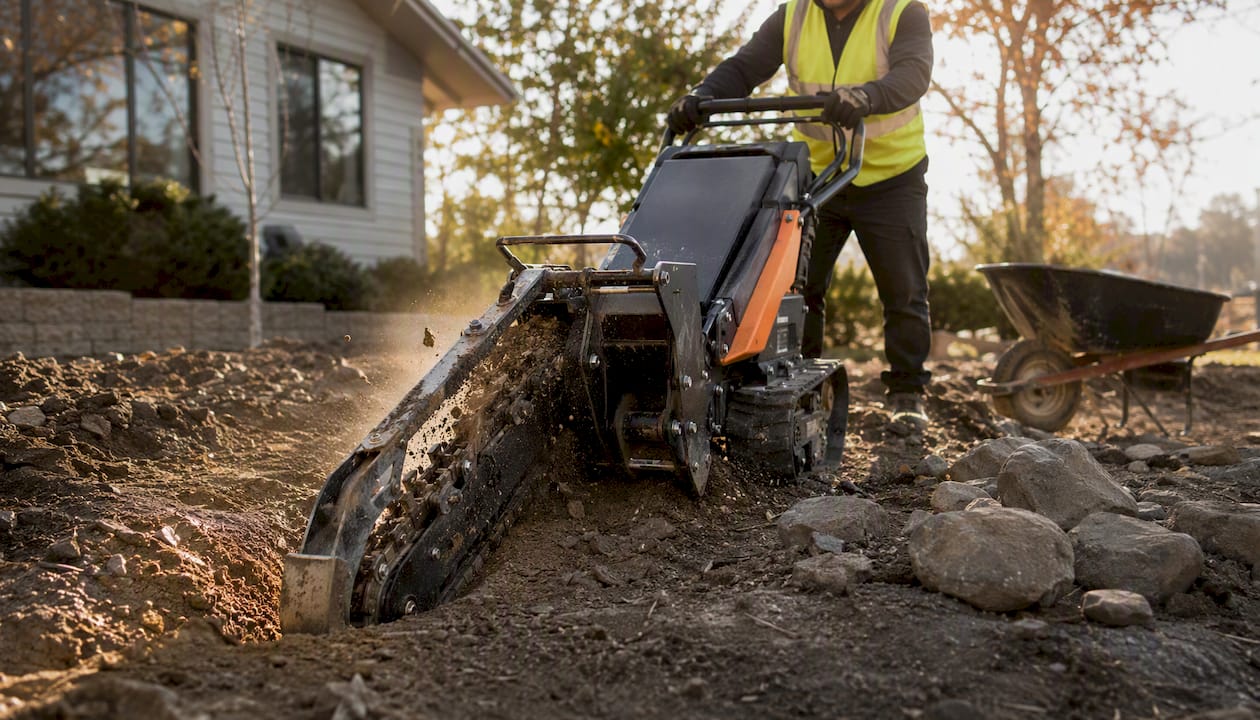
Soil and trenching difficulty are the biggest variables most homeowners do not see coming. Clay-heavy or rocky soil requires more equipment time and sometimes a trenching machine rental, which adds cost. HUD sitework guidance identifies site prep and earthwork as frequent hidden cost drivers on outdoor installations. In parts of Utah where caliche or hardpan is common, trenching labor alone can add $500–$1,500 to a mid-size install.
Zone count and head density matter because each zone is essentially a separate circuit: its own valve, wiring run, and set of heads. A yard with dense planting beds, irregular shapes, or mixed sun/shade areas needs more zones to water correctly. Cramming too many heads onto one zone is a common DIY mistake that leads to uneven coverage and dead patches.
System type changes both upfront cost and operating cost. Spray heads cover ground fast but use more water per minute. Rotors are slower but more efficient on large turf areas. Drip irrigation, which delivers water directly to root zones, costs more per linear foot to install but Penn State Extension research confirms it saves significant water and energy compared to overhead spray, especially on beds and foundation plantings. HomeCostCalc's model puts basic spray systems at roughly $0.50/sq ft for materials alone, while smart drip configurations run up to $1.20/sq ft.
Local code requirements add fixed costs that are non-negotiable. Most U.S. jurisdictions require a code-compliant backflow assembly (either an RPZ or PVB type) on any irrigation connection to a potable water supply. That device plus annual testing is a recurring line item many homeowners miss entirely when budgeting. Freeze-climate states, including Utah, also require winterization (blowout) each fall, which adds to annual operating costs.
A properly designed system with the right head spacing and zone layout will use less water and last longer than one that was undersized to hit a lower bid price. The cheapest quote is rarely the cheapest system over five years.
DIY vs. hiring a pro: what the real cost difference looks like
A DIY irrigation kit for a small yard (roughly 2,500–3,500 sq ft) runs $300–$700 in materials from a home improvement store. That sounds like a big savings against a $2,500–$3,500 professional install. The gap narrows fast once you account for what DIY does not include.
Renting a trencher runs $150–$300 per day. Permit fees are still required in most jurisdictions whether you pull them yourself or hire a contractor. More importantly, DIY installs frequently have incorrect head spacing, pressure mismatches, and shallow pipe runs that freeze and crack in cold climates. Fixing those problems after the fact often costs more than the original savings.
Pro Tip: If you are set on DIY, start with a pressure test at your water meter before buying anything. Low static pressure (below 40 PSI) or high pressure (above 80 PSI) will require pressure regulation equipment that most starter kits do not include, and getting that wrong ruins head performance across the whole system.
What a professional install typically includes that DIY does not:
- Zone-by-zone hydraulic design based on your actual water pressure and flow rate
- Permit pulling and code-compliant backflow installation
- Proper pipe depth for your climate's frost line
- System startup, head adjustment, and controller programming
- Warranty on parts and labor (typically one to two years)
- Cleanup and surface restoration after trenching
For yards over 5,000 square feet, sloped terrain, rocky soil, or any project that combines irrigation with hardscape or sod installation, professional installation is the practical choice. The design work alone on a multi-zone system is worth the cost.
What does an irrigation system cost to run each year?
Installation is a one-time expense. Operating costs are forever, so budget them before you commit to a system.
Annual operating cost checklist:
- Water use: A typical residential sprinkler system adds $20–$50 per month to a water bill during the irrigation season (roughly April through October in most U.S. climates). On a 1/2-acre lot running 8 zones, that can reach $200–$350 per season depending on local water rates and how often you run the system.
- Winterization (blowout): In freeze climates, a professional blowout runs $75–$150 per visit. This is not optional in Utah and similar climates. Skipping it risks cracked pipes and heads that cost $300–$800 to repair in spring.
- Annual backflow testing: Most jurisdictions require a licensed tester to certify the backflow assembly each year. Budget $50–$100 for this test. Virginia Tech extension irrigation guidance and similar university resources outline why this testing schedule matters for both code compliance and water quality.
- Head replacements and minor repairs: Expect to replace one or two heads per season on an active system. Heads run $5–$20 each installed. Budget $100–$200 per year for routine repairs.
- Controller battery or power: Minimal cost, but smart controllers with cellular connectivity may carry a small subscription fee ($10–$30/year depending on the platform).
A realistic annual maintenance budget for a mid-size residential system in a freeze climate is $300–$600, covering winterization, backflow testing, and minor repairs. Drip systems generally run lower on the repair side but may need emitter replacements and filter cleaning each season.
Homeowners who skip annual maintenance consistently spend more on emergency repairs than those who budget a modest service visit each spring and fall. The math is not close.
For a broader look at seasonal property upkeep, the spring maintenance checklist for hardscape and concrete covers related tasks worth coordinating with your irrigation startup.
How do contractors price irrigation jobs, and what should you ask?
Most irrigation contractors use one of three pricing models: per-zone flat pricing, per-square-foot pricing, or a fully itemized bid. Per-zone pricing is the most common for residential work and the easiest to compare across quotes. Per-square-foot pricing works well for large, open lots. Itemized bids give you the most transparency but require more time to compare line by line.
When you request bids, ask every contractor the same set of questions so quotes are actually comparable:
- What is the per-zone price, and what does each zone include (heads, valve, wiring, pipe)?
- Is the backflow preventer included, and what type will you install?
- Who pulls the permit, and is the permit fee included in the quote?
- What pipe depth will you trench to, and how will you restore the surface?
- What is the warranty on parts and labor, and who handles warranty claims?
- What is your change-order policy if unexpected site conditions arise?
- How long will installation take, and what is the permit lead time in this jurisdiction?
Red flags to watch for: a quote with no mention of a backflow preventer, no permit line item, or a scope described only as "full system install" with no zone count or head count. Vague scopes almost always lead to disputes or surprise add-ons. For more on vetting contractors before you sign anything, this guide on finding a general contractor you can trust covers the right questions to ask before any outdoor project.
Typical installation timelines span a few days for a standard residential system once permits are secured. Permit lead times vary by municipality from same-day to two weeks, so factor that into your project schedule if you have a planting or sod installation following the irrigation work.
A quick estimator you can run yourself
You do not need a contractor on-site to produce a working budget.
Steps:
- Measure your irrigated area in square feet (lawn plus beds, minus hardscape).
- Estimate zone count: divide total square feet by 1,500–2,000 for spray zones or 3,000–4,000 for rotor zones. Mixed systems fall in between.
- Pick a system tier: basic spray ($350–$425/zone), mid-range rotor/spray mix ($450–$525/zone), or smart drip hybrid ($550–$650/zone).
- Add fixed items: backflow preventer ($200–$500 installed), permit ($50–$200), and controller ($100–$400 depending on smart vs. basic).
- Add a 10–15% contingency for unexpected trenching difficulty, extra fittings, or surface restoration.
These figures align closely with the per-square-foot baseline from HomeWyse's cost calculator and the tier examples in CostToRenovate's sprinkler system calculator.
What homeowners are usually surprised by (a contractor's perspective)
The surprises that cost the most money are almost never the ones homeowners ask about upfront.
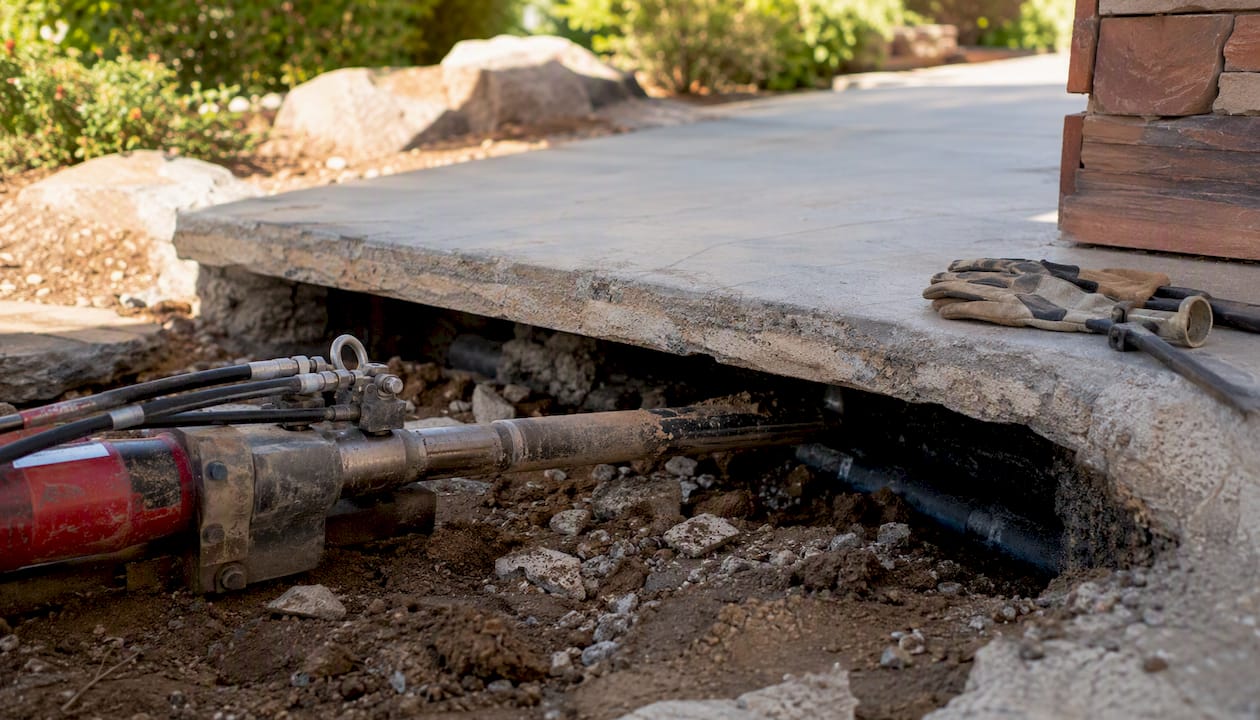
The most common one: hidden pipe runs around existing hardscape. A patio, driveway, or retaining wall that sits between the water source and a planting zone means boring or tunneling under the structure rather than open trenching. That work takes more time and specialized equipment, and it is almost impossible to price accurately from a photo. When irrigation is planned alongside hardscape installation, routing decisions get made before concrete is poured, which eliminates this problem entirely.
The second surprise: tie-ins to existing systems. Homeowners who already have a partial system and want to expand it often assume the expansion is straightforward. In practice, older systems frequently have pressure problems, incompatible valve types, or undersized mainlines that limit how many zones can be added. A proper assessment of the existing system before bidding is worth asking for explicitly.
Coordinating irrigation with sod, seeding, or planting installation also matters more than most homeowners realize. Irrigation heads need to be set at final grade, which means the irrigation rough-in should happen before topsoil and sod go down, not after. Scheduling those trades in the wrong order means digging up fresh sod, which nobody wants.
Pro Tip: If you are planning any hardscape work (patio, retaining wall, walkway) in the next two to three years, rough in your irrigation mainline and sleeve conduit under any planned concrete now. The cost to add a sleeve during initial earthwork is minimal. Cutting through finished concrete later is not.
A-to-zconstruction handles irrigation and the site work around it
Getting irrigation right is easier when the contractor doing the trenching is the same one handling the earthwork, grading, and hardscape. A-to-zconstruction installs irrigation and sprinkler systems in Utah as part of a full-service landscaping and site work offering that includes sod, xeriscaping, earthwork, and hardscape. That means zone routing, pipe depth, and head placement get coordinated with everything else happening on your property, not figured out after the patio is already poured.
For a free estimate, send property photos, rough square footage, your known soil conditions (rocky, clay, sandy), and a list of the areas you want irrigated. A-to-zconstruction serves residential and commercial clients across Utah, and the estimate process is straightforward: one point of contact, one scope, no subcontractor handoffs. Visit the free irrigation estimate page to get started, or browse the full Utah landscaping services to see what a bundled project looks like.
Sources
These sources are worth bookmarking when you are building a budget or reviewing contractor quotes:
- Cost to Install Lawn Irrigation System - 2026 Cost Calculator (Customizable)
- Sprinkler System Cost Calculator (2026)
- Sprinkler System Cost 2026 – Installation Prices
FAQ
How much does it cost to install a 1,000 sq ft sprinkler system?
A 1,000 sq ft yard typically needs 2–3 zones and runs $1,250–$2,100 installed, including backflow and permit costs. Simple soil and flat terrain keep it toward the lower end of that range.
How much does a sprinkler system cost for a 1/4 acre yard?
A 1/4-acre lot (roughly 10,890 sq ft) usually requires 4–6 zones and costs $2,500–$4,050 for a professionally installed system. Rocky or sloped terrain in areas like Utah can push that figure higher.
How much does an irrigation system increase home value?
Irrigation systems are generally viewed as a value-add by buyers, particularly in dry climates, though the return varies by market and system condition. A well-maintained system in a water-conscious region tends to support faster sales and stronger offers, but no single national figure applies universally.
How much does an irrigation system increase the water bill?
A typical residential sprinkler system adds roughly $20–$50 per month during the active irrigation season. On a larger property running 8–10 zones, seasonal water costs can reach $200–$350 depending on local water rates and run schedules.