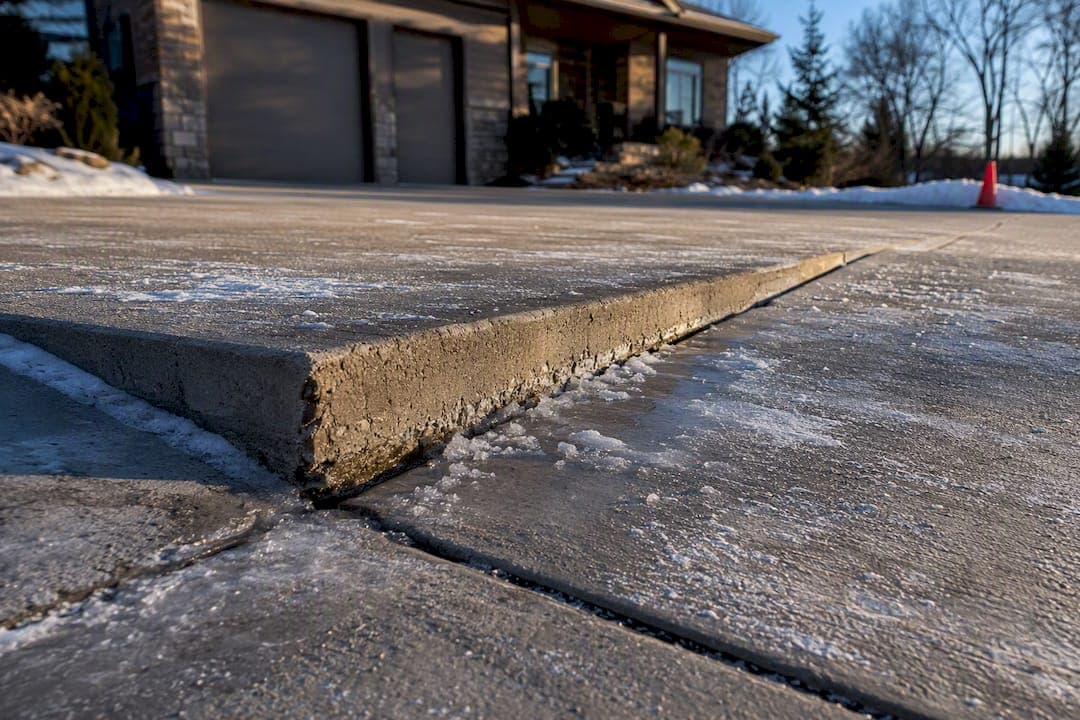
Most driveway heaving comes down to two things: frost heave under the slab or expansive clay soil swelling with moisture. A small seasonal rise often settles back once the ground thaws, but cracked panels, lateral shifting, or heave that returns worse every winter won't fix itself. Keep water away from the edges, stay off any raised panels, and call a contractor if the movement is large, spreading, or creating a trip hazard.
TL;DR:
- Frost heave occurs primarily in silty or loamy soils with high fines content, especially when water and freezing temperatures are present, causing upward pressure on the slab.
- Repeated freeze-thaw cycles weaken concrete over time, making minor heaves more likely to become permanent and leading to cracking and structural damage.
- Installing a deep, well-draining granular base, using a geotextile separator, and incorporating insulation can significantly reduce the risk of driveway heaving in cold regions.
- Repair options like polyurethane foam injections are effective for minor heave, but severe damage due to compromised base material often requires excavation, base replacement, and proper drainage.
- Ignoring persistent heaving or cracks can pose trip hazards, accelerate structural degradation, and complicate home sale negotiations if unaddressed over multiple seasons.
Table of Contents
- What Causes Driveway Heaving: Frost Heave, Ice Lenses, and Expansive Soils
- Is It Heave or Settlement? A Quick Diagnosis Checklist
- Will a Heaved Driveway Settle Back After Thaw?
- How to Prevent Driveway Heaving: Design and Retrofit Fixes
- How to Fix a Heaved Driveway: Repair Options That Actually Work
- When to Call a Contractor: Inspection, Timeline, and Cost Factors
- Signs and Risks of Neglected Driveway Heaving
- Long-Term Maintenance Tips to Minimize Recurrence
- A to Z Construction's Perspective: Diagnosing Before Digging
- How We Can Help With a Heaving Driveway
- Sources
- FAQ
What Causes Driveway Heaving: Frost Heave, Ice Lenses, and Expansive Soils
Frost heave starts underground, not on the surface. As the freezing front moves down through the soil, water gets pulled upward through capillary action and freezes into layers called ice lenses. Each lens adds thickness, and because water expands by about 9% when it freezes, that growing ice sheet pushes everything above it, including your slab, straight up.
Not every soil does this. Frost heave requires three ingredients working together: frost-susceptible soil, a water source, and freezing temperatures. Silty and loamy soils with a lot of fine particles are the worst offenders because they hold and wick water efficiently. Clean sand and gravel barely heave at all, since water drains through them instead of climbing.
A separate but related problem is expansive clay. Clay minerals absorb moisture and swell, sometimes lifting a slab even without freezing weather, which can look identical to frost heave from the surface.
Sites with the highest risk usually share a pattern:
- Base material with high fines content instead of clean crushed stone
- A shallow granular base, often less than 8 inches
- Poor surface drainage that lets water pool near the slab edge
- A location in a region with deep seasonal frost penetration.
Statistic to know: Water's 9% expansion on freezing sounds small until you realize it's happening in layers, repeatedly, all winter, under thousands of pounds of concrete.
Is It Heave or Settlement? A Quick Diagnosis Checklist
Heave and settlement move in opposite directions, and mixing them up leads to the wrong repair. Heave pushes concrete up. Settlement lets it sink. Confusing the two is one of the most common homeowner mistakes, because both can produce cracks and uneven panels.
Look for these patterns before you call anyone:
- Panels that rise, crack, or become trip hazards specifically after cold weather points to frost heave.
- Panels that sink, tilt, or develop widening gaps over months usually mean settlement or erosion under the slab.
- A downspout, sprinkler head, or newly disturbed soil near the affected area often explains why that one spot moves and the rest of the driveway doesn't.
Pro Tip: Take a photo of any cracked or raised panel with a tape measure in frame. Compare it again after the spring thaw. That single habit tells you more than any guess about whether the movement is seasonal or permanent.
Will a Heaved Driveway Settle Back After Thaw?
Sometimes, yes. A driveway that heaves an inch or less in January can drop back close to flush by April, once the ice lenses melt and the soil beneath drains. That's the good news for a lot of homeowners watching a panel lift for the first time.
The bad news is that repeated cycles wear the slab down even when it looks fine each spring. A few things tend to make the damage stick:
- Cracked reinforcement mesh or rebar that no longer holds the panel together as one piece
- A base contaminated with fines that traps water instead of draining it
- Several consecutive winters of freeze-thaw cycling in the same spot
If a panel has heaved and released cleanly for one winter, wait and watch. If it's on its second or third season, or the crack pattern is spreading, plan a spring inspection once the ground has fully thawed and dried out.
How to Prevent Driveway Heaving: Design and Retrofit Fixes
Prevention is almost entirely about what's under the concrete, not the concrete itself. A thicker slab doesn't stop frost heave; a better base does.
- Build a real granular base. A clean crushed-stone base in the range of 12 to 18 inches, depending on local frost depth, breaks the capillary path water needs to reach the freezing front.
- Add a geotextile separator. A non-woven fabric layer keeps fine soil particles from migrating up into the clean stone over the years, which preserves that capillary break instead of letting it clog with silt.
- Consider rigid insulation. A layer of rigid XPS foam placed beneath the base can significantly reduce effective frost penetration, which is often the difference between a driveway that heaves and one that doesn't in colder regions.
- Fix the surface slope. Grade the driveway to shed water away from the slab at 2% or steeper, extend downspouts well past the edge, and route sprinkler heads away from the pad.
- Add drainage where the water table is high. A French drain or curtain drain on the uphill side intercepts groundwater before it ever reaches the base.
- Specify clean aggregate. Base material should keep fines under roughly 3% passing the #200 sieve; anything dirtier holds water and defeats the point of a granular base.
Pro Tip: If you're comparing bids for a new driveway, ask each contractor what base depth and material they're specifying, not just what the concrete thickness will be. Our guide on how thick your concrete driveway should be covers why the slab is almost never the part that fails first.
How to Fix a Heaved Driveway: Repair Options That Actually Work
If a panel heaved this winter and it's minor, the cheapest fix is patience. Keep water diverted, avoid parking on the raised section, and reassess after thaw before spending a dime.
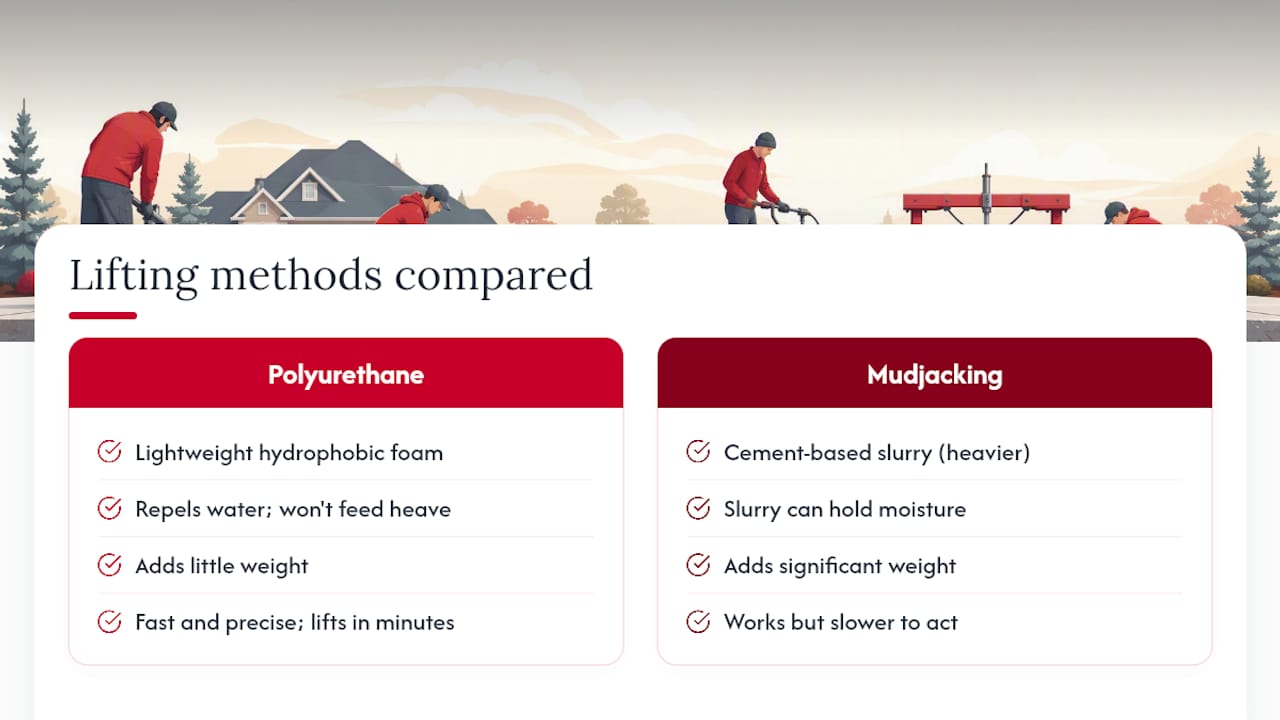
For heave that doesn't recover or keeps recurring, two lifting methods dominate the market. Polyurethane foam injection pumps a lightweight, hydrophobic foam under the slab through small holes, expanding it to lift the panel back to grade within minutes. It's fast, precise, and because the foam repels water rather than absorbing it, it doesn't feed future heave the way saturated fill can. Mudjacking, the older method, pumps a heavier cement-based slurry underneath instead. It works, but it's slower to cure, adds significant weight to a base that may already be struggling, and the slurry itself can hold moisture.
Neither method solves a bad subgrade on its own. When the base is contaminated with fines, saturated, or simply too shallow, the real fix is excavation: pull the old base out, install a geotextile separator, replace it with clean aggregate, and add drainage before repouring.
Full replacement becomes the smarter call once damage crosses certain thresholds: structural cracks through the reinforcement, panels that have shifted laterally instead of just vertically, or a substantial portion of the surface showing cracking or spalling. Our concrete driveway installation guide walks through what a proper rebuild looks like from base to finish.
When to Call a Contractor: Inspection, Timeline, and Cost Factors
Some warning signs are worth a phone call rather than another season of watching. Persistent trip hazards that don't flatten after thaw, cracking that spreads year over year, panels shifting sideways, or standing water that keeps returning to the same spot all point toward a problem bigger than a DIY patch.
A real inspection should include:
- Probing or coring to check actual base depth and material
- A basic look at soil type, since silty and clay soils behave very differently than sand
- Mapping where water currently drains, or fails to
- Checking slab condition against your local frost-depth reference for base sizing
Timing matters more than people expect. Base repairs and replacement pours generally need dry, thawed ground, which limits serious work to spring through early fall in colder regions. Cost swings widely depending on scope: a localized foam lift costs far less than excavating and rebuilding a base, and drainage work, soil removal, and permitting can each add to the total. Our cost guide for concrete driveway installation breaks down the variables in more detail.
Signs and Risks of Neglected Driveway Heaving
A heaved panel that gets ignored rarely stays a cosmetic issue. The most immediate risk is physical: a raised edge of an inch or two is enough to catch a heel, a bike tire, or a stroller wheel, and it's the kind of hazard insurance adjusters and personal injury lawyers know well.
Mechanically, an ignored heave tends to compound. Each freeze-thaw cycle that lifts and drops the same panel works like repeated bending stress on the concrete. Hairline cracks widen. Once a crack reaches the steel reinforcement inside the slab, that steel is exposed to moisture and can corrode, weakening the panel from the inside in a way you can't see from the surface.
There's also a knock-on effect for anything attached to the driveway. A heaved slab that meets a garage floor, a walkway, or a porch stoop can pull those adjoining structures out of alignment too, turning a single-panel problem into a multi-surface repair.
Financially, delay rarely saves money. A panel that could have been leveled with foam injection for a modest cost can turn into a full base rebuild once the cracking spreads or the subgrade washes out further. And a driveway with visible heave damage is one of the first things a home inspector flags during a sale, which can complicate negotiations even when the underlying issue is fixable.
The practical takeaway: a driveway that heaves once is a data point, not a diagnosis. A driveway that heaves the same way every winter is telling you something about the ground underneath it that won't fix itself.
Long-Term Maintenance Tips to Minimize Recurrence
Once a driveway has been leveled or rebuilt, the goal shifts to keeping water and fines away from the base that's protecting it. A few habits do most of the work.
Check your drainage every fall, before the ground freezes. Downspouts should discharge well past the slab edge, and any grading that's settled toward the driveway over the summer should get built back up. This single check catches the majority of preventable water problems before winter arrives.
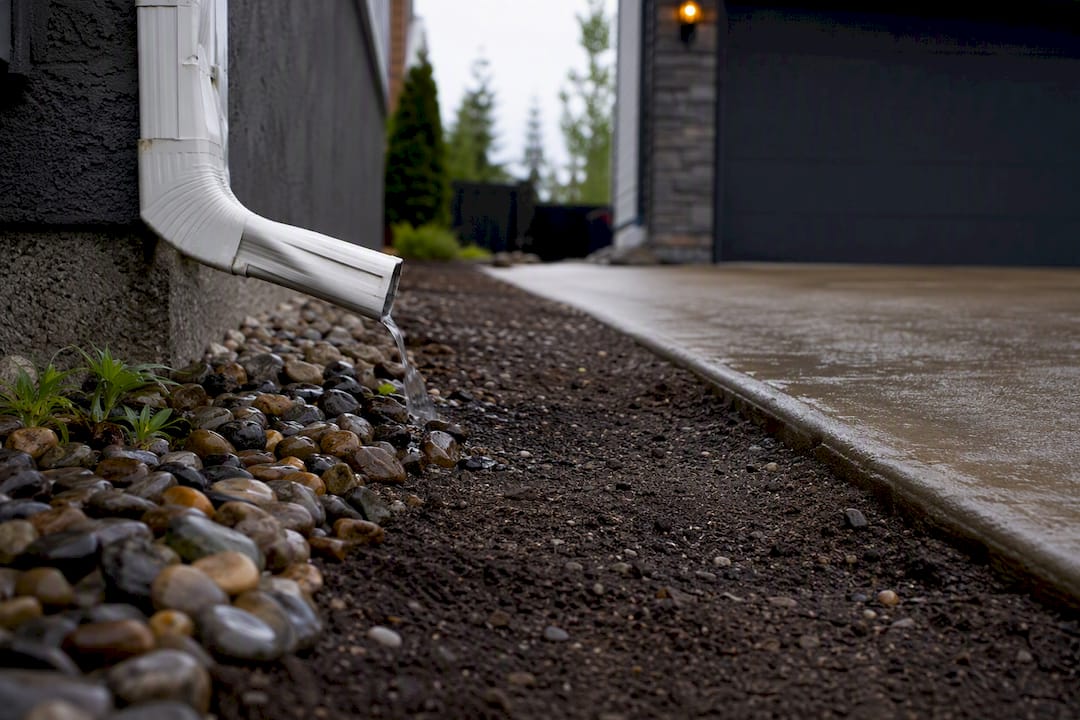
Watch your landscaping choices near the driveway edge. Irrigation heads aimed at the pad, garden beds that trap water against the slab, and trees with aggressive root systems near the base all create the kind of localized moisture and disturbance that reintroduces heave risk even after a proper rebuild.
Reseal joints and cracks promptly. A hairline crack that lets water into the base every winter is exactly how a clean, well-draining base slowly turns back into a frost-susceptible one. Our spring maintenance checklist for hardscape and concrete covers the seasonal routine that catches these issues early.
Finally, resist the urge to add fill dirt or gravel yourself if a low spot develops. Mismatched material dumped on top of an engineered base can undo the capillary break that's keeping the frost line from reaching your slab. If a section needs building up, it needs the right material, not whatever's left over from another project.
A to Z Construction's Perspective: Diagnosing Before Digging
When we assess a heaving driveway, water is the first thing we chase, not the concrete. Find where it's getting in, and you usually find why the panel moved. From there, we test the base and subgrade to decide whether a targeted lift solves it or the base itself needs to come out.
Handling earthwork, drainage, and the concrete pour under one crew means the diagnosis and the fix happen without three separate companies pointing fingers at each other. For homeowners weighing options themselves, our guide to common site prep mistakes is a good place to start.
— Jake
How We Can Help With a Heaving Driveway
A-to-zconstruction handles the parts of a heave repair that separate contractors often split into three different bids: the earthwork and drainage fix, the base rebuild, and the concrete pour itself, all with one licensed crew.

A free estimate starts with a site visit, where we probe the existing base, check drainage paths, and identify whether you're dealing with frost heave, expansive soil, or both. From there, you get scope options in writing, from a targeted foam lift to a full base and slab rebuild, with no guessing about what's included. If your driveway has been heaving every winter and you're ready to find out why, request a free hardscape estimate or browse our hardscape services to see the full scope of what we handle from base to finish.
Sources
- HyperPhysics — water density / freezing expansion
- North Dakota Geological Survey — Frost Heave (newsletter)
- Free Driveway Frost Heave Risk Explorer | Simulations4All
- DES Guide — frost protection and base recommendations
FAQ
Will Concrete Settle Back After Frost Heave?
Small heaves often drop back close to flush once the ground thaws, but repeated freeze-thaw cycles or cracked reinforcement can leave permanent lift or damage that won't self-correct.
What Causes Heaving in Concrete Driveways?
Heaving happens when ice lenses grow in frost-susceptible soil beneath the slab, or when expansive clay soil swells with moisture and pushes the concrete upward.
How Do You Fix a Heaving Concrete Driveway?
Minor seasonal heave often just needs monitoring and better drainage, while persistent heave usually requires polyurethane foam lifting, mudjacking, or excavating and rebuilding the base with clean aggregate and a geotextile separator.
How Do You Stop a Driveway From Heaving?
Build a deep, clean granular base with a geotextile separator, grade the surface to shed water at 2% or steeper, extend downspouts away from the slab, and add rigid insulation beneath the base in colder regions to cut frost penetration.