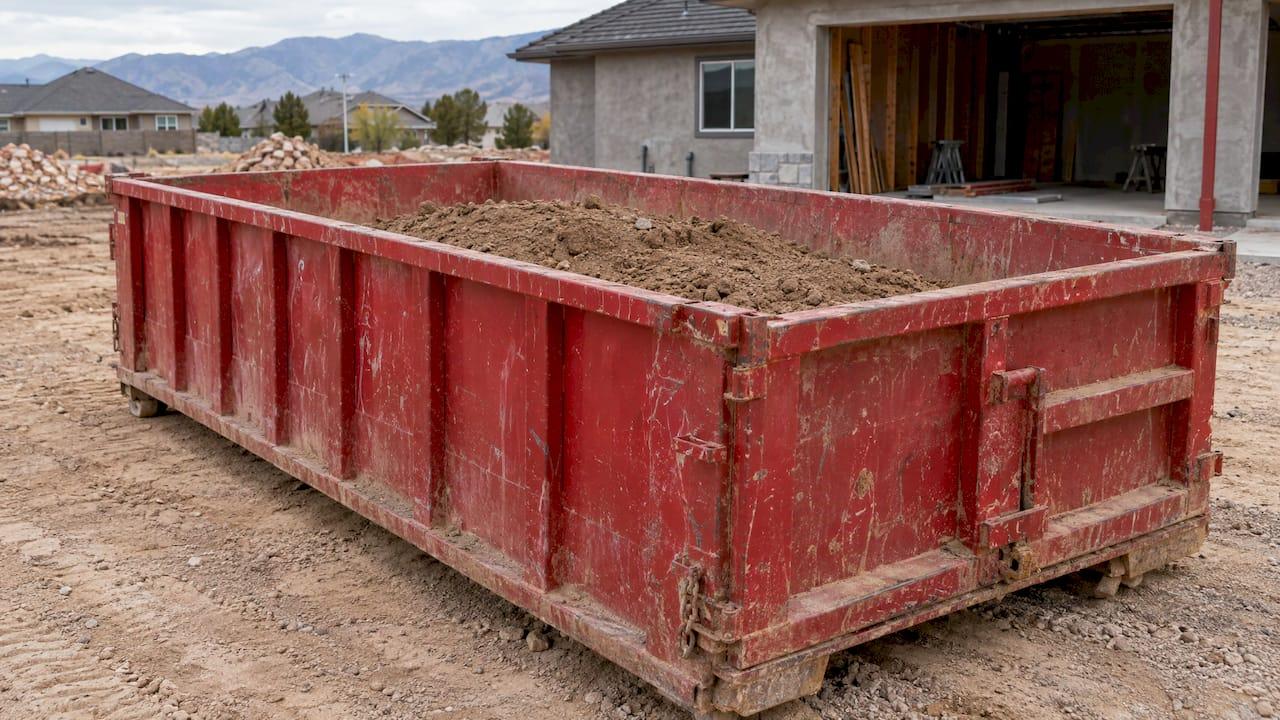
Yes, you can put dirt in a dumpster, but only if the dirt is clean, the container is sized for weight instead of volume, and the load stays under the fill line. Dirt that is mixed with trash, wood, roots, sod or chemicals is treated as ordinary debris or as regulated waste, and that changes the price, the container and sometimes where it can legally go. This guide covers the rules in plain terms for homeowners, landowners and contractors in Utah, with Iron County's landfill rules as the local example.
TL;DR
- Clean dirt means soil only: no trash, lumber, wire, roots, sod or chemical residue. Anything mixed in turns it into a mixed load.
- Dirt is heavy, so the limit is weight, not size. Use a smaller container and respect the fill line.
- Keep dirt out of the same dumpster as concrete scraps, yard waste and demolition debris unless the rental is set up for mixed loads.
- Contaminated soil from a spill or cleanup is regulated by state law and does not belong in a standard dumpster.
- In Iron County, every load headed to the landfill must be covered and secured, and hazardous waste is refused.
Table of Contents
- What counts as clean dirt
- Why dirt is a weight problem, not a space problem
- Fill-line rules in plain language
- Can you mix dirt with concrete, yard waste or demolition debris?
- What to check before you load
- Utah and Iron County: what the local rules say
- Contaminated soil is a different category
- Where dirt jobs usually come from
- Dumpster and dirt removal handled with the project
- Our view on dirt, dumpsters and doing it in the right order
- FAQ
- Sources
What counts as clean dirt
Clean dirt, often called clean fill, is native soil, subsoil or topsoil that has nothing else in it. The reason providers insist on this is practical. Clean soil is usually sent to a facility that reuses it as fill, cover or grading material, and those facilities only take material that is uncontaminated. One stray piece of lumber or a few rolls of sod can send the whole load to a different facility at a higher rate.
In practice, a clean dirt load is:
- Soil, clay or sand with no trash, bags, plastic or packaging.
- Free of wood, roots, stumps, grass, sod and other organic matter.
- Free of wire mesh, rebar, pipe and other metal.
- Free of large rocks. Many dirt-only programs set a maximum rock size, so ask before you load a pile with cobbles in it.
- Free of any petroleum, solvent, pesticide or other chemical residue.
If you are digging a foundation, trenching for irrigation or regrading a lot, most of what comes out of the ground is clean as long as it stays separate from the rest of the job's waste. The trouble starts when the excavation crew and the demolition crew share one container.
Why dirt is a weight problem, not a space problem
The single most common mistake with dirt is treating it like household junk. A dumpster is measured in cubic yards, but a landfill and the hauling truck care about tons. A cubic yard of soil commonly weighs well over a ton, and wet soil weighs noticeably more than dry. That means a container can look half empty and already be at the limit a truck can legally carry on the road.
This is why dirt loads are handled differently from other debris:
- Smaller containers. Dirt-only jobs are usually put in 10-yard containers, because a larger box filled with soil would be too heavy to haul.
- A fill line. Heavy material is loaded to a marked line, not to the rim. For some container sizes that line sits well below the top.
- Weight allowances and overage charges. Standard rentals include a set number of tons. Past that, you pay per ton based on the scale ticket from the landfill.
- Dirt-specific pricing. Some programs price clean dirt as a flat rate with no weight charge, because the material is recycled. Others treat it as regular debris with a standard allowance.
The practical takeaway: tell the provider you are loading dirt before the container is delivered, and tell them roughly how many cubic yards you expect. That one conversation decides the size, the price structure and the fill line.
A quick worked example
Say you are removing the soil for a 12 by 20 foot patio base, excavated about 8 inches deep. That is 240 square feet at roughly two-thirds of a foot, so about 160 cubic feet, or just under 6 cubic yards of loose-packed dirt. Because excavated soil expands once it is dug up, plan for somewhat more than that. At more than a ton per cubic yard, you are looking at a load in the range of several tons. A 10-yard container filled only partway is the right match. A 20- or 30-yard box would be the wrong choice, since it would be far too heavy to haul long before it looked full.

Fill-line rules in plain language
The fill line is the legal and practical stop point for loading. It protects the truck driver, the road and the container. A few rules apply almost everywhere:
- Never load above the line or the rim. Overfilled containers can be refused at pickup or charged extra, because they cannot be hauled safely.
- Keep the rear door area clear. The door has to latch, and nothing should hang over the edge.
- Spread the weight evenly. A pile of dirt in one corner can make the container unstable on the truck.
- Load heavy material first and low. If you are putting anything else in the same container, dirt goes on the bottom.
- Do not pack loose material so high it can blow or fall out on the road.
If your project produces more dirt than one container can take, schedule a swap instead of stacking the dirt higher. Two properly loaded containers cost less, and cause fewer problems, than one that gets turned away.
Can you mix dirt with concrete, yard waste or demolition debris?
The short answer is that mixing is where clean-dirt loads go wrong.
- Dirt with trash, wood, plastic or insulation. The load is no longer clean fill. It is priced and disposed of as a mixed load, usually at a higher rate.
- Dirt with sod, roots and yard waste. Organic matter does not belong in a clean-soil load. Grass clippings, branches and sod are handled as yard waste.
- Dirt with concrete or brick. Some programs accept clean concrete and dirt together in a dedicated heavy-material container, and others want them separate. Do not assume. If you are also breaking out a slab, see our guide on concrete disposal options and EPA rules before deciding how to sort the pile.
- Dirt in a general construction dumpster. Technically possible in a standard mixed-debris rental, but the weight allowance is reached quickly, and you pay for tonnage.
The cleanest approach on any job with more than one waste stream is to separate at the source. Put the excavated soil in one place, the demolition debris in another, and the green waste in a third. That costs you a few minutes of planning and saves the contamination fees later.
What to check before you load
Run through this list before the first shovel goes in:
- Know what is in the soil. If the ground was ever used for fuel storage, a shop, a dump or farm chemicals, do not treat it as clean fill until you know otherwise.
- Let it dry if you can. Wet soil is heavier and some facilities will not accept it. A few days of drying reduces weight and makes loading easier.
- Pull out the extras. Remove roots, sod, rebar, pipe, stakes, plastic sheeting and trash from the pile.
- Confirm the size and the allowance. Ask for the container size, the included tons or flat-rate terms, and where the fill line sits.
- Plan the placement. The container needs firm, level ground and clear space for the truck. Protect a finished driveway with boards under the container.
- Cover the load if required. In Iron County, loads arriving at the landfill must be covered and secured, so ask who handles the covering for your container.
- Check permits. If the container has to sit on a public street, your city may require a permit. Private driveways and job sites usually do not.
Utah and Iron County: what the local rules say
In Cedar City the relevant facility is the Iron County landfill. According to the Iron County solid waste page, the Cedar City landfill at 3127 N Iron Springs Rd accepts all wastes except hazardous wastes, such as batteries, pesticides and oil, and liquid wastes, such as paint. The county also publishes a rate for clean-fill landfills of $22.00 a ton, the same figure it lists for municipal solid waste and mixed loads. Rates and holiday closures change, so check the county page for the current schedule before a big haul.
A few other points from the same county page are worth knowing:
- Every load must be covered and secured. Uncovered soil is a road hazard and a reason to be turned away.
- Loads containing hazardous substances can be rejected in full, and the state environmental agency can be notified.
- Out-of-county waste pays a double fee, which matters if your project is near the county line.
- Asbestos loads must be scheduled in advance. If you are remodeling an older building, do not mix suspect material into a dirt or debris container.
At the state level, landfills and transfer stations in the county are required by the Iron County code of ordinances to be maintained to Utah Department of Environmental Quality standards. Those standards are the reason a facility can refuse a load it cannot verify as clean.
Contaminated soil is a different category
Soil that has been contaminated by a spill, a leaking tank or an industrial release is not clean dirt, and it does not go in a dumpster. Utah's Solid and Hazardous Waste Act excludes contaminated soils and tanks that result from remediation or cleanup of a release or spill from its definition of construction and demolition waste. In plain terms, that material follows a separate, regulated path.
If you suspect contamination, such as a stained area, a chemical smell, an old fuel tank or buried debris, stop digging in that spot and contact the Utah Department of Environmental Quality or a licensed environmental professional before moving any soil. Do not put it in a rental container and hope it passes.

Where dirt jobs usually come from
Most clean dirt comes from a handful of project types:
- Foundations and slabs. Excavating for footings and slab-on-grade work produces a lot of soil. Our concrete services cover driveways, slabs, foundations and flatwork.
- Patios, walkways and retaining walls. Base preparation removes several inches to a couple of feet of soil. See our hardscape work.
- Landscaping and irrigation. Trenching, regrading, turf prep and xeriscape conversions all generate dirt and sod. The sod must be separated from the soil. See our landscaping services.
- Fence lines. Post holes and trenches add up on long runs.
- Excavation and grading. Lot leveling, pads and drainage work are the largest dirt generators. Our excavation and grading service covers these.
If the dirt is going to be reused on your own property, for example as backfill, a berm or a leveling pad, you may not need a dumpster at all. Planning the earthwork so the cut and fill balance on site is the cheapest way to deal with soil.
Dumpster and dirt removal handled with the project
If you are hiring a contractor anyway, the simplest way to avoid the sorting, sizing and fill-line headaches is to have the waste handled as part of the job. A to Z Construction offers residential and construction dumpster rental in Utah, and our in-house, licensed crew handles earthwork, concrete, hardscape, fencing and landscaping from the first estimate to completion. With one point of contact for the whole project, the person who plans your excavation is the same person you talk to about where the soil goes.
If your project is a jobsite cleanup rather than a single dirt pile, our construction waste removal page explains what we offer for contractors and builders. Tell us what you are removing and how much, and we will help you plan the container around it.
Our view on dirt, dumpsters and doing it in the right order
We build the things that create the dirt: driveways, foundations, patios, retaining walls, fences and landscapes. So we think about where the soil goes before the first cut, not after the pile is already in the yard.
Our approach is to run every phase of a project with our own licensed crew, without handing pieces off to subcontractors. For dirt, that matters. When the same team plans the excavation, the grading and the cleanup, the soil can be kept clean and separate from the start, reused on site where it makes sense, and hauled once instead of three times.
Utah's climate and codes shape all of this. Dry ground in southern Utah makes for lighter loads, and local landfill rules about covering and sorting loads are not optional. Knowing them is part of the job.
If you are planning earthwork, a new slab or a landscape rebuild, ask us to include the dirt and the dumpster in the same bid. One contact, one schedule, and no surprises at the scale house.
Jake
FAQ
Can you put dirt in a dumpster?
Yes, as long as it is clean and the container is sized for weight. Dirt is very heavy, so a 10-yard container loaded partway is the usual choice. Always tell the provider you are loading soil before delivery so the size, price and fill line are set correctly.
What happens if I mix trash or sod with clean dirt?
The load stops being clean fill. It is handled as a mixed load, which usually costs more, and a facility that only takes clean soil can reject it or charge a contamination fee. Keep roots, sod, wood, wire and trash out of the dirt container.
Why is dumping dirt illegal in some places?
Dumping soil on public land, in a ditch or on someone else's property without permission is illegal in most places because it can damage drainage, spread contamination and violate land-use rules. Legal disposal means a permitted landfill or approved fill site, or reuse on your own property where local rules allow it.
Can contaminated soil go in a dumpster?
No. Soil affected by a spill, a leaking tank or chemicals is regulated by the state and needs approved handling. If you suspect contamination, stop and contact the Utah Department of Environmental Quality or a licensed environmental professional before moving it.
Do I need a permit to put a dumpster on my property?
On private property such as your driveway or job site, you usually do not. If the container has to sit on a public street or right of way, your city may require a permit, so check with your city before delivery.
Sources
- Iron County solid waste page
- Iron County code of ordinances, Chapter 17.36
- Utah Solid and Hazardous Waste Act, Part 1