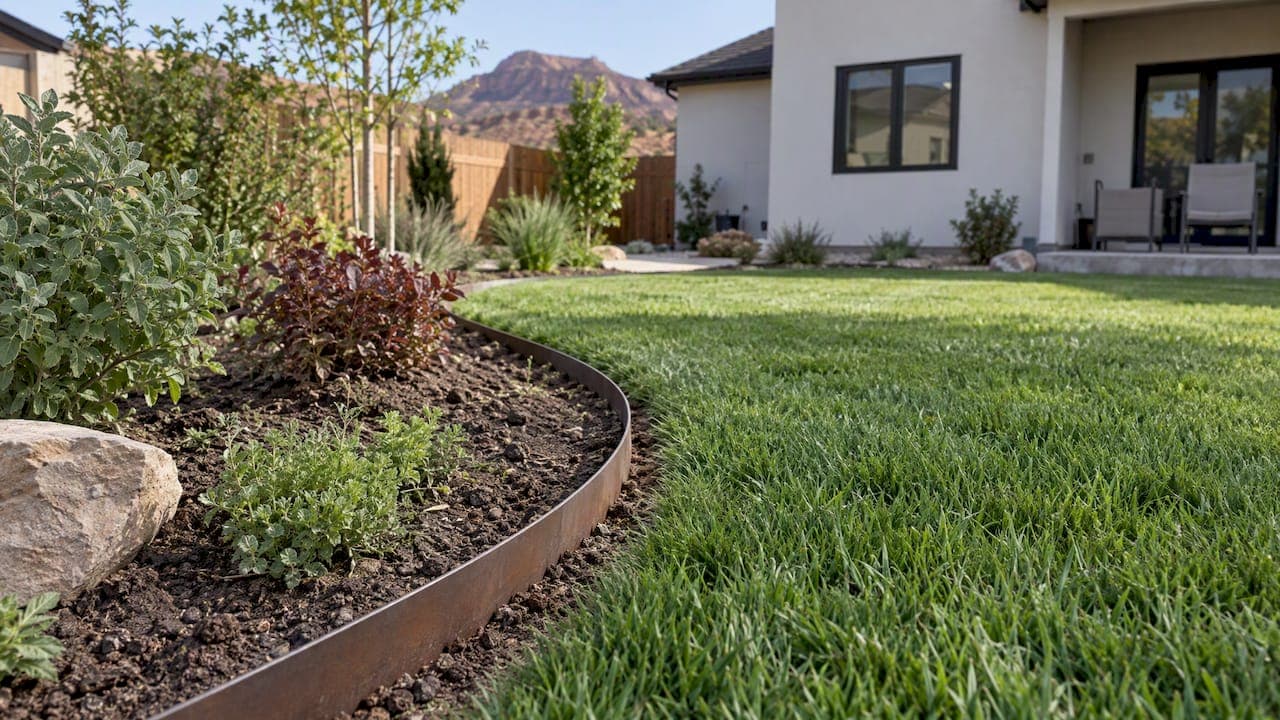
For long-term, low-maintenance borders, steel or pavers win out; for budget-friendly, no-dig projects, plastic or rubber edging does the job; for a formal, classic look, brick or natural stone fits best. A simple spade-cut trench can also work as a free, low-fuss option. Each direction suits different goals around maintenance, style, and yard size, so the materials breakdown and choosing checklist below will help narrow things down.
TL;DR:
- For an effective root barrier, cut a straight trench 4 to 6 inches deep, then compact the base before installing and backfilling edging.
- A spade cut costs nothing but needs recutting every few weeks; thin plastic or rubber may crack in cold weather and shift within two seasons.
- Flush pavers provide a stable mowing strip, while low profile steel suits tight curves and small modern yards; use one material consistently.
- Sheet mulching with cardboard and mulch converts lawn to planting beds without edging, but it takes several months to break down before planting.
Table of Contents
- Common Yard Edging Materials and Styles
- How to Choose Edging for Your Yard
- Installation Fundamentals and Durability
- Low-Cost and DIY Edging Options
- Design Tips for Small and Modern Garden Spaces
- Contractor Tips From A to Z Construction
- Jake's Perspective: Balancing Aesthetics and Longevity
- Professional Edging and Hardscape Installation
- FAQ
- Sources
Common Yard Edging Materials and Styles
Picking the right border starts with knowing what each material actually does well, and where it tends to fall short.
A cut or spade edge, carved straight into the turf, costs nothing but a few hours of labor. It looks clean right after cutting but needs re-cutting every few weeks to hold its line, and it offers almost no root barrier against spreading grass.
Plastic and rubber edging are the easiest no-dig options on the market. They install fast, bend around curves, and cost little upfront, but thinner gauges crack under freeze-thaw cycles and can pop out of the ground within a season or two, according to product testing from The Spruce.
Steel edging, including Corten steel strips, delivers the clean, minimal line that modern gardens tend to favor. It holds tight curves better than rigid materials, resists heaving when installed at the right depth, and develops an even rust patina over time that many homeowners treat as a design feature rather than a flaw.
Brick and paver borders bring a formal, structured look and double as a mowing strip when set flush with the lawn. They need a compacted base to stay level, but once set correctly, they rarely shift.
Natural stone and flagstone offer visual character that manufactured materials cannot match, though irregular shapes mean more hand-fitting during installation and occasional resetting as soil moves.
Concrete or cement curbing is close to permanent once cured, but it is a job for a professional crew with the right forms and mix, not a weekend project.

Treated wood and log-style borders suit informal raised beds and cottage-style plantings, but expect rot and replacement within several years depending on soil moisture.
Decorative edging, such as faux stone panels, short picket fencing, or pebble-filled borders, installs quickly and leans more toward style than function.
- Spade-edge: free and fast, but needs regular upkeep.
- Plastic/rubber: cheap and flexible, but short-lived in harsh climates.
- Steel: modern and durable, with a visible patina over time.
- Brick/pavers: formal and stable, ideal as a mowing strip.
How to Choose Edging for Your Yard
Start by naming the job the edging needs to do. A mowing strip calls for something flush and rigid, a root barrier needs real depth below grade, and purely decorative containment can be lighter and cheaper.
Next, look at your site conditions. Slope affects how edging sits and sheds water, frost-prone soil pushes rigid materials upward over winter, and tight curves rule out stiff materials like poured concrete or thick timber.
Then weigh cost against lifecycle. A cheap plastic edge might need replacing every few seasons, while steel or pavers cost more upfront but rarely need touching again.
- Define the primary job: mowing strip, root barrier, or decorative line.
- Check slope, frost exposure, and how tight your curves need to be.
- Compare upfront price against expected years of service.
- Ask any contractor or seller about warranty terms, required trench depth, and drainage around the edge.
Pro Tip: Walk your yard with a hose or rope laid along your planned edge line before buying anything, it reveals curves and pinch points no tape measure will catch.
Installation Fundamentals and Durability
Depth is what separates edging that lasts from edging that fails within a year. A common point of confusion is the so-called 3-inch edging rule, a shallow depth often repeated online. Extension guidance from Kansas State University recommends a 4 to 6 inch trench with a 90-degree cut face for an effective root barrier, since shallower cuts let grass roots simply grow underneath.
A trench of 4 to 6 inches is the depth range extension sources point to for long-term root control, far more effective than relying on surface trim alone.
- Mark your line and remove turf along it.
- Cut a straight 90-degree trench to the full depth needed.
- Compact the base before setting any material.
- Anchor steel or bed pavers on sand, then backfill tightly to close gaps.
Freeze-thaw cycles push shallow or poorly anchored edging out of the ground over winter, so colder climates benefit from heavier-gauge steel or deeper-set hardscape. Homeowners can handle marking and digging, but poured concrete curbing or tricky drainage transitions are better left to a licensed earthwork crew.
Low-Cost and DIY Edging Options
Budget-conscious projects still have solid choices. No-dig plastic or rubber coils snap into place without a trench, faux stone pieces mimic masonry at a fraction of the price, and reclaimed brick or pavers set on edge create a sturdy border from salvaged material.
Sheet mulching, which smothers turf with cardboard and mulch layers, works as a no-edging alternative for converting lawn to bed space, per Penn State Extension guidance, though it takes several months to break down before planting.
- Compact the base soil before setting any edging material.
- Warm pliable plastic edging in the sun to make curves easier to shape.
- Drive anchor stakes at consistent intervals so wind and mowers can't shift the line.
- Re-cut or re-trim grass edges on a regular schedule to keep the border crisp.
DIY coils and reclaimed materials save money, but they become false economy fast if the base isn't compacted first. Homeowners building supports or temporary frames alongside edging sometimes borrow ideas from PVC project plans for bending and anchoring pipe, a trick that carries over well to flexible edging work.
Design Tips for Small and Modern Garden Spaces
Small yards read as larger when edging stays low-profile. Flush pavers, narrow steel strips, or slim coping avoid the visual clutter that chunky timber or stacked stone can create.
Repetition helps too: a single, continuous material used the same way around every bed keeps a compact space feeling unified rather than busy. Keep edge height proportional to what's planted next to it, tall borders around low groundcover look out of scale.
- Choose low-profile steel or flush pavers over tall or bulky materials.
- Use one consistent edging style throughout the yard, not several competing ones.
- Try micro-edging, like mini fences or pebble borders, for container groupings.
- Match modern architecture with Corten steel, narrow linear pavers, or concealed fixings.
Contractor Tips From A to Z Construction
The most common failure we see on edging jobs is shallow placement. Homeowners cut a 2 to 3 inch trench, skip compacting the base, and ignore nearby tree roots, and within a season the border has shifted or grass has crept underneath.
Cutting a proper 90-degree trench and compacting the base before anything goes in the ground is the single step that prevents most edging failures we get called to fix.
Our crews set steel deeper in frost-prone soil and bed pavers on compacted sand with a rigid edge restraint behind them to stop lateral creep. For poured concrete curbing, steep slopes, or any job that ties into existing hardscape, calling a licensed contractor saves money over redoing a DIY attempt. We've documented similar prep-and-anchoring lessons in a sloped-yard fencing project that applies the same depth and compaction principles.
Pro Tip: If you're unsure whether your soil needs a deeper trench, dig a test hole where frost heave has caused problems before, it tells you more than any depth chart.

Jake's Perspective: Balancing Aesthetics and Longevity
Good edging is a prep job wearing a pretty finish. Spend the extra hour compacting the base and cutting a real trench, and you skip years of resetting, replacing, and redoing. Shortcuts at install always cost more later.
— Jake
Professional Edging and Hardscape Installation
If a DIY edge starts shifting or a concrete curb needs forms and a proper pour, that's where our hardscape team steps in. We handle paver patios and walkways, retaining walls, and integrated curbing as part of broader landscaping projects, and our landscaping services tie edging into irrigation, turf, and planting beds so everything works together.

Request a free estimate and we'll walk your yard with you before any digging starts.
FAQ
What type of lawn edging is best?
Steel and paver edging tend to last the longest with the least upkeep, while plastic or rubber coils cost less upfront but wear out faster. The right choice depends on your budget, climate, and how much maintenance you want to do each year.
How can I edge my lawn cheaply?
A spade-cut trench costs nothing but labor and works well for a season or two of clean lines. No-dig plastic coils and reclaimed brick or pavers laid on their side are also low-cost options that hold up longer than a plain cut edge.
What is the 3-inch edging rule?
The "3-inch rule" refers to a shallow edging depth sometimes recommended for quick, decorative borders, but extension guidance from Kansas State University points to a 4 to 6 inch trench for an effective root barrier. Shallower cuts mainly look neat but let grass roots grow underneath over time.
What to use instead of landscape edging?
Sheet mulching, which layers cardboard and mulch over turf to smother it, works as a no-edging method for converting lawn into a planting bed, according to Penn State Extension. A simple spade-cut line is another option when a hard material border isn't needed.
Sources
- All About Edging (Johnson County / K-State Extension)
- Sheet mulching: lawn to garden bed in 3 steps (Penn State Extension)