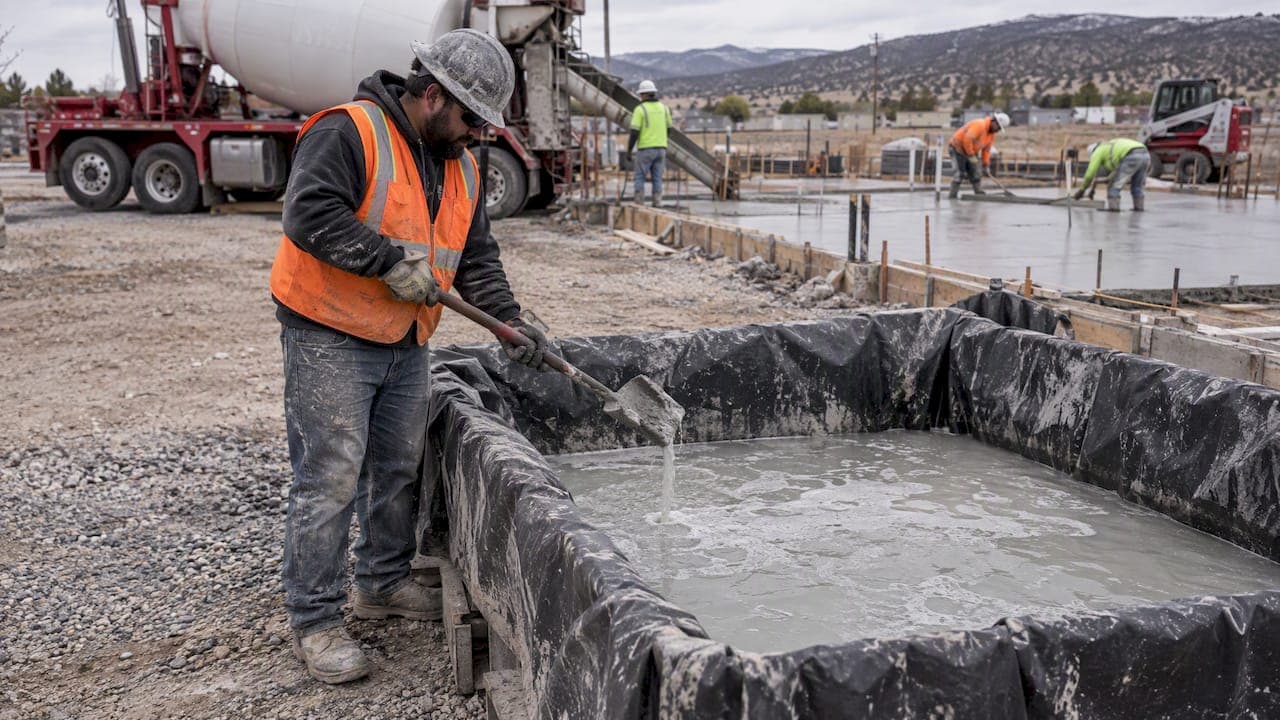
Contain all concrete washout in a lined, leak-tight pit or container and never let washwater reach a storm drain, ditch, or natural water body. The slurry is highly alkaline, so it should be contained and kept out of storm drains and natural water bodies. Let solids harden, then recycle or dispose of them properly, and only treat or move washwater through filtration or an approved disposal route.
TL;DR:
- Where guidance applies, keep washout 50 feet from drains, ditches, and open water, using a sealed container or liner at least 10 mil thick.
- A 10 foot by 10 foot lined pit is a common baseline; preserve freeboard and inspect after heavy rain to prevent overflow.
- Filter washwater through coarse aggregate, grit, and fines before reuse; carbon dioxide or dry ice controls pH without prior approval, unlike most chemicals.
- Arrange recycling or hauling before the pour; clean cured concrete can become road base or fill, while contaminated debris may require landfill disposal.
Table of Contents
- On-site quick checklist for crews between pours
- How to build a temporary washout that won't leak
- Choosing between bags, bins, buckets, and dry-reclaim additives
- How to filter, neutralize, and recycle washwater
- What to do with hardened concrete solids
- Permit rules every crew needs to know
- A contractor's take on what actually prevents violations
- How A to Z Construction handles washout, hauling, and recycling
- FAQ
- Sources
On-site quick checklist for crews between pours
Keep this list posted near the washout area and walk new crew members through it before the first pour of the day.
- Site the washout at least 50 feet from storm drains, ditches, or open water where state guidance applies.
- Line the pit with 10-mil polyethylene or thicker, or use a leak-tight container instead of digging an unlined hole.
- Maintain the recommended freeboard for above-grade and below-grade facilities so nothing overflows.
- Use only the water needed to clean chutes and tools, and keep containers covered ahead of forecasted rain.
- Inspect the washout regularly and after heavy rain, then empty or vacuum it before it overflows.
- Mark the washout location clearly and cover it in the daily toolbox talk so nobody dumps elsewhere out of habit.
Pro Tip: Tape a laminated copy of this checklist to the washout frame itself. It survives weather better than a clipboard and stays exactly where crews need it.
How to build a temporary washout that won't leak
A temporary washout only works if it is sized and lined correctly from the start. Above-grade and below-grade builds solve the same problem differently, and the right choice depends on soil, space, and how long the washout needs to stay active.
- Frame an above-grade pit: build berms around a footprint of roughly 10 feet by 10 feet, a common baseline for many jobs, and line the inside with at least 10-mil polyethylene sheeting.
- Hold freeboard: leave enough space between the washwater surface and the top of the berm to prevent liquid from overflowing, per EPA stormwater BMP guidance.
- Dig a below-grade pit when space is tight: excavate, line the full pit including sides and base, and position it above the seasonal high water table where possible.
- Maintain freeboard below grade: leave enough clearance to reduce the risk of overflow.
- Consider portable units: vinyl containers and metal roll-off bins with covers and pump-truck ramps work well on sites without room to excavate.
- Close it out: let liquid evaporate or vacuum it off, then break up the hardened solids for recycling or disposal.
The same EPA guidance recommends a 10-mil polyethylene liner as the practical minimum thickness, since thinner sheeting tears under foot traffic and concrete chunks.
Check liners daily and after heavy rain, and patch any tear the moment you see it. A puncture can let washwater escape, so repair damage promptly.

Choosing between bags, bins, buckets, and dry-reclaim additives
Job size and schedule usually decide which containment method makes sense, more than preference alone.
- Washout bags and small vinyl tubs cost the least and suit small residential pours where volume stays low.
- Metal roll-off washout bins handle larger commercial jobs better: they're portable, reusable across pours, and make recovering hardened solids easier than digging them out of a pit.
- Chute-mounted buckets let drivers capture washwater at the truck itself, cutting down on liquid handling across the whole site, a practice EPA guidance describes alongside vinyl containers and roll-off bins.
- Dry reclaiming additives convert returned fresh concrete into a dry granular material without adding wash water, which eliminates a chunk of the liquid waste problem when a supplier offers the option.
- Weigh job size, rain exposure, available labor, and local recycling access before locking in a method for the whole project.
How to filter, neutralize, and recycle washwater
Washwater does not need to end up as waste. A basic three-stage filtering approach gets most of it back to a usable or dischargeable state.
- Separate coarse aggregate first, letting the heaviest material settle or screening it out before the water moves anywhere else.
- Remove grit and sand through a secondary filter or settling basin, which clears most of the visible cloudiness.
- Reduce pH and remove fines last, since untreated washwater can be highly alkaline and harmful to soil and aquatic life.
Filtered water may be reusable for flushing chutes and tools, depending on site requirements and applicable approvals. For pH control, carbon dioxide or dry ice is the method state guidance accepts without prior sign-off, while most chemical neutralizers require written approval from the regulating agency before you use them.
When on-site treatment isn't practical, arrange an approved disposal route for the washwater, such as delivery to a treatment facility or publicly owned treatment works. A waste handler or concrete recycler may be able to help with paperwork and hauling when a site generates more washwater than the crew can process.
Pro Tip: Call the recycler or treatment facility before the pour to confirm its requirements and arrange an approved disposal route.
What to do with hardened concrete solids
Once washwater is gone and the slurry has cured, the leftover solids still have value if you handle them right.
- Break up hardened residue and pull out any embedded rebar or metal before hauling, since clean loads cost less to process.
- "Clean" concrete, free of soil or major contamination, is frequently accepted by recyclers as aggregate for road base or fill.
- Mixed or contaminated debris often has to go to a construction and demolition landfill, where tipping fees apply.
- Small amounts can sometimes stay on-site as fill material or for basic erosion control instead of leaving the property at all.
- Line up a recycler or roll-off provider before the job starts so pickup and documentation are ready the moment the washout closes.
Contractors who plan ahead this way routinely cut both hauling trips and disposal costs compared with scrambling after the pour.
Permit rules every crew needs to know
Stormwater permits require washout to be controlled and managed so it does not enter storm drains or surface waters.
- Best management practices call for washout in designated, lined areas with enough capacity for the liquid and solids, not an afterthought pit.
- Chemical pH treatments beyond carbon dioxide or dry ice typically need written approval from the state regulator before use or before any discharge to a treatment plant.
- Keep inspection and maintenance records as part of the washout plan, and follow applicable permit requirements.
- Support activities tied to the project may also be subject to stormwater controls under NPDES construction permit language.
A washout sized below 10 feet by 10 feet is a common cause of overflow violations on larger pours, since it simply can't hold what a full truck generates.
A contractor's take on what actually prevents violations

Most washout violations trace back to timing, not ignorance. Crews know the rules, but they schedule hauling after the pit is already full. Booking a recycler or hauler before the pour, not during cleanup, removes that pressure entirely.
Another potential problem is a torn liner that goes unnoticed, or concrete tracked across the site and left uncleared. Both can be straightforward to address but may go unnoticed if crews do not check the area. Tagging the washout area in the morning briefing and keeping one dedicated container on every active site solves more inspection problems than any paperwork update ever will.
— Jake
How A to Z Construction handles washout, hauling, and recycling
Setting up a compliant washout on top of everything else a pour demands is one more thing to get wrong under deadline pressure. As a Utah general contractor, we can fold washout handling straight into the project instead of treating it as a separate headache.

- We set up lined washout pits or containers sized for your pour from day one.
- We coordinate recycling so solids don't sit around waiting for a hauler.
- We can include washout management in the project scope from the first estimate, not as a change order later.
If you're planning a concrete driveway, slab, or foundation pour, reach out for a site assessment and we'll build washout handling into the plan from the start.
FAQ
What is done with waste concrete?
Hardened waste concrete can be broken up and sorted, then recycled where accepted or taken to an appropriate disposal facility. Liquid washwater should be contained and managed through an approved treatment, reuse, or disposal route.
What is the 421 rule for concrete?
There is no widely recognized rule with a specific number in concrete washout guidance. If you've seen the term used locally, check with the relevant building or environmental department.
What is poor man's concrete?
This isn't a standard term for concrete washout or disposal. If you encountered it describing a mix or technique, ask the person using the term what they mean.
Is concrete washout good for a driveway?
No. Washout slurry is not designed as a driveway material. Use concrete specified for the driveway instead of washout residue.
Sources
For sizing specifics, liner requirements, and permit language, these documents cover the details this guide summarizes:
- Stormwater Best Management Practices: Concrete Washout
- How to Meet Ecology's Construction Stormwater General Permit Requirements: A guide for Construction Sites