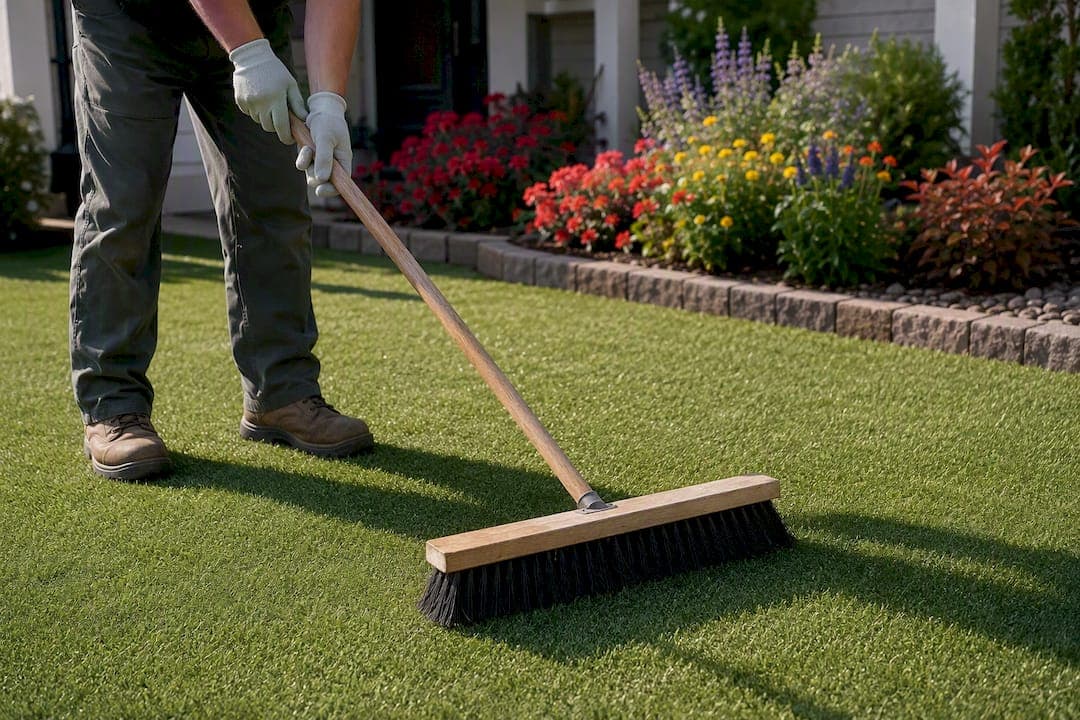
A simple, repeatable routine of debris removal, targeted rinsing, and regular brushing keeps artificial turf looking great and protects its warranty. Do this weekly: clear leaves and debris, rinse pet-traffic zones, and brush high-use paths against the grain. Do this monthly: groom the full lawn to lift matted fibers and redistribute infill. Manufacturer manuals like SYNLawn's care guide back this cadence, and most warranty terms assume you're following something close to it.
- Weekly: Remove debris, spot-rinse high-traffic and pet areas, brush busy paths.
- Monthly: Full-lawn grooming session, infill check, drainage spot-check.
- Seasonally: Deeper reset for spring pollen, fall leaves, and winter snow load.
- Annually: Professional deep clean and infill replenishment, especially for heavy-use lawns.
Key Takeaways
Consistent weekly brushing and monthly grooming prevent most artificial turf problems before they require costly professional repair.
| Point | Details |
|---|---|
| Brush weekly, groom monthly | High-traffic paths need weekly brushing; a full-lawn groom every 4 to 8 weeks handles residential use. |
| Rinse pet areas often | Enzyme cleaners need real dwell time to break down odor-causing bacteria before rinsing. |
| Act fast on stains | Food, grease, and paint respond best within minutes; dried petroleum stains may be permanent. |
| Watch infill levels | Low spots, pooling water, or hard footing signal it's time to redistribute or top off infill. |
| Call a pro annually | A-to-zconstruction handles infill replenishment, drainage repair, and seam fixes that protect long-term warranty coverage. |
Table of Contents
- How Often Does Artificial Turf Maintenance Need To Happen?
- What Is the Right Way To Clean and Brush Artificial Turf?
- How Do You Clean Up Pet Waste on Artificial Turf?
- How Do You Get Stains Out of Artificial Turf?
- Why Does Infill Matter and When Should You Top It Off?
- How Do You Fix Small Tears and Drainage Problems?
- When Should You Hire a Professional for Turf Maintenance?
- What Tools and Products Belong in a Turf Maintenance Kit?
- What Do Contractors See Most Often When Turf Goes Wrong?
- Need a Hand With Turf Repairs or a Professional Reset?
- Sources
- FAQ
How Often Does Artificial Turf Maintenance Need To Happen?
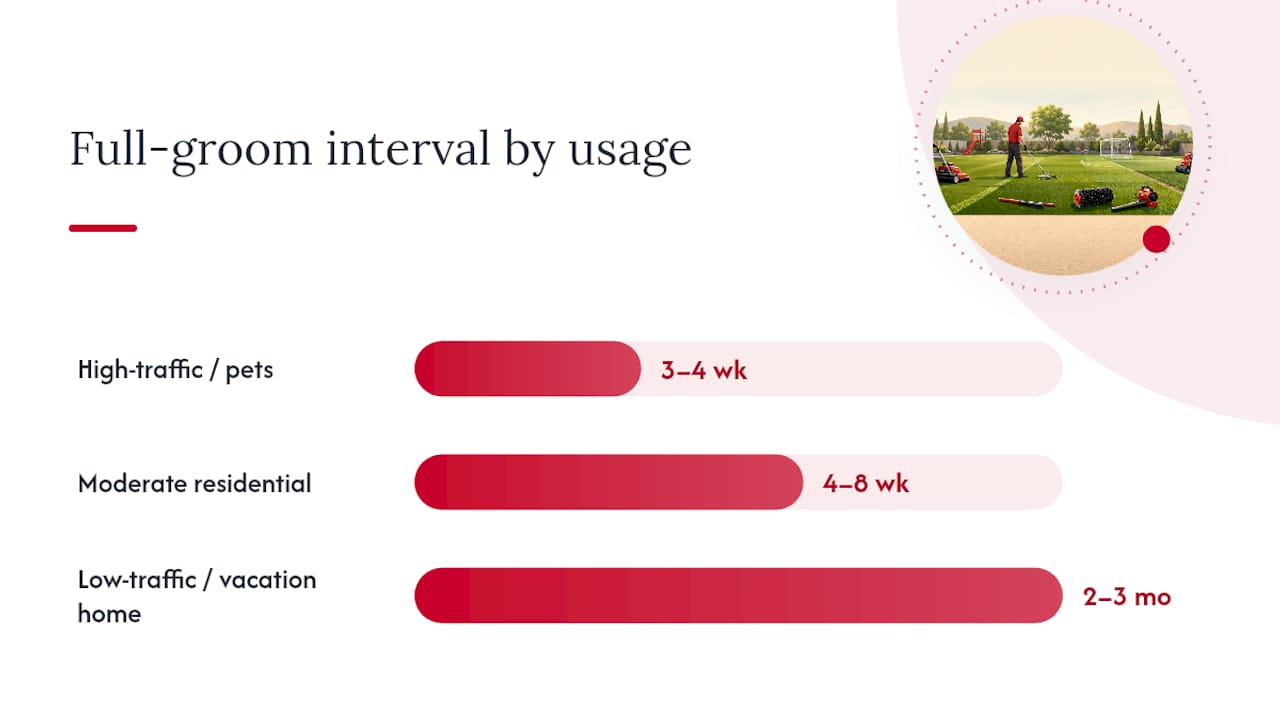
The honest answer: it depends on how hard your lawn works. A dog-friendly backyard needs more attention than a decorative side strip nobody walks on. FusionTurf's brushing guidance recommends brushing high-traffic paths weekly, grooming a typical residential lawn every few weeks, and stretching low-traffic or vacation-property turf to every couple of months.
| Usage tier | Weekly tasks | Monthly/seasonal tasks |
|---|---|---|
| High-traffic / pets | Brush paths, rinse waste zones | Full groom every 3–4 weeks, infill top-up |
| Moderate residential | Quick debris check | Full groom every 4–8 weeks |
| Low-traffic / vacation home | Occasional debris check | Full groom every 2–3 months |
Spring calls for a full reset after winter compaction and pollen buildup. Fall means more frequent debris removal as leaves pile up. Winter care is mostly about avoiding compacted snow and ice scrapers. Summer heat can soften infill and flatten blades faster near reflective surfaces like glass doors or pool decks, so check those hot spots more often.
Pro Tip: Bump your grooming frequency temporarily after a backyard party, a heavy storm, or a stretch of extra dog traffic. Manufacturer warranties often specify a maintenance baseline, and catching up quickly after a spike in use keeps you within those terms, according to Turfspin's scheduling guidance.
What Is the Right Way To Clean and Brush Artificial Turf?
Sequence matters more than most homeowners realize. Clean in the wrong order and you just push dirt deeper into the infill instead of removing it.
- Clear loose debris first with a leaf blower or hand pickup. Never skip this step before rinsing.
- Rinse the entire area with a garden hose to knock down dust and flush the infill layer.
- Brush against the grain using a synthetic-bristle broom or push rake with plastic tines, working in overlapping passes.
- Cross-brush a second time over high-traffic zones to fully lift matted fibers.
- Do a final light rinse if the lawn saw heavy dirt or dust that day.
TurFresh's rebloom guide confirms this brushing motion, called reblooming, restores blade lift and pushes infill back into an even layer, which helps both drainage and appearance.
Safe tools:
- Synthetic-bristle push broom or brush
- Leaf blower (low setting)
- Garden hose with a spray nozzle
Tools to avoid:
- Metal rakes or wire brushes, which snag and fray fibers
- Hot-water or high-pressure washing, which can loosen seams and blast out infill
How Do You Clean Up Pet Waste on Artificial Turf?
Pick up solid waste immediately, every time. Letting it sit invites staining and odor that work their way into the infill layer, which acts as a buffer against bacteria and smell.
- Remove solid waste right away with a bag or scoop.
- Rinse the spot with water, more often in warm weather or in zones your dog favors.
- Apply a turf-safe enzyme cleaner directly to urine-prone patches.
- Let it sit for the dwell time on the label, usually several minutes, so the enzymes actually break down odor-causing bacteria.
- Rinse thoroughly once the dwell time is up.
Skipping the dwell time is the most common mistake pet owners make. Enzyme cleaners need contact time to work, not just a quick spray-and-rinse. Stick to enzyme-based, turf-labeled products and skip bleach or ammonia entirely. Both can degrade backing and fiber coatings over time.
How Do You Get Stains Out of Artificial Turf?
Speed matters more than the product you reach for. A stain that sits for a day is harder to lift than one you catch in minutes.
- Food and grease: Blot, don't rub. Use mild dish soap diluted in water.
- Gum: Freeze it with an ice cube, then gently scrape it off once hardened.
- Paint: Act fast with water while it's wet; dried latex paint is often permanent.
- Oil or petroleum products: Blot immediately; avoid solvent-based cleaners, which can dissolve backing adhesives.
SYNLawn's care manual warns against certain solvents and high-pressure streams for exactly this reason, they can do more damage than the stain itself. If a stain won't budge after one gentle attempt, stop. Call a professional or your original installer rather than risk the backing.
Why Does Infill Matter and When Should You Top It Off?
Infill is the sand or rubber granulate layer between the blades. It weighs the turf down, cushions footsteps, helps water drain through the backing, and buffers odors from pets and organic matter.
Watch for these warning signs that infill needs attention:
- Low spots or visible backing showing through the fibers
- Water pooling instead of draining quickly after rain
- Ground feeling harder underfoot than it used to
- Odors that keep returning even after cleaning
Redistribute infill during your regular grooming sessions, brushing it evenly rather than letting it pile up in low-traffic corners. Landscape turf typically runs a lighter infill depth than pet-specific systems, which are usually built heavier to manage odor and drainage. Product data sheets from your specific turf manufacturer are the final word on the right depth and material for your lawn, since formulations vary. Top-ups should be broadcast lightly and brushed in, never dumped in one spot.
How Do You Fix Small Tears and Drainage Problems?
Minor damage is often a weekend fix; drainage trouble usually isn't.
- Reattach a lifting seam edge with turf adhesive and seam tape rated for outdoor use.
- Patch small tears with a matching turf remnant and adhesive, trimmed to blend with the surrounding pile.
- Re-secure loose edging or staples along perimeters where turf meets hardscape.
- Check for pooling water 30 minutes after a rinse. Water that sits instead of draining points to a base or drainage issue, not a surface problem.
If a seam keeps failing after repair, the base has shifted, or water still pools after reblooming and brushing, that's your signal to call a contractor rather than keep patching.
When Should You Hire a Professional for Turf Maintenance?
DIY care handles most upkeep, but some jobs need equipment and expertise homeowners don't have on hand.
- Deep cleaning and sanitization using commercial-grade equipment
- Infill extraction and full replenishment
- Power brushing with a nylon power broom for large or heavily matted areas
- Seam repair and drainage remediation
Annual or biannual professional service is worth scheduling for high-use residential lawns and close to mandatory for commercial installations, according to Safe Healthy Playing Fields' maintenance guidance. It's also often tied to warranty terms, since manufacturers frequently expect documented maintenance before honoring a claim.
Pro Tip: Save every service receipt and snap before-and-after photos of major cleanings or repairs. If you ever need to file a warranty claim, that paper trail is often the difference between an approved claim and a denied one.
What Tools and Products Belong in a Turf Maintenance Kit?
Keep it simple. A leaf blower, a synthetic-bristle push broom, a push rake with plastic tines, a garden hose with a spray nozzle, and a turf-safe enzyme cleaner cover nearly everything a homeowner needs.
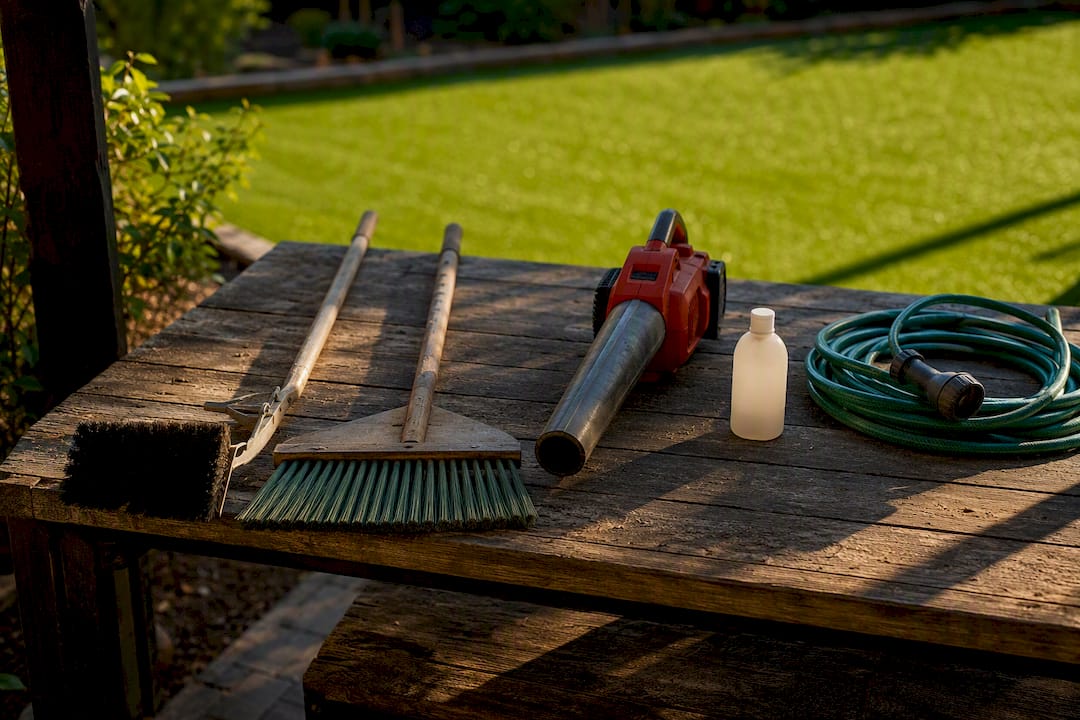
Skip metal rakes, wire brushes, hot-water pressure washing, and bleach or ammonia-based cleaners entirely. A nylon power broom speeds up large grooming jobs, but it's usually worth renting or hiring out rather than buying for occasional use.
What Do Contractors See Most Often When Turf Goes Wrong?
Most turf damage isn't from age. It's from a metal rake left in the garage getting grabbed out of habit, or a homeowner blasting a stained patch with a hot-water pressure washer because it seemed faster. Both shred fibers and loosen seams faster than years of normal foot traffic ever would.
The lawns that hold up best get light, frequent grooming instead of occasional deep intervention. Check seams after winter thaw, and schedule a rebloom before big spring and summer events rather than after. A five-minute weekly brush beats an expensive restorative visit every time.
Pro Tip: If you only do one thing consistently, brush. It's the cheapest habit that prevents the most expensive repairs.
Need a Hand With Turf Repairs or a Professional Reset?
A-to-zconstruction handles what DIY maintenance can't: infill leveling and replenishment, drainage and base repairs, seam reattachment, and full installation inspections when a lawn needs more than a brush and a hose.

Because A-to-zconstruction's crews handle turf, grading, and drainage work in-house, a drainage issue traced back to the base doesn't mean juggling a turf company and a separate excavation contractor. One licensed crew handles the diagnosis and the fix, which matters when pooling water turns out to be a grading problem rather than a surface one. If your lawn's seams are failing, infill has gone flat, or drainage isn't keeping up after storms, request a free artificial turf estimate and get a professional read on what it actually needs.
Sources
- How Often to Brush Artificial Turf: Schedule and Tips | FusionTurf
- Maintenance: Synthetic Turf - Safe Healthy Playing Fields
- Artificial Grass Maintenance & Turf Rebloom Guide | TurFresh
- Care and Maintenance Manual (SYNLawn)
- Creating an Effective Artificial Turf Maintenance Schedule – Turfspin
FAQ
What Maintenance Does Artificial Turf Actually Need?
Regular debris removal, brushing to keep fibers upright, prompt rinsing of pet areas, and periodic infill redistribution cover most upkeep needs. Annual professional deep cleaning handles what DIY tools can't reach.
Do You Need To Add Sand or Infill Every Year?
Not necessarily every year, but check infill levels at least annually and top off when you notice low spots, pooling water, or harder footing. Frequency depends on foot traffic and pet use, and product data sheets from your specific turf are the final word on depth.
How Often Should You Brush Artificial Turf?
Brush high-traffic paths weekly and groom the entire lawn every 4 to 8 weeks for typical residential use, stretching to every 2 to 3 months for low-traffic areas.
Can You Pressure Wash Artificial Turf?
Only with cold water, a wide-angle nozzle, low pressure, and staying at least 12 inches from the surface. Hot water or direct high-pressure spray near seams can loosen adhesive and blast out infill.
When Should You Call a Professional Instead of Doing It Yourself?
Call a pro for seam failures, persistent pooling after brushing, base or drainage issues, or when your warranty terms specify professional service. A-to-zconstruction handles these repairs alongside infill replenishment and drainage fixes for Utah properties.