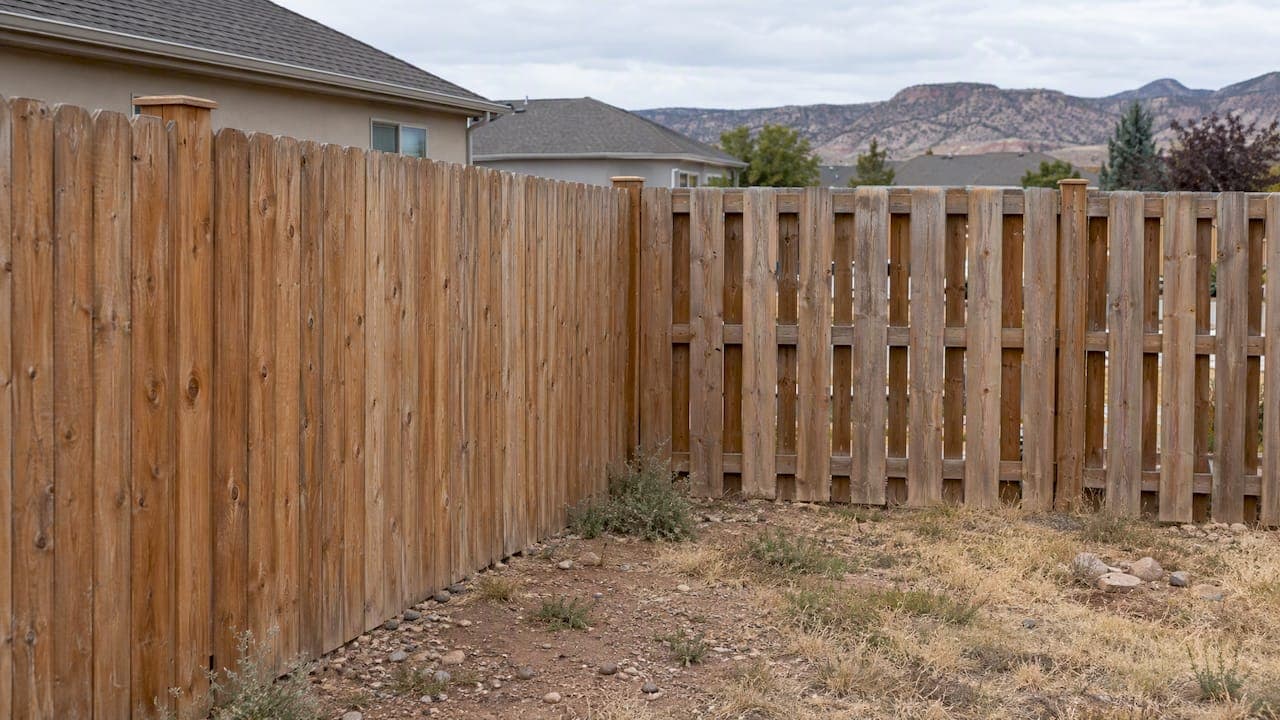
Board-on-board wood fencing gives most homeowners the best balance of full privacy, durability, and resale appeal, with shadowbox and vinyl panel styles close behind for neighbor-friendly or low-maintenance needs. Before picking a style, check your local height and permit rules, since fences over a common threshold often require approval. The style families worth comparing are solid vertical wood, horizontal slat, shadowbox, vinyl, and masonry.
TL;DR:
- For neighbor goodwill or windy yards, shadowbox leaves airflow gaps and finished faces on both sides; louvered panels also soften wind but screen less completely.
- A lattice topper blocks sightlines only when its openings are privacy grade, around one inch; standard four inch garden lattice is mostly decorative.
- Wood needs sealing every two to three years, and cedar typically lasts 15 to 20 years; vinyl needs occasional washing and lasts 20 years or more.
- Many jurisdictions cap rear and side fences around six feet and front fences around four, but local permits, zoning, and HOA rules can differ.
- Wind exposed solid fences may need posts buried 36 to 48 inches, with footings below the frost line to prevent heaving.
Table of Contents
- Privacy Fence Styles Gallery: What Each Design Actually Offers
- Materials and Tradeoffs: Wood, Vinyl, Metal, and Masonry
- Permits, Height Limits, and Structural Basics to Check First
- When to Hire a Contractor Instead of Building It Yourself
- Which Styles Block Sightlines and Which Ones Let Light Through
- How Much Upkeep Each Style and Material Actually Needs
- Climate Factors That Affect Fence Choice in Cedar City, Utah
- Balancing Privacy, Looks, and Being a Good Neighbor
- A to Z Construction's Fencing Services: Get a Free Estimate
- FAQ
- Sources
Privacy Fence Styles Gallery: What Each Design Actually Offers
Each style trades privacy, cost, and upkeep differently. Here's how the most common options stack up.
Board-on-board overlaps two layers of vertical boards so there are no gaps to see through from either side. It scores 9 to 10 out of 10 for privacy and works well for backyards bordering busy streets or close neighbors. Cedar and pressure-treated pine are the usual materials, and installation takes longer than single-layer styles because of the double boards.
Board-to-board (stockade) places boards tightly side by side instead of overlapping them. It delivers similar privacy to board-on-board at a lower material cost, but small gaps can appear as the wood dries and shrinks. It's common on tract-home developments where budget matters more than a finished look on both sides.
Shadowbox, sometimes called a "good neighbor" fence, alternates boards on opposite sides of the rails so both neighbors see a finished face. Industry guidance ranks shadowbox as the top neighbor-friendly option, and it also performs better in wind because the slight gaps let air pass through instead of pushing against a solid wall.
Horizontal slat fencing runs boards sideways instead of up and down, which visually widens a narrow yard and reads as more modern than traditional picket styles. It costs more per linear foot than standard vertical wood because of extra cutting and hardware, and it needs the same staining schedule as any wood fence to resist graying.
Tongue and groove and solid panel styles use milled edges that interlock, producing a smooth, nearly opaque surface with no visible gaps on either side. Homeowners who want a refined finish for a front-facing yard often choose this over basic board styles, though it carries a higher material cost.
Lattice-top fences pair a solid lower section with an open lattice band above, which keeps ground-level privacy while letting light and air move through the top. The key detail is lattice size: standard garden lattice often has four-inch openings that do little to block sightlines, while privacy-grade lattice with openings around one inch screens much more effectively.
Louvered, basket weave, and other specialty styles suit homeowners chasing a specific look rather than maximum screening. Louvered panels angle slats to block direct sightlines while allowing airflow, and basket weave creates a woven texture that reads as decorative first, private second.
Vinyl privacy panels mimic solid wood board styles without the staining or rot concerns. They come in a narrower range of colors than paint allows, and panels can expand or contract with temperature swings, so proper gap allowance at installation matters.
Aluminum, ornamental iron, and masonry options prioritize durability and curb appeal over full screening. Aluminum and iron are open by design and rarely used alone for privacy, while masonry walls block both sightlines and street noise but cost significantly more to build.
- Board-on-board and tongue and groove give the most complete sight block for close-set lots.
- Shadowbox and louvered styles trade a little privacy for better wind performance and neighbor goodwill.
- Lattice toppers only add real privacy when the openings are sized for screening, not decoration.
Pro Tip: Mix a solid lower panel with a privacy-grade lattice top if you want seclusion without the fence feeling like a wall.
Materials and Tradeoffs: Wood, Vinyl, Metal, and Masonry
Material choice affects cost, upkeep, and how long the fence lasts as much as the style does.
Cedar resists rot and insects naturally and holds stain well, making it the common pick for board-on-board and shadowbox styles meant to last. Pressure-treated pine costs less upfront but needs more frequent sealing to match cedar's lifespan.
Vinyl needs little more than occasional washing, but panels expand and contract with heat, so edges and caps should be installed with room to move. Aluminum and ornamental iron hold up well with minimal care but rarely deliver full privacy on their own, so they're often paired with dense plantings for screening.
Masonry and stucco walls offer the highest privacy and the best noise reduction of any style, but they carry the highest cost and the most complex permitting and footing requirements.
- Wood: moderate cost, moderate upkeep, best style variety for privacy.
- Vinyl: moderate to higher cost, lowest upkeep, limited color range.
- Aluminum or iron: moderate cost, low upkeep, low privacy alone.
- Masonry: highest cost, lowest upkeep, highest privacy and noise control.
Higher cost pays off in high-wind areas, on long-term properties where lifespan matters more than upfront price, or where street noise is a real problem.
Permits, Height Limits, and Structural Basics to Check First
Before you commit to a style, confirm what your local code allows. Municipal codes commonly set different rules for solid versus ornamental fences, including separate height caps and bans on certain decorative features.
Many jurisdictions cap rear and side yard fences around 6 feet and front yard fences around 4 feet, though exact limits vary by city and sometimes by zoning overlay, so always confirm with your local building department before buying materials.
Solid fences catch more wind than open styles, so wind-prone installations often call for deeper post embedment, generally 36 to 48 inches, and stronger concrete footings set below the frost line.
- Confirm your property line and have utilities located before digging.
- Check your city's height and permit rules for your specific yard (front, side, rear).
- Review HOA or neighborhood covenants, which can be stricter than city code.
Our guide to privacy fence height and footings walks through permit triggers and post depth in more detail.
When to Hire a Contractor Instead of Building It Yourself
We are a licensed general contractor and have completed many fencing projects using wood, vinyl, aluminum, and iron, all managed internally by our own in-house crew.
Hiring a pro makes the most sense when your project involves permit complexity, masonry or heavy footing work, a sloped lot, or a high-wind zone where post depth and spacing matter. It's also the safer route when you want a warranty backing the installation.
- Permit paperwork and inspections: a contractor handles the back and forth with your building department.
- Footings and post spacing on slopes: proper depth and spacing prevent leaning or heaving fences.
- Masonry or combination walls: these need engineering review that DIY installs often skip.
Pro Tip: Plan your planting layout alongside your fence design so screening trees and the fence work together instead of competing for the same strip of yard. Our fence post spacing guide covers spacing for different soil and slope conditions.
Which Styles Block Sightlines and Which Ones Let Light Through
Full sight block comes from styles with no gaps between boards or panels: board-on-board, tongue and groove, solid vinyl panels, and masonry walls all fall into this category. These suit backyards facing busy streets, close neighbors, or pools where total seclusion matters most.
Semi-permeable styles let some light and air through while still screening most direct sightlines. Shadowbox, louvered panels, and lattice-topped fences fit here, along with basket weave in some configurations. They work well when you want airflow in the yard or a softer look than a solid wall, and when your main goal is screening rather than total blockage.
Board-to-board sits close to full privacy when new but can develop small gaps as the wood dries, so it's a reasonable middle choice rather than a top pick for absolute seclusion.
For a front yard, where height limits are usually lower, a semi-permeable style like louvered or lattice-top often makes more sense than trying to force full privacy into a shorter fence. For backyards with more height allowance, solid styles earn their keep.
How Much Upkeep Each Style and Material Actually Needs
Wood fences, regardless of style, need the most attention. Staining or sealing every two to three years keeps cedar and pressure-treated pine from graying and extends their lifespan, which typically runs 15 to 20 years for cedar and somewhat less for pine without consistent care.
Vinyl needs almost no maintenance beyond occasional washing and can last 20 years or more, though panels may need adjustment if expansion gaps were set too tight at installation.
Aluminum and ornamental iron hold up with minimal care, mainly rust spot touch-ups on iron over time, and both commonly last 20 to 30 years.
Masonry walls need the least routine maintenance of any option and can outlast every other style by decades, but repairs after cracking or settling are more involved and costly than patching a wood panel.
Shadowbox and louvered styles, since they're usually wood, follow the same staining schedule as solid wood fences despite their gaps. Lattice toppers need the same attention as the wood they're attached to.
Across the board, the maintenance pattern is simple: wood asks for the most ongoing work, vinyl and metal ask for the least, and masonry asks for almost nothing until something eventually needs structural repair.

Climate Factors That Affect Fence Choice in Cedar City, Utah
Cedar City sits in a high desert climate with hot, dry summers, cold winters, and real temperature swings between day and night. That combination affects both material choice and installation details.
Wood fencing holds up well here as long as it's sealed regularly, since dry heat accelerates checking and splitting more than humidity does. Vinyl can be a strong fit too, though its expansion and contraction becomes more noticeable across Cedar City's wider daily temperature range, making correct installation gaps more important than in milder climates.
Frost depth matters for post footings in this region, since winter freezing can heave improperly set posts. Setting footings below the local frost line prevents the lifting and leaning that shows up after a few winters with shallow posts.
Wind is also a practical factor across much of southern Utah's open terrain, which favors either reinforced post depth for solid styles or a semi-permeable style like shadowbox or louvered panels that lets wind pass through instead of pushing against a solid face.
Balancing Privacy, Looks, and Being a Good Neighbor
Pick the minimum height that actually solves your privacy problem. Going taller than you need makes a yard feel boxed in and invites more permit scrutiny for no real benefit.
Pair solid sections with plantings or a lattice band to soften the look, as recommended in our backyard privacy landscaping guide treating a fence as a filter rather than a wall. Check your HOA and local code before you fall in love with a design, since redesigning after a rejected permit costs more than checking first.
— Jake
A to Z Construction's Fencing Services: Get a Free Estimate
We handle wood, vinyl, aluminum, and iron fencing from permit paperwork through final installation, managing every phase internally to ensure smooth coordination. That means fewer delays and one point of contact if a footing detail or a permit question comes up mid-project.
- Request a free estimate on our fencing services page for wood, vinyl, or aluminum and iron.
- Pair your fence with planting layers using guidance from our hardscape and landscaping partners.
- Reach out before you finalize a style so we can flag permit or footing issues early.
If you're weighing a wood privacy fence specifically, our wood fencing page covers cedar and redwood finish options in more detail.
FAQ
Which type of privacy fence is best?
Board-on-board wood fencing is ranked highest for complete privacy because its overlapping boards leave no sightline gaps. Shadowbox is a strong alternative where wind exposure or neighbor relations matter more than absolute screening.
How do I block my neighbor's view of my backyard?
A solid style like board-on-board or tongue and groove blocks direct sightlines completely, while a shadowbox or lattice-topped fence offers a softer, semi-permeable option. Pairing a fence with mixed plantings adds another layer of screening and resilience over time.
What are the different types of fence styles?
Common privacy fence styles include board-on-board, board-to-board (stockade), shadowbox, horizontal slat, tongue and groove, lattice-top, louvered, and basket weave, built in wood, vinyl, aluminum, or masonry. Each style varies in how much privacy, airflow, and maintenance it offers.
What is the cheapest style of privacy fence?
Board-to-board (stockade) in pressure-treated pine is typically the most affordable solid-privacy option, since it uses less material than board-on-board while still blocking most sightlines. Basket weave and basic picket styles can cost less but trade away full privacy.
Do I need a permit for a privacy fence?
Many jurisdictions require a permit once a fence passes a set height, often around 6 feet for rear and side yards and lower for front yards, though specific rules vary by city. Always confirm with your local building department before finalizing your design.
Sources
- University of Maryland Extension — plants for mixed privacy screens
- Fence Advisors — privacy fence styles ranked
- Austin Development Services — fencing regulations