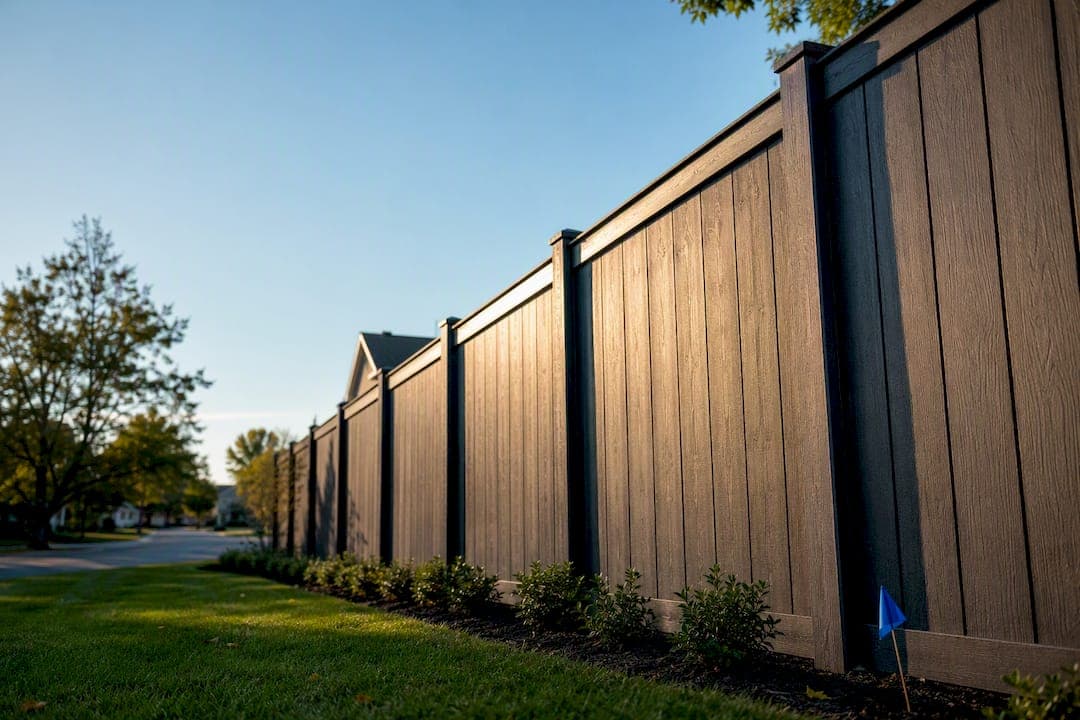
Six feet is the standard privacy fence height for most backyards in the United States, while front yards typically cap out at 3 to 4 feet to preserve sightlines. Go taller than 6 feet and you'll usually trigger a permit requirement, sometimes with engineered plans attached, so check your local code before you order materials.
TL;DR:
- Most homeowners can build a 6-foot privacy fence without a permit in residential zones, but taller fences often require engineered plans and approvals.
- Fences in front yards are typically limited to 3 to 4 feet to maintain sightlines, while backyard fences usually reach 6 feet, with 7 to 8 feet being situational and permit-dependent.
- Corner lots and pool areas have additional restrictions, often capping fences at 3 feet in visibility triangles and requiring self-closing gates for safety.
- Taller fences significantly increase wind load and structural requirements, often needing larger posts, deeper footings, and sometimes engineering inspections, especially beyond 7 feet.
- Proper permit and property boundary confirmation before construction can prevent costly disputes, fines, or the need for teardown and modifications.
Table of Contents
- What Is the Standard Privacy Fence Height for Your Yard?
- Do You Need a Permit for a Tall Privacy Fence?
- What Are the Rules for Corner Lots and Pool Fences?
- How Height Affects Fence Structure and Wind Load
- A Step-by-Step Checklist to Confirm Your Allowed Height
- Design Choices That Add Privacy Without Adding Height
- How Fence Height Affects Neighbor Relations
- Pros and Cons of Different Privacy Fence Heights
- Maintenance Differences Across Fence Heights
- A to Z Construction's Take: Common Fence Height Mistakes
- Get Your Fence Height Right the First Time
- Sources
- FAQ
What Is the Standard Privacy Fence Height for Your Yard?
Fence height isn't one-size-fits-all, and the right number depends on where the fence sits and what job you need it to do.
- 3 to 4 feet, front yard. Most municipal codes cap front-yard fences here to protect sightlines for drivers and pedestrians, and to keep the street-facing view open. This is also the range that keeps curb appeal intact without making a house feel walled off.
- 6 feet, backyard and side yards. This is the default privacy fence height in the vast majority of residential zones. It blocks eye-level sightlines from neighboring yards and street level, which covers the privacy need for most homeowners without any special approval.
- 7 to 8 feet, situational. Homeowners reach for this height when a neighbor's yard sits on elevated ground, when a pool deck needs extra screening, or when road noise is a real problem. Fences in this range are usually permit dependent, and some cities allow them only under specific conditions.
The jump from 6 to 8 feet sounds small on paper, but it changes the entire regulatory conversation. A 6-foot fence is often a same-day purchase decision. An 8-foot fence is a project.
Do You Need a Permit for a Tall Privacy Fence?
Most municipal codes let you build up to 6 feet in rear and side yards without pulling a permit. Cross that line and the paperwork changes fast.
Chicago's building department flags any fence taller than 6 feet for additional permit documentation, a common pattern nationwide. Austin goes further: its code allows some solid fences to reach 8 feet, but only under specific circumstances tied to permits and location, including rules for rights-of-way and floodplain areas. San Diego's municipal code takes a more granular approach, setting different allowable heights depending on yard type and offering an exception process for homeowners who need to go beyond the standard limit through the city's walls and fences ordinance.
Beyond the city, there's the HOA. Homeowners associations frequently impose stricter caps than the municipal code does, and getting written approval from the Architectural Review Committee matters even when your city would allow a taller fence. A verbal "sounds fine" from a board member isn't approval.
- Confirm the municipal height limit for your specific yard type (front, side, rear, corner).
- Ask whether your HOA's CC&Rs set a lower cap than the city does.
- Get any HOA approval in writing before signing a fence contract.
Skip this step and the consequences range from a fine to a forced teardown. Some cities will require you to modify or remove a noncompliant fence at your own cost, which turns a weekend project into an expensive redo.
What Are the Rules for Corner Lots and Pool Fences?
Corner lots carry their own set of restrictions, and they exist for a real safety reason: drivers need to see cross traffic and pedestrians.
Most codes define a "visibility triangle" or sightline zone near street intersections and driveways, and fences inside that zone are often capped around 3 feet, regardless of what's allowed elsewhere on the property. Municipal code excerpts from cities like Raleigh spell out these visibility area rules alongside opacity percentages for solid versus semi-transparent fencing near intersections.
Pools add another layer. Many jurisdictions set a minimum barrier height around a pool, paired with a requirement for self-closing, self-latching gates, since this is a life-safety issue rather than a preference.
- Sightline triangles near intersections: often capped at 3 feet.
- Pool perimeter fencing: minimum heights plus self-closing gate hardware are common requirements.
- Setbacks away from the street can let you build taller sections once you clear the restricted zone.
If your lot is a corner lot, don't assume the backyard rule applies to the whole perimeter. It usually doesn't.
How Height Affects Fence Structure and Wind Load
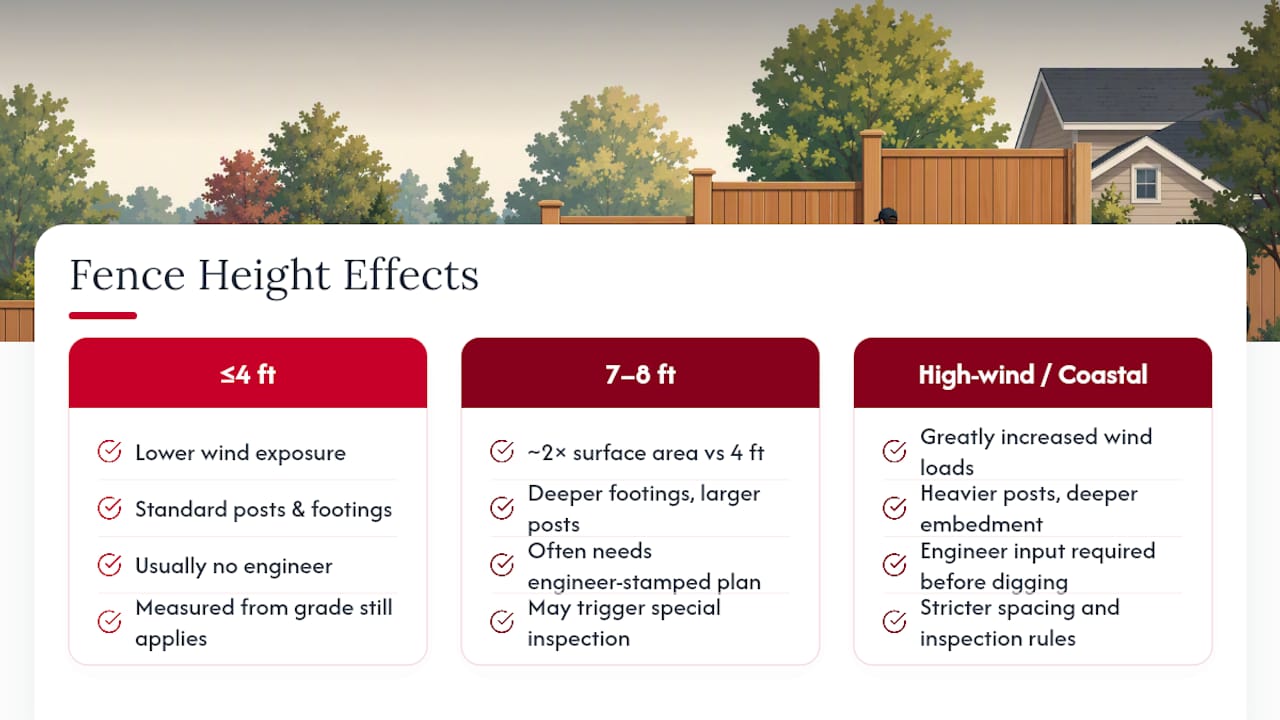
A taller fence isn't just a bigger version of a short one. It behaves differently in wind, and the structural math changes fast as height increases.
Think of a solid 8-foot fence panel as a sail. The surface area exposed to wind roughly doubles compared to a 4-foot fence, and that extra force has to go somewhere. It goes into the posts and footings. Industry specifications for taller residential fencing commonly call for deeper footings and larger posts once you move into the 7 to 8 foot range, and in high-wind or coastal zones, a structural engineer should weigh in on post spacing and embedment depth before you dig a single hole.
Here's a detail that catches homeowners off guard: many municipalities measure fence height from natural grade, not finished grade. If you've regraded your yard or built a retaining wall, the "6-foot" fence you install might measure differently once the inspector accounts for the original slope. That's worth understanding before you plan a retaining wall alongside a fence project, since the two often interact more than homeowners expect.
Pro Tip: Ask your building department point-blank how they measure fence height. "From grade" can mean three different things depending on the inspector, and getting the answer in writing before you build saves you from a failed inspection later.
Fences that clear roughly 7 feet, or that sit in high-wind zones, often need an engineer-stamped plan and sometimes a special inspection during construction. That requirement alone is why so many taller-fence projects take longer than homeowners expect.
A Step-by-Step Checklist to Confirm Your Allowed Height
Before you order a single panel, work through this in order.
- Look up your zoning and parcel rules online. Most cities publish fence height limits by yard type (front, side, rear, corner) on their planning or development services website.
- Call the building department directly. Ask about permit thresholds, how height is measured, and whether your lot has any special conditions like a floodplain designation or a right-of-way easement.
- Contact your HOA's Architectural Review Committee. Ask what height they allow and what documentation they need, even if the city's limit is higher.
- Pull your property survey. Confirm your lot lines, check for easements, and make sure the fence line you're planning doesn't cross onto a neighbor's property or a utility easement.
- Submit permit paperwork and engineer documents if required. For anything above 6 feet, budget extra time for this step. It's rarely instant.
Skipping step one and jumping straight to material shopping is the single most common reason fence projects stall midstream.
Design Choices That Add Privacy Without Adding Height
If your code caps you at 6 feet but you want more screening, the fence itself isn't your only lever.
- Lattice toppers add visual screening above a solid section while often still counting toward your measured height limit, so check the math before assuming this is a workaround.
- Staggered board or shadow-box panels block direct sightlines from both sides while using less material than a fully solid fence, and they let some airflow through, which helps in windy areas.
- Berms and evergreen plantings raise your effective privacy screen without touching the structural height limit at all. A row of arborvitae behind a 6-foot fence can add several feet of visual coverage with zero permit involved.
- Material choice matters more as height increases. Vinyl fencing holds up well at standard heights but can flex more in wind at taller dimensions unless reinforced. Wood offers easier on-site reinforcement for taller runs. Composite splits the difference on maintenance and rigidity.
None of these tricks get you out of a permit if your actual fence structure exceeds the limit. They just help you get more privacy out of the height you're legally allowed to build.
How Fence Height Affects Neighbor Relations
Fence disputes rarely start with the fence itself. They start with a missing conversation.
A 6-foot fence installed a few inches over the property line, or a taller section built without warning right along a shared boundary, is one of the most common triggers for neighbor conflict in residential construction. Even when a fence is fully legal, height differences between two adjoining yards can create friction. If your side sits higher due to grading, your "6-foot" fence might loom over a neighbor's yard at closer to 7 or 8 feet from their vantage point, even though you measured correctly from your own grade.
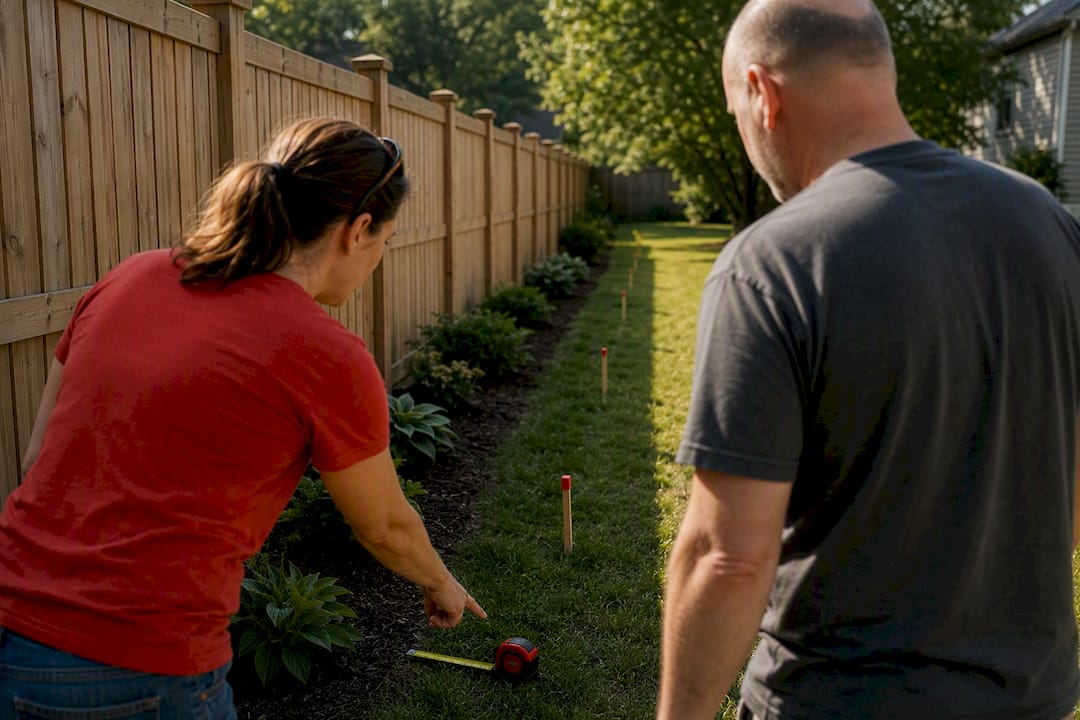
The fix is almost always communication before construction, not after. Walking your property line with a neighbor and pointing out where posts will go, roughly how tall the finished fence will stand, and which side will face which direction, heads off most disputes before they start. Many disagreements aren't really about the code. They're about surprise.
When a dispute does happen, most jurisdictions handle it through the same channels you'd use to confirm your own rules: the building department for code violations, and small claims or mediation for boundary or cost-sharing disagreements between neighbors. Some HOAs also offer a mediation step through their Architectural Review Committee before anything escalates further. Keeping your permit paperwork and property survey on hand gives you a fast, factual answer if a neighbor questions your fence's height or placement, rather than an argument based on guesswork from either side.
Pros and Cons of Different Privacy Fence Heights
Every height comes with a trade-off, and the "right" one depends on what problem you're actually solving.
A 4-foot fence keeps your yard open and neighborly, which some homeowners genuinely want, but it offers close to zero privacy screening and does little for security. It's cheap, fast to install, and rarely needs a permit anywhere.
A 6-foot fence hits the sweet spot for most residential lots. It blocks eye-level views from adjacent yards, deters casual trespassing, and stays inside the no-permit zone in most cities. The trade-off is that it won't stop someone determined to climb, and it won't screen out a two-story neighbor's upstairs windows.
A 7 to 8 foot fence delivers real privacy against elevated sightlines and adds a meaningful security deterrent, since scaling an 8-foot solid barrier takes real effort. The cost is higher on every front: material, labor, permitting time, and often a stricter HOA review. It can also make a small yard feel boxed in, and depending on your neighborhood's aesthetic norms, an unusually tall fence can stand out in a way that draws more attention, not less.
There's no universally "best" answer here. A homeowner backing up to a busy road has different priorities than one dealing with a two-story neighbor peering into a pool area, and the height that solves one problem might be overkill, or underkill, for the other.
Maintenance Differences Across Fence Heights
Taller fences don't just cost more to build. They cost more to keep standing.
A 4-foot fence carries relatively light wind load and rarely needs structural attention beyond the occasional post repair or panel swap after storm damage. A 6-foot fence sees more wind exposure and, in wood, more warping and staining on the taller boards where sun and moisture hit unevenly across a bigger surface.
At 7 to 8 feet, maintenance becomes a bigger consideration. Larger panels flex more in wind over time, which can loosen fasteners and stress post connections faster than a shorter fence experiences. Wood at this height shows checking and splitting sooner on exposed faces, since there's simply more surface catching sun and rain. Vinyl holds its color well at any height but can show stress cracking near post connections on taller runs if the underlying structure wasn't sized correctly to begin with. Composite tends to split the difference, needing less refinishing than wood while costing more upfront than either wood or vinyl.
Whatever height you land on, staining or sealing wood every 2 to 3 years, checking post plumb annually, and inspecting hardware after major wind events applies across the board. Taller fences just make each of those checks matter more, because there's more structure for a small problem to compound into.
A to Z Construction's Take: Common Fence Height Mistakes
Jake here. The mistakes I see most often on fence projects aren't about design. They're about sequence. Homeowners buy materials before checking the local code, assume 6 feet is universally permit-free without confirming it for their specific lot, or under-spec the footings on a taller fence because the shorter fence next door never needed anything special.
Before hiring anyone, ask a straightforward set of questions: who pulls the permit, what's the footing depth for your specific height and soil, what post size they're specifying, what warranty covers the work, and whether they can point to completed projects similar to yours. A contractor who hesitates on any of those is telling you something.
— Jake
Get Your Fence Height Right the First Time
There's a real cost to guessing on fence height: a failed inspection, a neighbor dispute, or a teardown order months after installation. A licensed contractor can handle the whole process under one roof, from confirming your local permit requirements to engineering the footings a taller fence needs, so you're not coordinating between a designer, a permit runner, and a separate installation crew.

Licensed general contractors have completed over 500 projects across concrete, masonry, and fencing work, often providing one point of contact managing your project from the first estimate through final walkthrough. Whether you need a standard 6-foot backyard fence or an 8-foot privacy solution that requires engineered plans, professionals can confirm what your local code and HOA allow before a single post goes in the ground. Explore vinyl, wood, and aluminum fencing options built to match your height and privacy needs, or reach out through the contact page to request an estimate and permit-help consultation for your project.
Sources
- City of Chicago — Fence permit instructions
- City of Austin — Fencing regulations
- FenceTrac — How tall can a privacy fence be?
- Catalyst Legal — Backyard fence height: How tall can it legally be?
FAQ
Can You Have an 8-Foot Privacy Fence?
In some jurisdictions, yes. Cities like Austin permit solid fences up to 8 feet under specific circumstances, but you'll almost always need a permit and possibly engineered plans first.
Is an 8-Foot Privacy Fence Too High for a Residential Yard?
It depends on your goal. An 8-foot fence delivers strong privacy and security but can make a small yard feel enclosed, and it typically requires more permitting effort and structural reinforcement than a standard 6-foot fence.
Can My Neighbor Put Up a 7-Foot Fence Without Telling Me?
In most areas, neighbors don't legally need your permission to build on their own property as long as they follow local code and any required permits, though HOA rules or shared boundary agreements can add extra requirements. If you suspect the fence is too tall or crosses a property line, checking with your building department is the fastest way to confirm.
What Is a Good Height for a Privacy Fence?
Six feet is the standard privacy fence height for most backyards, offering eye-level screening without triggering the permit and engineering requirements that come with 7 to 8 foot fences. For most homeowners, it's the height that balances privacy, cost, and approval speed.