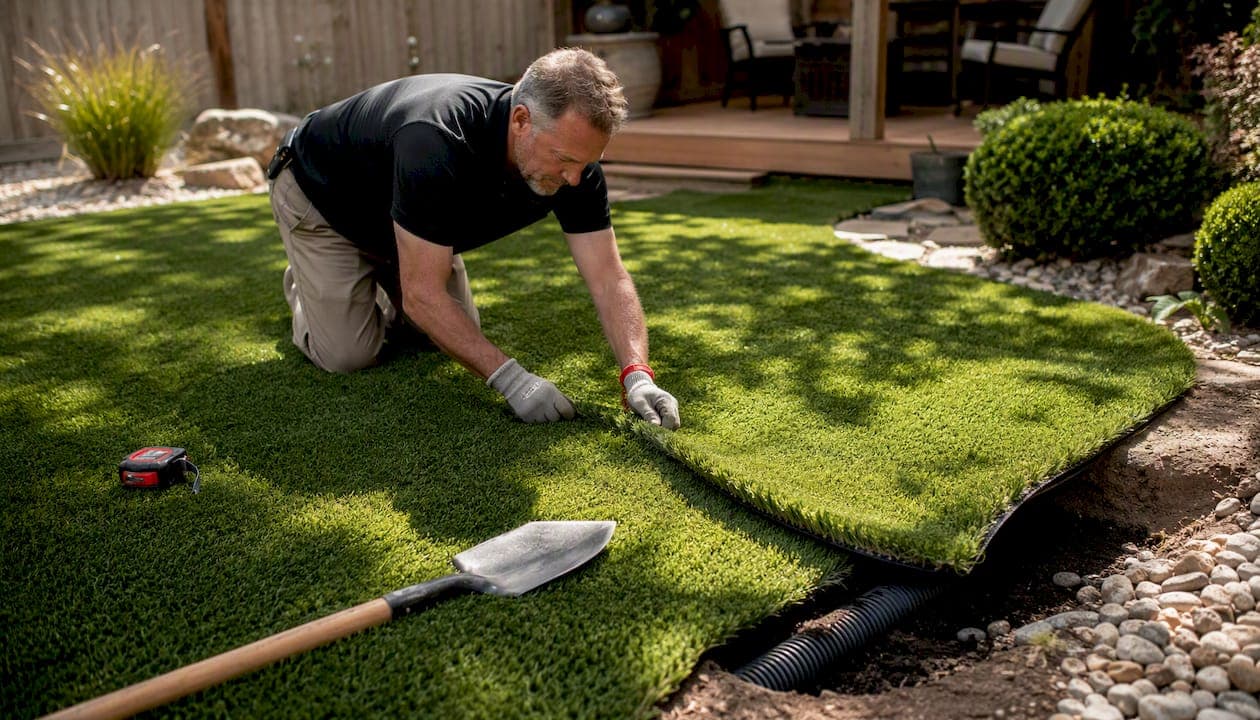
For most Utah yards, the best turf for dogs is a pet-grade artificial turf system built on three non-negotiable specs: high-capacity drainage backing rated at 500+ inches per hour, antimicrobial-treated polyethylene blades, and zeolite infill applied at a recommended moderate amount per square foot. That combination handles odor, survives active dogs, and holds up through Utah's punishing summers better than anything else on the market.
Why those three specs specifically?
- Drainage backing (500+ in/hr): Urine passes through before it pools and breeds bacteria. Standard hole-punched backings drain at a low rate insufficient for pet yards—nowhere near enough for a dog yard.
- Antimicrobial polyethylene blades: Treated fibers resist bacterial growth at the source. Nylon fibers retain urine and odor; avoid them entirely for pet areas.
- Zeolite infill at 0.5–1 lb/ft²: The mineral traps ammonia chemically rather than just masking it, and it helps lower surface temperatures significantly compared with untreated infills — a real advantage on a 100°F Cedar City afternoon.
Table of Contents
- What makes the best turf for dogs different from standard synthetic grass?
- How does synthetic pet turf compare with natural grass and hybrid options?
- What blade materials and infill specs should you actually demand?
- What does a proper pet turf installation actually involve?
- How do you keep pet turf odor-free through Utah seasons?
- Which natural grasses hold up best in a dog yard?
- How do you choose the right specs and contractor?
- Why these recommendations hold up under scrutiny
- Key Takeaways
- What most contractors get wrong about pet turf
- A-to-zconstruction installs pet turf the right way in Utah
- FAQ
What makes the best turf for dogs different from standard synthetic grass?
Pet turf and standard synthetic grass share a surface, but the engineering underneath is completely different. True pet-grade turf differs in three critical areas: drainage capacity, blade durability, and antimicrobial protection.
Drainage capacity is where most cheap installs fail. Standard residential turf uses a hole-punched backing that drains around 30–35 inches per hour. A single medium-sized dog urinating multiple times a day overwhelms that quickly. Pet turf systems use a flow-through mesh or SuperDrain+ style backing that achieves permeability above 1,000 inches per hour on premium products. The liquid clears the backing before it has time to concentrate.
Blade material matters more than pile height or color. Polyethylene blades with a C8-style polymer structure resist matting under repeated dog traffic and don't hold odor the way nylon does. Nylon fibers were designed for sports fields, not pet areas — they retain urine and are harder to flush clean. Non-toxic, lead-free construction is the baseline to demand; some manufacturers now offer USDA Certified Bio-Based materials as an added safety signal.
Pro Tip: Before signing any contract, ask for the manufacturer's datasheet showing the backing's drainage rate and the blade polymer type. A contractor who can't produce those documents is guessing at specs.
How does synthetic pet turf compare with natural grass and hybrid options?
| Dimension | Pet-grade artificial turf | Natural sod (warm season) | Hybrid/zoned approach |
|---|---|---|---|
| Durability/wear | Excellent; no bare spots | Moderate; urine burns in 2–3 weeks | Good where turf covers high-use zones |
| Drainage/throughput | 500–1,000+ in/hr (backing dependent) | Varies by soil; compaction reduces flow | Depends on zone design |
| Odor control | High with zeolite infill + rinsing | Dilution required; burns recur | Moderate; natural zones help |
| Pet safety | Non-toxic PE blades; lead-free options | No synthetic chemicals | Mixed |
| Heat retention | Elevated in direct sun; zeolite reduces it | Cooler surface naturally | Cooler in grass zones |
| Maintenance | Weekly brushing, regular rinsing | Watering, overseeding, repair | Both maintenance types |
| Typical lifespan | 15 years with proper care | Ongoing; replant after heavy damage | Variable |
| Utah climate fit | Strong in sun; shade adds cooling | Best in shaded or low-traffic yards | Flexible for mixed yards |
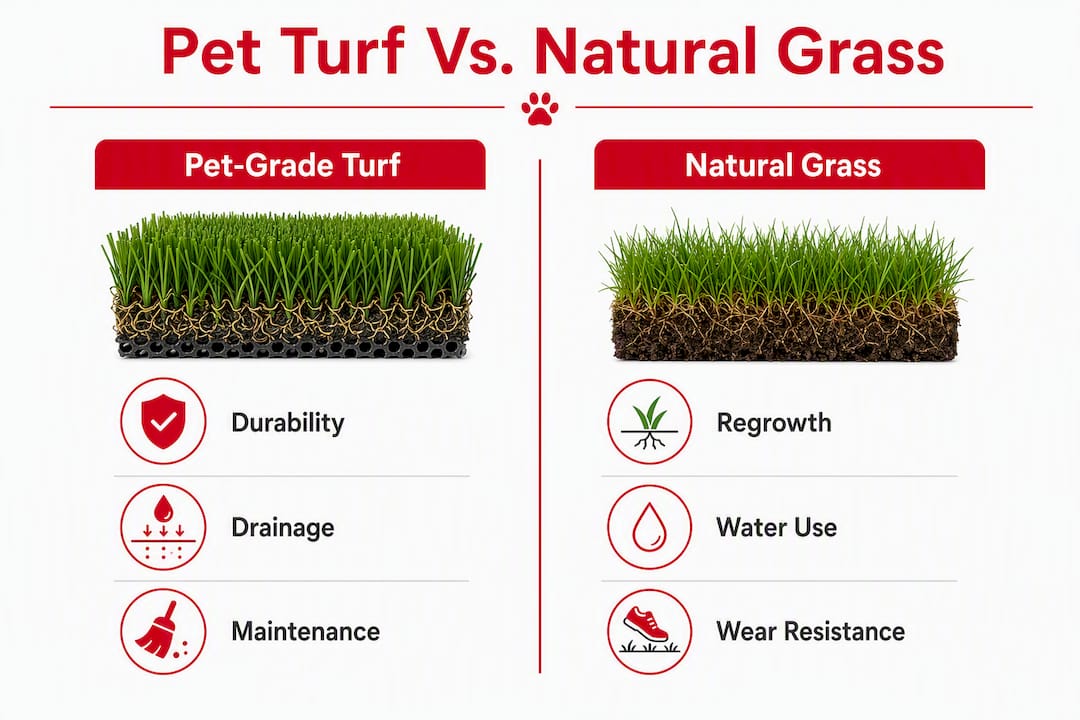
The practical verdicts break down by use case. A high-traffic residential dog run or commercial dog daycare yard almost always warrants pet-grade artificial turf — the wear and odor load exceeds what sod can handle without constant repair. A shaded backyard with one small dog and good soil drainage is a legitimate candidate for natural sod, especially TifTuf Bermuda or Zeon Zoysia. A hybrid approach, where turf covers the primary run and sod fills lower-traffic areas, works well for larger properties that want the look of real grass in visible zones.
One point worth repeating: turf performance is a system result. The backing, infill, sub-base, and maintenance routine all have to match. A premium backing paired with the wrong infill or a poorly graded sub-base will still fail within months.
What blade materials and infill specs should you actually demand?
| Spec | Recommended | Avoid |
|---|---|---|
| Blade polymer | Polyethylene (C8-style) | Nylon |
| Backing drainage | 500+ in/hr; 900–1,000+ for heavy use | Standard hole-punched (30–35 in/hr) |
| Infill type | Zeolite (primary); silica sand (base ballast only) | Crumb rubber in pet areas |
| Zeolite application rate | a moderate amount per square foot; higher for heavy-use zones | Under-application leaves odor control gaps |
| Safety certification | Non-toxic, lead-free; USDA Bio-Based where available | Unverified materials |
Zeolite is the right primary infill for pet areas. Products like OdorZorb and TurFill use a porous honeycomb mineral structure that locks in ammonia from pet urine rather than letting it off-gas. Beyond odor control, zeolite can lower surface temperatures by up to 30°F compared with conventional infills — meaningful when Utah summers push pavement temps well above air temperature. Apply it evenly at a moderate amount per square foot and brush it into the thatch after spreading.
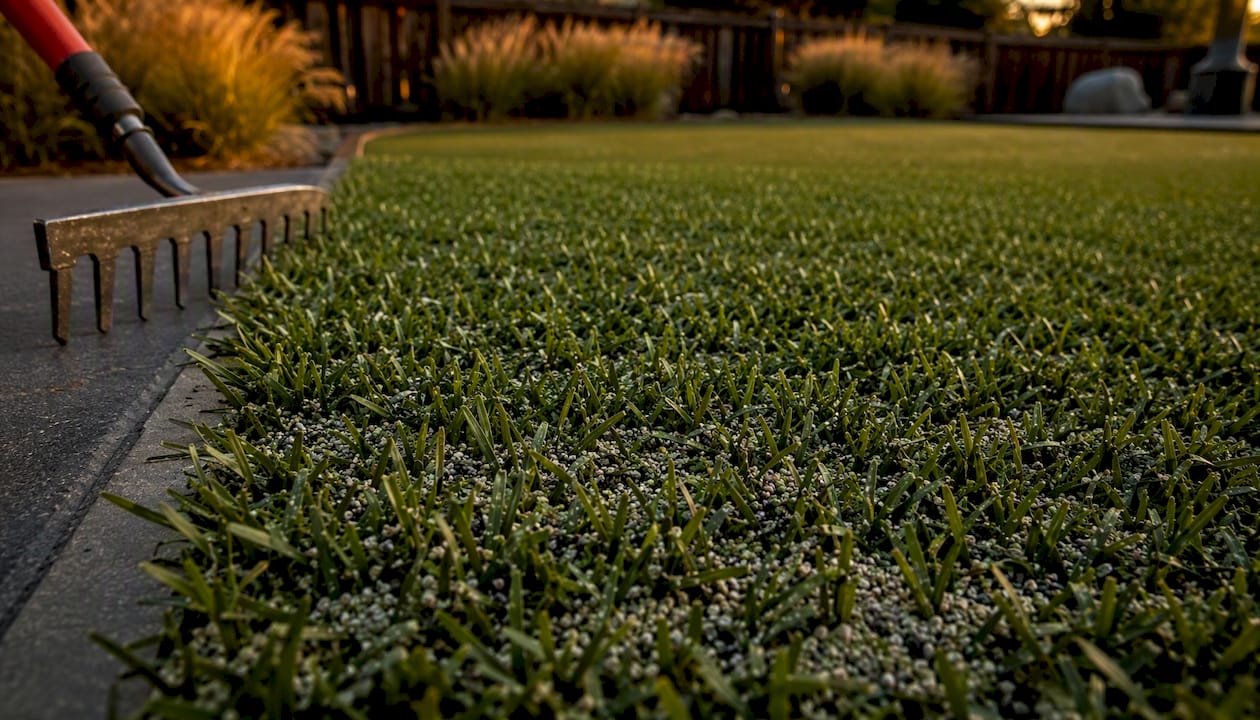
Silica sand still has a role as base ballast under the zeolite layer, but it does nothing for odor on its own. Don't let a contractor substitute silica sand for zeolite and call it a "pet infill."
Pro Tip: Zeolite traps ammonia chemically, but it doesn't destroy it. Routine rinsing flushes what the mineral has captured and resets its absorption capacity. Skip the rinse cycles and the infill saturates.
What does a proper pet turf installation actually involve?
Getting the installation right is where most DIY and low-bid contractor jobs fall apart. Here's what a proper install requires:
- Site grading and slope: The ground must slope away from structures at a minimum 1–2% grade so urine and rainwater drain away rather than pool beneath the turf.
- Compacted aggregate sub-base: Typically 3–4 inches of crushed aggregate, compacted to spec. An uncompacted base shifts over time and creates low spots where urine collects — no backing drainage rating fixes that. Proper earthmoving and grading before turf goes down is what separates a 15-year install from a 3-year problem.
- High-flow drainage layer: Installed between sub-base and turf backing where soil drainage is poor or the yard is large.
- Perimeter restraints and anchoring: Bender board or nailed edging prevents turf edges from lifting under dog activity.
- Turf seaming: Seams run away from primary sight lines and are secured with seaming tape and adhesive rated for outdoor use.
- Infill application and compaction: Zeolite spread evenly, brushed in, and lightly compacted to settle into the blade thatch.
Budget for grading and drainage work as separate line items. Those costs vary by site complexity, but skipping them to save money upfront is the single most common reason pet turf installs develop odor problems within the first year. For detailed cost breakdowns by line item, local Utah figures give a realistic planning baseline.
How do you keep pet turf odor-free through Utah seasons?
Maintenance is not optional, regardless of what the product marketing says about low-maintenance garden benefits. Active rinsing and debris removal remain essential, especially in Utah's hot, dry summers when ammonia concentrates fast.
A realistic schedule looks like this:
- Daily: Remove solid waste promptly. Leaving it breaks down into the infill and accelerates odor buildup.
- Weekly: Brush high-traffic areas with a stiff-bristle broom to prevent blade matting and redistribute infill.
- Monthly (or after heat spells): Rinse the entire surface with water to flush ammonia from the zeolite. In July and August in southern Utah, that cadence may need to move to every two weeks.
- Annually: Top-dress with fresh zeolite at the manufacturer's recommended rate to replenish absorption capacity in heavy-use zones.
Signs that maintenance isn't keeping up: persistent ammonia smell after rinsing, soggy or spongy feel underfoot (sub-base drainage issue), or visible blade matting that doesn't recover after brushing. Any of those warrants a call to the contractor, not another bag of infill.
Pro Tip: After an extended heat spell, rinse in the early morning before the surface heats up. Hot infill releases ammonia faster than cool infill — rinsing while it's still cool flushes more effectively.
Which natural grasses hold up best in a dog yard?
If you prefer real grass and your yard has the right conditions, two warm-season varieties stand out.
- TifTuf Bermuda is the top choice for high-traffic dog yards in warm climates. Its dense rhizome structure resists wear better than most sod varieties, and urine-burn bare spots recover in roughly 2–3 weeks under normal growing conditions. It needs full sun and regular water, but it's the most forgiving natural option for active dogs.
- Zeon Zoysia suits shadier yards where Bermuda struggles. It's slower to recover from damage but tolerates lower light and has a softer texture underfoot.
Managing either variety with dogs means mapping where your dogs actually spend time, watering urine spots within 24 hours to dilute the nitrogen load, and overseeding damaged areas each spring. For yards with more than two large dogs or a dedicated run area, natural grass becomes a maintenance burden that most owners eventually replace with pet-grade turf. A properly planned irrigation system makes natural sod management significantly more manageable.
How do you choose the right specs and contractor?
The buyer checklist is short but non-negotiable:
- Manufacturer datasheet confirming backing drainage rate (500+ in/hr minimum)
- Written infill plan specifying product name, type, and application rate
- Sub-base compaction records or a written compaction standard the crew will meet
- Warranty documentation that explicitly covers pet-related wear and drainage failures
- Slope/grade plan showing how water exits the site
Exact questions to ask any contractor before signing:
- What is the backing drainage rate, and can you show me the datasheet?
- What blade polymer is used — polyethylene or nylon?
- What infill product will you use, and at what application rate per square foot?
- How will you prepare the sub-base, and what compaction standard will you meet?
- Does the warranty cover pet-related failures, and for how long?
For projects involving significant grading, drainage tie-ins, or large commercial runs, a licensed general contractor handles the full scope without handoff gaps between trades. Smaller, flat residential jobs with minimal earthwork can sometimes be handled by a turf-only installer — but the moment drainage or grading is involved, a GC's integrated capability matters. Understanding the full installation toolset helps you ask sharper questions during the bid process.
Why these recommendations hold up under scrutiny
The specs in this article come from manufacturer product data, supplier application guidance, and contractor-level installation experience — not marketing copy.
Drainage ratings above 500 inches per hour, antimicrobial blade treatments, and zeolite infill at a moderate amount per square foot are the documented performance benchmarks that separate pet-grade turf systems from standard synthetic grass adapted for pet use. These figures appear on manufacturer datasheets from multiple suppliers and are consistent with practical installer experience across hundreds of Utah projects.
A-to-zconstruction has completed 500+ projects across Utah, including pet turf installations for residential dog runs and commercial facilities. That project volume means the team has seen what fails — undersized drainage, wrong infill, uncompacted sub-bases — and what holds up over a Utah summer. Specification and installation guidance reflects that accumulated field experience, not just product literature.
Key Takeaways
Pet-grade artificial turf with 500+ in/hr drainage backing, antimicrobial polyethylene blades, and zeolite infill at 0.5–1 lb/ft² is the most durable, odor-resistant dog-friendly surface for Utah yards.
| Point | Details |
|---|---|
| Drainage backing is the baseline | Demand 500+ in/hr; standard hole-punched backings at 30–35 in/hr are inadequate for pet use. |
| Zeolite infill at the right rate | Apply a moderate amount per square foot; it traps ammonia and lowers surface temps by up to 30°F. |
| Sub-base quality determines longevity | Improper grading causes urine pooling regardless of backing rating — don't skip earthwork. |
| Maintenance is non-negotiable | Daily solids removal, weekly brushing, and monthly rinsing keep odor control working. |
| A-to-zconstruction for Utah installs | With 500+ completed projects, A-to-zconstruction handles full-site grading, drainage, and turf installation under one licensed GC. |
What most contractors get wrong about pet turf
The industry talks a lot about blade pile height and color options. Those details are almost irrelevant to how a pet turf system actually performs. What determines whether a dog yard smells fine in year three or becomes unusable by year one is almost entirely sub-base preparation and infill selection — two things that happen before or after the turf itself goes down.
The other thing owners underestimate is heat. Southern Utah summers are brutal, and a dark synthetic surface in direct sun gets hot enough to burn paw pads. Zeolite infill helps, but it doesn't eliminate the problem. Shading structures, morning-use habits during peak summer, and choosing lighter-colored turf products all matter. Any contractor who doesn't bring up heat management when discussing a Utah pet turf project is skipping a real concern.
Warranty language is worth reading carefully too. Many turf warranties cover manufacturing defects but exclude pet-related wear or drainage failures caused by improper installation. Ask specifically: does this warranty cover odor problems or drainage failure linked to pet use? If the answer is vague, get it in writing before the job starts.
A-to-zconstruction installs pet turf the right way in Utah
Most turf installers handle the surface. A-to-zconstruction handles everything under it too — site grading, sub-base compaction, drainage planning, turf installation, and infill application, all from one licensed in-house crew. No handoffs between a grading sub and a turf sub. No gaps in accountability when something doesn't drain right.
For Utah homeowners and commercial property managers, that integrated approach means the drainage spec, the sub-base compaction, and the turf system are all designed together from the start. A-to-zconstruction's hardscape and artificial turf services cover the full project scope, and the team has the earthwork capability to handle complex grading or drainage tie-ins that a turf-only installer can't touch.
To get started, request a free hardscape estimate. Bring site photos, a rough map of where your dogs spend time, and a budget range — that's enough to get a specific, written bid.
FAQ
What drainage rate should pet turf backing have?
Pet turf backing should drain at a minimum of 500 inches per hour; premium systems reach 900–1,000+ inches per hour. Standard hole-punched backings drain at a low rate insufficient for pet yards, which is inadequate for dog yards.
How much zeolite infill does a dog yard need?
Apply zeolite at 0.5–1 lb per square foot for most pet areas, with higher rates for heavy-use zones. Brush it evenly into the blade thatch and plan annual top-dressing to maintain odor-control capacity.
How long does TifTuf Bermuda take to recover from urine damage?
TifTuf Bermuda typically recovers from urine-burn bare spots in about 2–3 weeks under normal warm-season growing conditions, making it the most resilient natural sod option for dog yards.
Is artificial turf safe for dogs?
Pet-grade artificial turf made from non-toxic, lead-free polyethylene blades is safe for dogs. Avoid nylon fibers and unverified materials; look for USDA Certified Bio-Based products when available for added assurance.
Can A-to-zconstruction install pet turf in Utah?
Yes. A-to-zconstruction installs complete pet turf systems across Utah, including site grading, sub-base preparation, drainage work, turf installation, and infill application as a licensed general contractor.