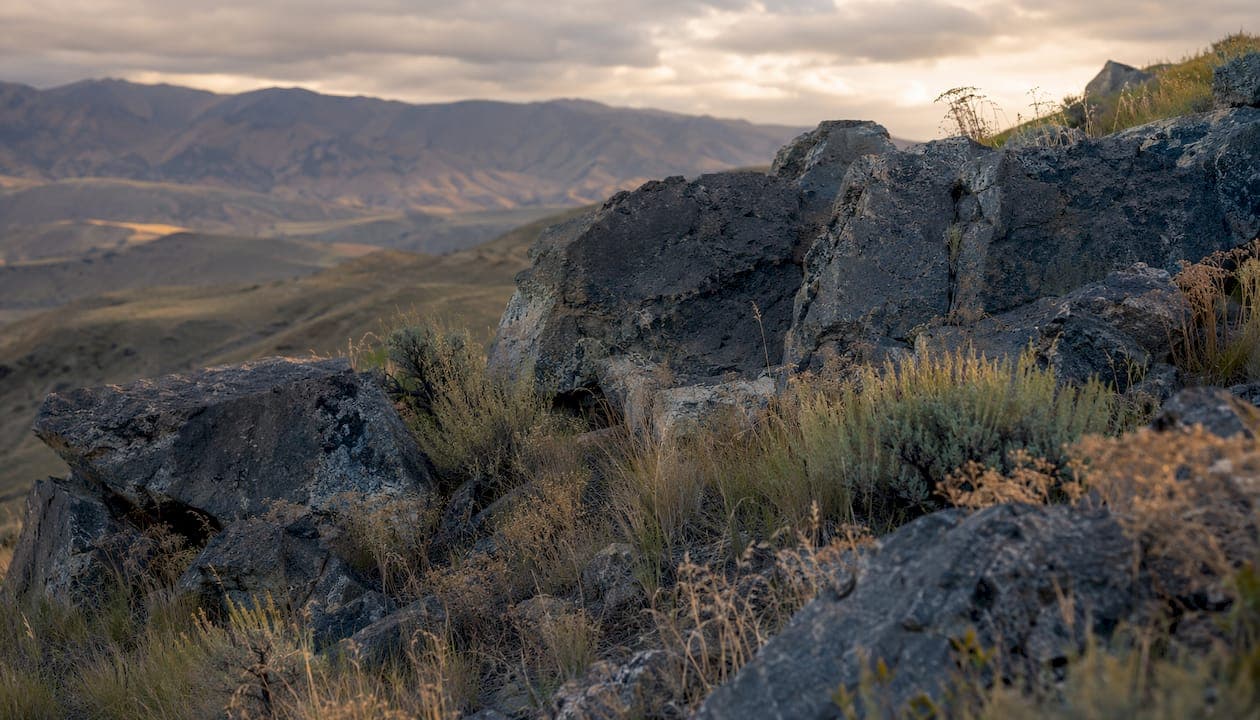
What are basalt boulders and why do they work so well?
Basalt boulders are dense, volcanic igneous rocks formed from the rapid cooling of mafic lava. Their color runs from deep charcoal gray to near-black, driven by high concentrations of pyroxene minerals, and their fine-grained texture sets them apart from granite or sandstone at a glance. Weight ranges in the US market cover a broad spectrum from smaller accent pieces to large structural stones, giving buyers a wide spectrum to work with.
What makes them genuinely useful rather than just attractive:
- Durability: Dense composition resists weathering, freeze-thaw cycles, and heavy load stress.
- Low maintenance: No sealing, staining, or annual treatment required.
- Visual range: Works equally well in a minimalist modern yard or a naturalistic rock garden.
- Structural strength: High compressive strength supports retaining walls and terraces.
- Columnar forms: Certain basalt rock formations, like those at Devils Postpile in California, show the geometric precision that makes columnar basalt prized in luxury landscape architecture.
Table of Contents
- Basalt boulder sizes and pricing in the US market
- How basalt boulders are used in landscaping and construction
- Where to find and buy basalt boulders in the United States
- Why A-to-zconstruction handles basalt boulder projects better in Utah
- A-to-zconstruction brings basalt boulder projects together
- FAQ
- Key Takeaways
Basalt boulder sizes and pricing in the US market
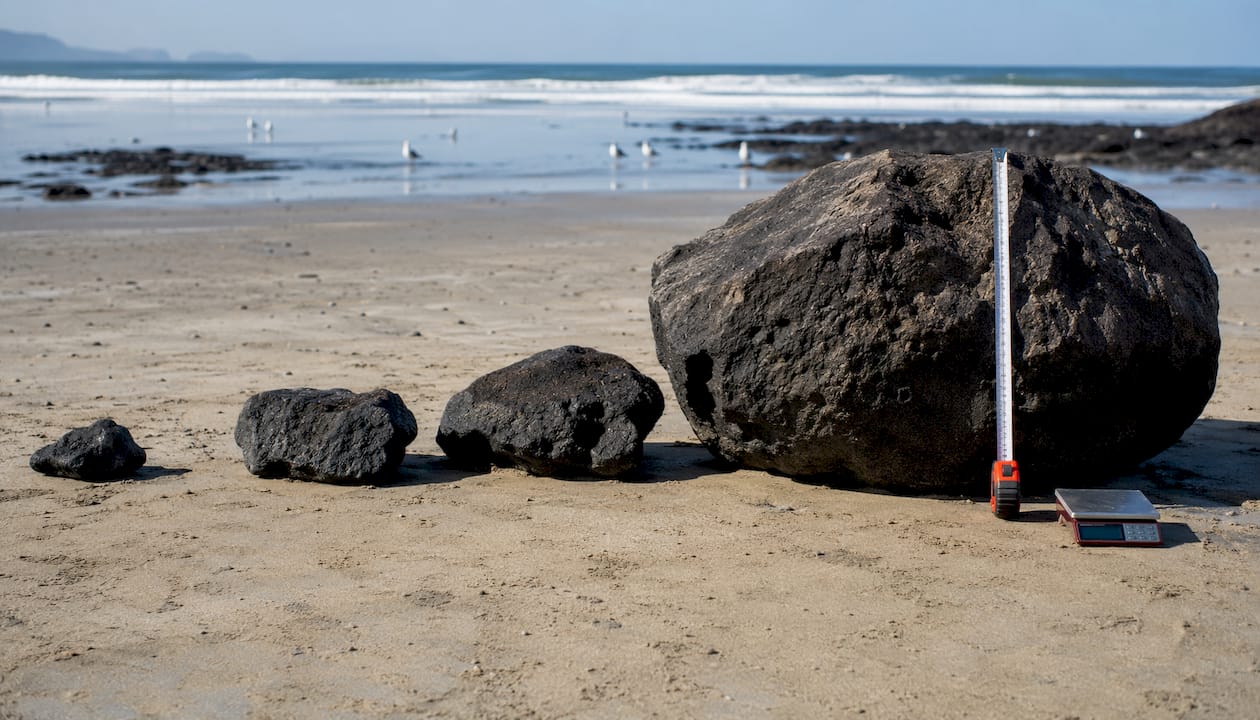
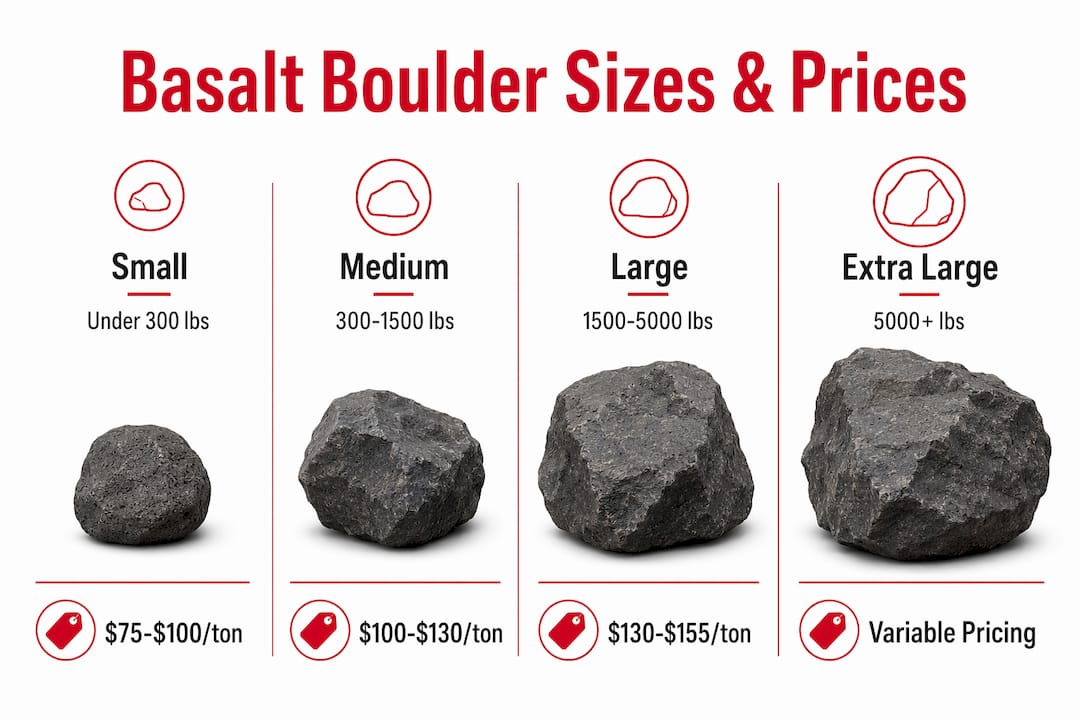
Pricing varies by supplier, region, and whether you buy by the ton or by the piece. Basalt boulders are listed by suppliers in various price ranges per ton, with diameter sizes typically spanning around 1 foot to over 4 feet. Freight and delivery add meaningfully to that cost, especially for large structural stones.
Weight per piece can vary significantly due to shape and mineral density, meaning boulders of similar diameter may have different weights. Always confirm weight with your supplier before calculating delivery loads.
| Size Category | Approx. Diameter | Approx. Weight | Typical Use |
|---|---|---|---|
| Small accent | — | Varies | Decorative borders, garden accents |
| Medium | — | Varies | Focal points, water features |
| Large | — | Varies | Retaining walls, terraces |
| Extra-large | — | Varies | Structural walls, entry monuments |
Regional factors matter too. Suppliers in California and Utah tend to have better local availability and lower freight costs than buyers in the Midwest or Southeast, where basalt is less commonly quarried.
How basalt boulders are used in landscaping and construction
Basalt's combination of structural strength and dark, dramatic color makes it one of the more versatile stones on the market. Its durability and low maintenance suit it for outdoor environments where other materials degrade within a decade.
Landscaping applications:
- Focal point boulders in garden beds or entry areas
- Rock gardens and naturalistic groupings
- Decorative borders along pathways or driveways
- Water features, pond edges, and dry creek beds
- Slope stabilization on hillsides prone to erosion
Construction and structural uses:
- Boulder retaining walls with embedded base courses
- Terraced hillside reinforcement
- Property boundary walls and entry monuments
- Erosion control along drainage channels
Beyond the functional list,
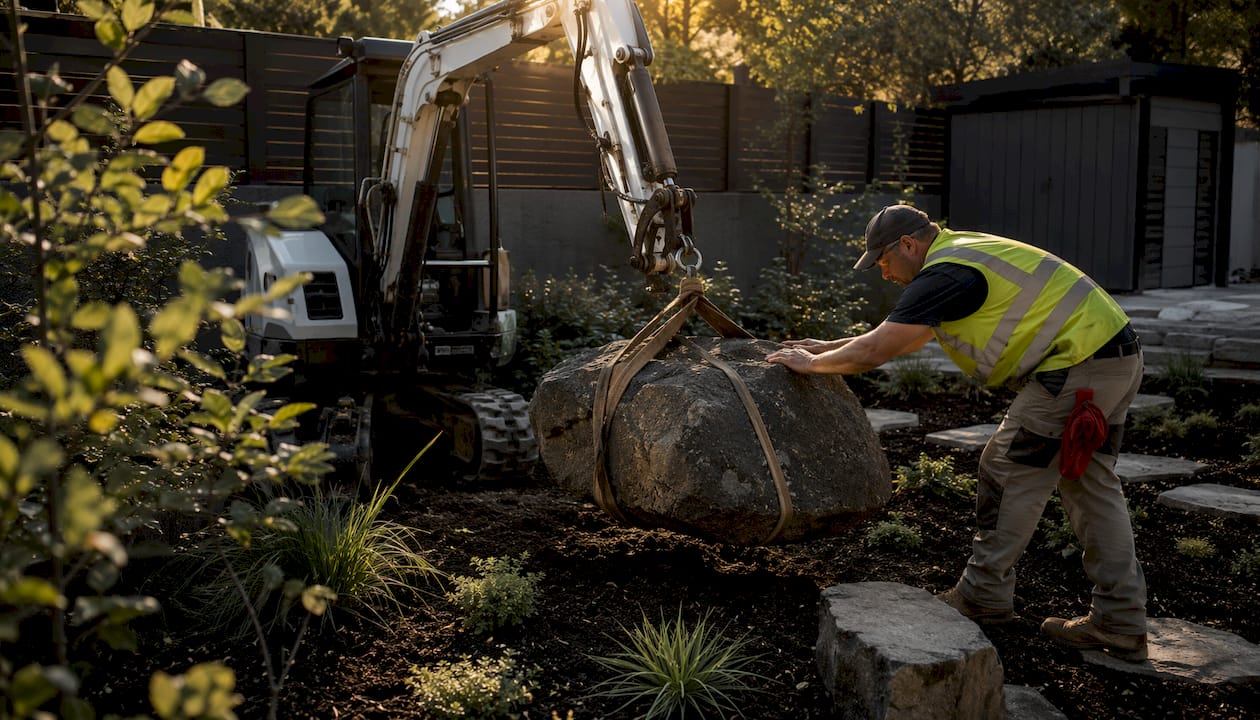
complement both modern minimalist designs and rustic naturalistic settings. Alkali basalt varieties offer richer color variation, which some designers specifically request for decorative projects. And because basalt serves as both crushed aggregate and dimension stone, it crosses the line between raw construction material and refined architectural stone in a way few other rocks do.Installation note: Boulders above 500 lbs require a skid steer, mini-excavator, or forklift for placement. Most suppliers offer dump delivery only, meaning you need equipment on-site before the truck arrives. For retaining wall installations, embed at least 20–30% of each boulder's height below grade and use compacted base material with drainage gravel behind structural courses.
Where to find and buy basalt boulders in the United States
Sourcing the right stone takes more planning than most buyers expect, particularly if you need a specific shape for dry-stack walls. Quarry-run boulders are generally more available than blocky, structural-grade pieces, so locking in your order early matters.
Supplier types to consider:
- Landscape supply centers: Canby Landscape Supply and Highland Landscape Supply carry black basalt boulders with pricing by the ton and multiple size categories available.
- Stone yards and quarries: Portland Rock offers black basalt boulders with clear size and weight specifications, useful for structural projects.
- Regional suppliers: Some regional suppliers offer basalt boulders with prices that vary and availability that can fluctuate seasonally, with availability that can vary by season.
Before you buy, confirm:
- Weight per piece or per ton (not just diameter).
- Shape classification: rounded, angular, or blocky.
- Delivery method: dump only, or do they offer crane placement?
- Minimum order quantities and lead times.
- Whether the supplier can mix sizes in one truckload.
Pro Tip: Spread a few inches of sand or dirt on your driveway before delivery. Large boulders dropped directly onto concrete or asphalt can crack the surface.
When evaluating landscaping rock options, compare basalt against granite and limestone on density and color retention. Basalt holds its dark color longer than most alternatives and outperforms limestone in freeze-thaw resistance, which matters in Utah and other high-altitude markets.
Why A-to-zconstruction handles basalt boulder projects better in Utah
A-to-zconstruction is a licensed general contractor based in Cedar City, Utah, with over 500 residential and commercial projects completed. That breadth matters for basalt boulder work because placing large stones correctly requires coordination across earthwork, masonry, and drainage, not just a delivery and a skid steer.
What sets A-to-zconstruction apart for this type of project:
- Integrated crew: Earthwork, masonry, and hardscape handled by one in-house team, no subcontractor handoffs.
- Masonry expertise: Brick and stone masonry services cover boulder retaining walls, stacked stone features, and structural installations.
- Regional knowledge: Serving Iron County, Washington County, Salt Lake County, and surrounding Utah areas, with familiarity in local soil conditions and frost depths.
- Single point of contact: One crew from site prep through final placement, which cuts the scheduling delays that come from coordinating multiple vendors.
For buyers who want the stone sourced, placed, and integrated into a broader hardscape or landscaping project, A-to-zconstruction handles the full scope.
A-to-zconstruction brings basalt boulder projects together
Buying basalt boulders is straightforward. Getting them placed correctly, integrated into a retaining wall or terraced slope, and tied into the rest of your yard's drainage and hardscape is where most DIY projects stall. A-to-zconstruction handles exactly that, from initial site assessment through final stone placement, with an in-house crew that covers masonry and hardscape installation without farming out the hard parts. If you're in Utah and want a basalt boulder project done right the first time, contact A-to-zconstruction for a project estimate.
FAQ
What is a basalt boulder?
A basalt boulder is a large, dense volcanic rock formed from cooled mafic lava, typically dark gray to black in color, with a fine-grained texture and high compressive strength suited for landscaping and structural use.
Basalt boulders typically cost between $75 and $155 per ton from US suppliers, with additional delivery costs based on distance and load weight.
What is basalt stone good for?
Basalt works well for retaining walls, erosion control, slope stabilization, water features, rock gardens, decorative focal points, and structural construction applications due to its durability and weather resistance.
How can you tell if a rock is basalt?
Basalt is identified by its dark gray to black color, fine-grained (aphanitic) texture, and heavy density. It may also contain small gas bubbles called vesicles or glassy green olivine crystals visible on the surface.
Key Takeaways
Basalt boulders ranging from 100 lbs to 10,000 lbs offer durable, low-maintenance stone for landscaping and construction, with US pricing typically between $75 and $155 per ton.
| Point | Details |
|---|---|
| Size range | Basalt boulders span 100 lbs to 10,000 lbs, covering accent stones through massive structural pieces. |
| Pricing | Expect $75–$155 per ton from US suppliers, plus separate delivery costs based on distance. |
| Key uses | Retaining walls, slope stabilization, water features, rock gardens, and decorative focal points. |
| Installation requirement | Boulders over 500 lbs require a skid steer, forklift, or mini-excavator; most suppliers offer dump delivery only. |
| A-to-zconstruction | Handles full-scope basalt boulder projects in Utah, from earthwork through masonry installation, with one in-house crew. |