
Vinyl fence installation cost is calculated per linear foot and covers materials, labor, gates, concrete, and site preparation. The national average runs $30–$92 per linear foot for professional installation in 2026, with most standard backyard projects totaling $4,149–$12,300. That wide range exists because fence height, style, terrain, and gate count all push prices in different directions. Understanding each variable before you request a quote puts you in control of the budget from day one.
What factors most impact vinyl fence installation costs?
Fence style is the single biggest cost driver. A 3-rail ranch fence costs $22–$42 per linear foot, a picket fence runs $30–$55 per linear foot, and a 6-foot privacy panel jumps to $55–$90 per linear foot. Textured finishes and darker colors push prices above $70–$110 per linear foot because specialty extrusion and pigment add manufacturing cost.
Fence height compounds labor costs in a way most homeowners miss. An 8-foot privacy fence adds roughly $3 per linear foot in labor surcharges alone. Taller panels require deeper post holes, heavier lifting, and more concrete per post, all of which slow the crew down.
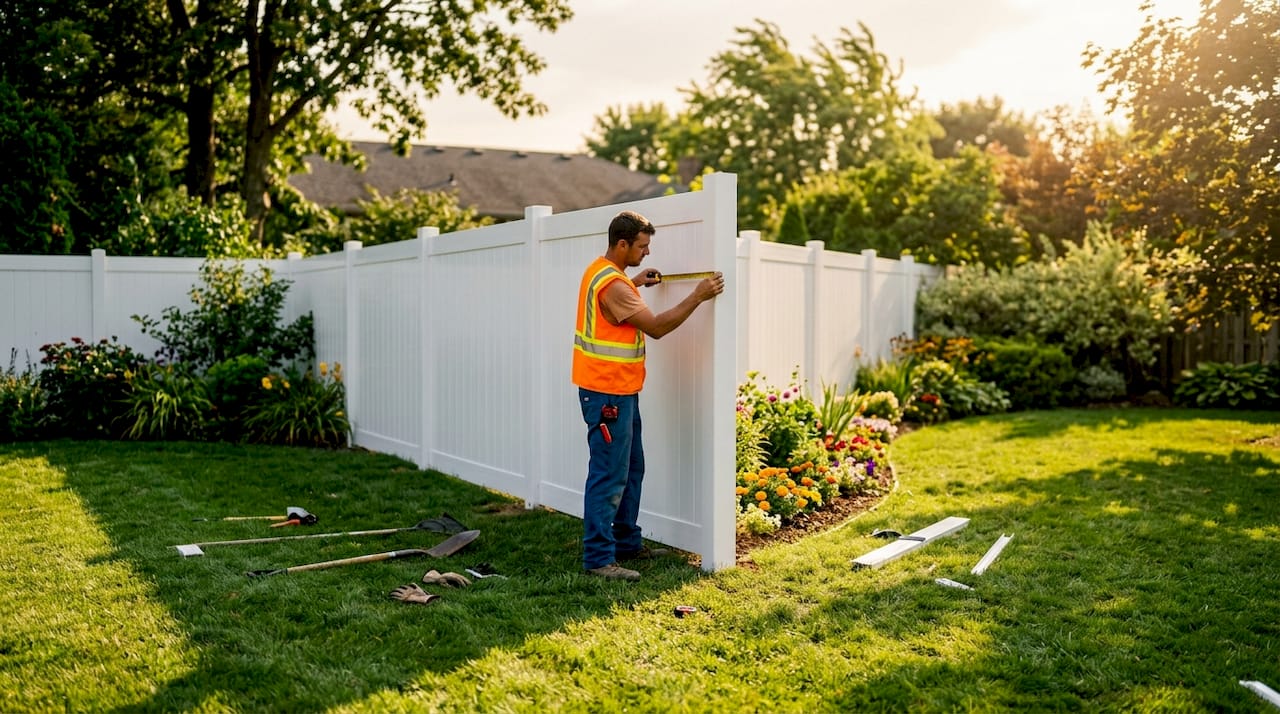
Linear footage and post count drive material volume. More corners mean more posts, and each post requires its own concrete footing. A yard with multiple angles or irregular boundaries can add 10%–15% to material costs compared to a simple rectangular layout.
Site conditions are the most underestimated variable. Rocky or sloped terrain adds labor costs through extra digging time and alignment corrections. Tree roots near the fence line force hand digging or root cutting, which slows the job considerably.
Permit fees vary by municipality. Permit costs range from $0 to over $1,500, with fences above 6 feet most commonly triggering permit and engineering requirements. HOA architectural review adds another layer of approval time and sometimes mandates specific colors or styles.
- Fence style: Ranch rail, picket, and privacy panels each carry different material and labor rates.
- Fence height: Taller fences require deeper posts, more concrete, and heavier labor.
- Linear footage: More fence means more panels, posts, and concrete.
- Gate count: Each gate adds hardware, extra posts, and installation time.
- Site conditions: Slopes, rocks, and roots increase digging labor.
- Permits and HOA: Regulatory requirements add fees and can delay the start date.
Pro Tip: Walk your property line with a tape measure before calling contractors. Knowing your exact linear footage prevents contractors from padding estimates with inflated measurements.
How do professional installation costs compare with DIY?
DIY material costs for vinyl fencing, including panels, posts, concrete, and gates, generally run $18–$45 per linear foot. Professional total installed costs typically start at $42–$82 per linear foot. That gap looks like pure savings on paper, but the math changes once you account for what professionals include.
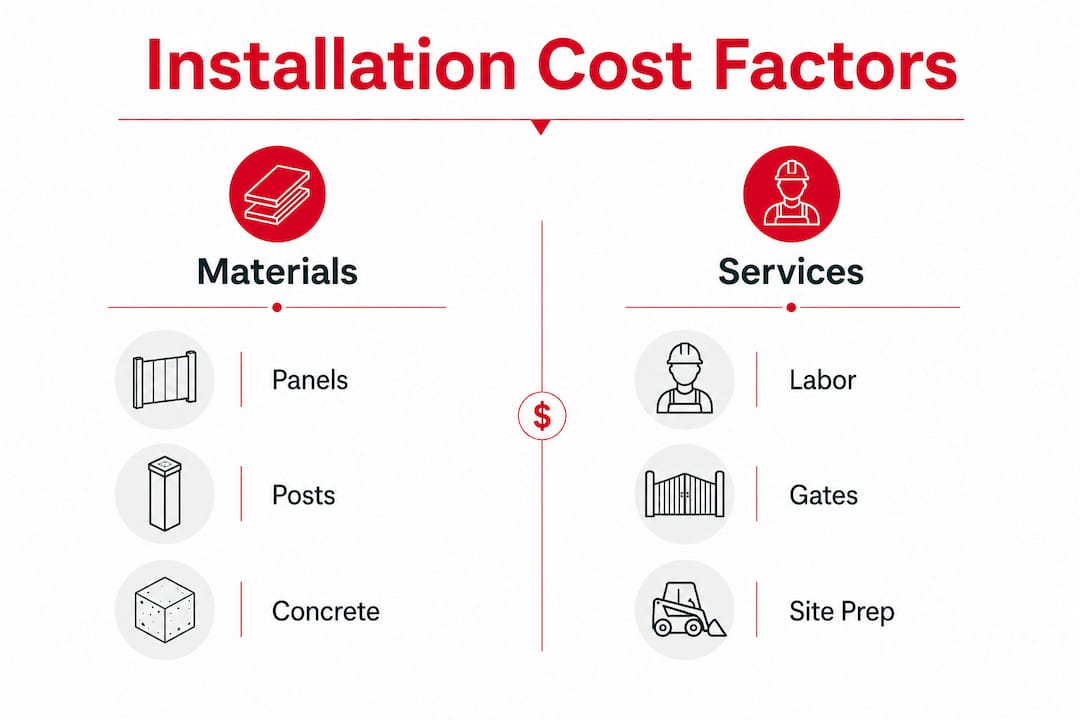
Labor covers layout, digging, post setting, panel installation, gate hardware, disposal, and cleanup. Labor is typically a separate $5–$10 per linear foot line item above material costs. A professional bid also carries workmanship warranty coverage, which a DIY project cannot replicate.
A hybrid approach cuts costs without sacrificing quality. Homeowners who handle demolition while professionals handle post setting and installation reduce overall project costs substantially. Demolition and debris hauling are the most time-consuming parts of a contractor's day, so removing that work from their scope directly lowers the bid.
| Approach | Estimated cost per linear foot | What's included |
|---|---|---|
| DIY materials only | $18–$45 | Panels, posts, concrete, gates |
| Hybrid (homeowner demo, pro install) | $30–$60 | Pro labor for post setting and panels |
| Full professional installation | $42–$92 | Layout, digging, concrete, panels, gates, cleanup, warranty |
DIY makes sense for flat lots, simple rectangular layouts, and homeowners with prior concrete work experience. Professional installation is the right call for sloped terrain, 8-foot privacy panels, rocky soil, or any project requiring a permit. Mistakes in post alignment are expensive to fix after concrete sets.
Pro Tip: Ask contractors to provide a line-item bid that separates materials, labor, gates, and permits. A single lump-sum quote makes it impossible to identify where costs are inflated.
How do gates, terrain, and old fence removal affect pricing?
Gates are the most predictable add-on cost. Single pedestrian gates run $270–$490 and double driveway gates run $520–$940, depending on height and hardware grade. Each gate also requires two additional posts set in concrete, which adds labor time beyond the gate price itself.
Terrain difficulty is less predictable but often more expensive. Here are the most common surcharge triggers:
- Rocky soil: Hand digging or pneumatic breaking adds significant time per post hole.
- Sloped yards: Posts must be stepped or raked to follow grade, requiring more layout time and precision.
- Tree roots: Root cutting or rerouting the fence line adds both labor and material costs.
- Soft or sandy soil: Posts require deeper setting or larger concrete footings to maintain stability.
- Existing structures: Fences near retaining walls, driveways, or outbuildings require custom cuts and extra fitting time.
Old fence removal adds $4–$12 per linear foot to the total project cost. That range reflects the difference between pulling out old wood pickets versus cutting out a chain-link fence with embedded concrete footings. Disposal fees for old materials may be included in the contractor's bid or charged separately, so confirm this upfront.
Permit requirements tied to fence height add both cost and time. Fences above 6 feet often require permits and engineering review for wind resistance. Engineering reports for 8-foot privacy fences can cost several hundred dollars on top of the permit fee itself. Factor four to six weeks of permit processing time into your project schedule if your fence exceeds local height limits.
For projects where the ground itself needs grading before fencing begins, site preparation services address slope correction and soil conditions before a single post goes in.
How to use a vinyl fence installation cost calculator
A vinyl fence installation cost calculator produces a reliable estimate when you feed it accurate inputs. The core inputs are linear footage, fence height, fence style, gate count, and post spacing. Most calculators separate material costs from labor and overhead, which helps you see where your money actually goes.
Here is how to build an accurate estimate step by step:
- Measure your perimeter: Walk the fence line and record total linear footage. Subtract gate openings.
- Choose your style: Select ranch rail, picket, or privacy panel. Each carries a different base rate.
- Set your height: 4-foot, 6-foot, and 8-foot options each carry different material and labor rates.
- Count your gates: Note whether each gate is pedestrian or driveway width.
- Add terrain surcharges: Flag any slopes, rocky areas, or root zones for manual adjustment.
- Add removal costs: If an old fence exists, add $4–$12 per linear foot to the estimate.
- Add permit fees: Check your municipality's fee schedule for fences at your planned height.
A sample calculation illustrates the difference between styles. A 150-foot, 6-foot privacy fence with two pedestrian gates on flat terrain runs approximately $8,250–$13,500 installed professionally. The same 150 feet in a 3-rail ranch style drops to $3,300–$6,300. Style choice alone can shift your total by thousands of dollars.
Common budgeting mistakes include ignoring gate hardware costs, skipping permit research, and comparing quotes that use different post spacing. Standard post spacing is 8 feet on center. A contractor using 6-foot spacing uses more posts and more concrete, which raises material costs but improves structural strength. Confirm post spacing in every bid you receive.
When comparing composite fencing options alongside vinyl, note that composite panels carry different structural requirements and cost profiles, which affects how calculators handle post depth and spacing.
Pro Tip: Get three bids and ask each contractor to use identical inputs: the same linear footage, post spacing, gate count, and style. Comparing bids built on different assumptions is like comparing apples to lumber.
Key Takeaways
Vinyl fence installation cost depends on style, height, terrain, and gate count, with professional installs running $30–$92 per linear foot and most projects totaling $4,149–$12,300.
| Point | Details |
|---|---|
| Cost range by style | Ranch rail costs $22–$42/LF; privacy panels cost $55–$90/LF installed professionally. |
| Gates add significant cost | Single pedestrian gates add $270–$490; double driveway gates add $520–$940 per opening. |
| Terrain surcharges are real | Rocky soil, slopes, and tree roots each add labor cost beyond the base per-foot rate. |
| DIY saves money with tradeoffs | DIY materials run $18–$45/LF, but professional installs include warranty, cleanup, and layout accuracy. |
| Permits matter above 6 feet | Fences taller than 6 feet commonly require permits and engineering review, adding cost and time. |
What I've learned about vinyl fence costs after hundreds of projects
The number homeowners fixate on is the per-foot rate. That instinct is understandable, but it leads to budget surprises more often than not. The per-foot rate tells you almost nothing without knowing the site conditions, gate count, and fence height.
The most expensive mistakes I see come from skipping site assessment. A homeowner gets a quote for $55 per linear foot on a 6-foot privacy fence, signs the contract, and then discovers the back corner sits on a buried concrete pad from an old shed. That one obstacle can add $800–$1,200 in unplanned labor. The fix is simple: walk the entire fence line with your contractor before signing anything.
Vinyl fencing costs 40%–60% more upfront than wood. That premium stings at signing, but vinyl outlasts wood by years because wood requires periodic staining and full replacement every 12–15 years while vinyl needs only occasional cleaning. Over a 20-year period, vinyl is the cheaper material by a meaningful margin.
My honest advice on DIY: attempt it only on flat ground with a simple rectangular layout and no permit requirement. The moment your yard has a slope, rocky soil, or an 8-foot height requirement, the risk of misaligned posts and failed footings outweighs the labor savings. A fence that leans or shifts after the first winter costs more to fix than it would have cost to install correctly.
Verify every contractor's bid line by line. A low headline price often hides missing line items like gate hardware, concrete, or debris disposal. The contractor who charges $62 per linear foot with all items included frequently beats the one quoting $48 per linear foot with five items billed as extras.
— Jake
A-to-zconstruction handles the details that inflate your budget
Vinyl fencing projects go over budget when site prep, demolition, and post work are treated as afterthoughts. A-to-zconstruction, a licensed general contractor based in Cedar City, Utah, coordinates every phase of a fencing project under one roof, from initial site grading through final panel installation.

A-to-zconstruction's vinyl fencing services cover layout, post setting, concrete work, gate installation, and cleanup, with no subcontractor handoffs to slow the schedule. For properties that need grading or earthwork before fencing begins, the team handles that prep work directly. Homeowners in Cedar City and across Utah can also explore structural remodeling services for projects that combine fencing with broader property improvements. Contact A-to-zconstruction for a detailed, line-item estimate built around your specific site.
FAQ
What is the average cost of vinyl fence installation per foot?
Professional vinyl fence installation costs $30–$92 per linear foot in 2026, depending on fence style, height, and site conditions. Most standard backyard projects total $4,149–$12,300.
How much does a vinyl privacy fence cost to install?
A 6-foot vinyl privacy fence costs $55–$90 per linear foot installed. An 8-foot privacy fence adds roughly $3 per linear foot in labor surcharges due to deeper post holes and heavier panels.
Does old fence removal add to the installation cost?
Old fence removal adds $4–$12 per linear foot to the total project cost. The exact amount depends on the old fence material and whether the existing posts are set in concrete.
When do I need a permit for a vinyl fence?
Permit requirements vary by municipality, but fences above 6 feet commonly trigger permit and engineering review requirements. Permit fees range from $0 to over $1,500 depending on jurisdiction and fence height.
Is vinyl fencing cheaper than wood over time?
Vinyl costs 40%–60% more upfront than wood, but it requires no staining and avoids the full replacement cycle that wood fences need every 12–15 years. Over 20 years, vinyl is the more cost-effective material.