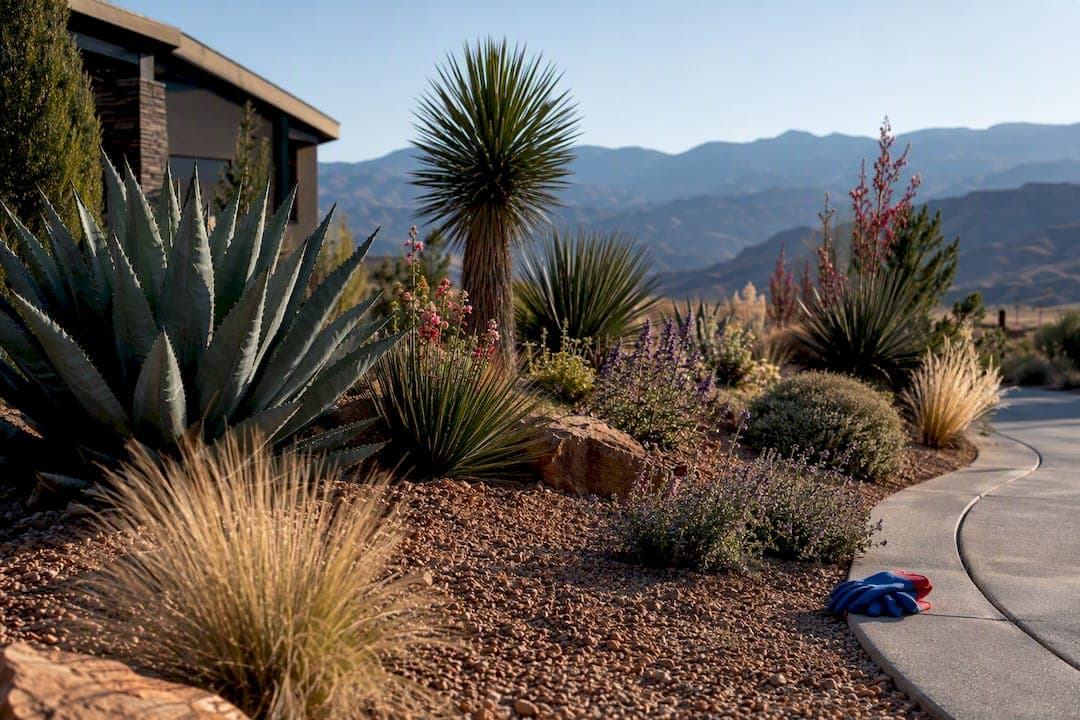
The fastest route to an attractive, low-water desert yard is a mixed palette of desert-adapted trees, shrubs, cacti and succulents, grasses, and drought-tolerant perennials, grouped by water need and given one to three years to establish. Skip a single "hero plant" strategy. Anchor the design with a tree like mesquite or desert willow, fill in with agave, yucca, and penstemon, and follow a real irrigation schedule while roots take hold.
TL;DR:
- Plants should be grouped by water need and given one to three years of supplemental irrigation to establish deep roots and tolerate droughts effectively.
- Desert-adapted trees like mesquite or desert willow tolerate poor soil and extreme temperatures, but species must match local elevation and climate for survival.
- Proper site preparation involves ensuring good drainage, avoiding organic amendments for native plants, and adjusting planting depth to prevent root rot.
- Combining spiky architectural plants with soft textured ones enhances visual interest, while mulching with gravel or decomposed granite stabilizes soil temperatures.
- Regular seasonal maintenance and appropriate protection against frost and heat stress are critical for managing desert plant health and longevity.
Table of Contents
- What Makes a Plant Truly Suited to Desert Landscapes
- How to Choose the Right Plants for Your Site
- Planting and Establishment: Getting Roots to Take Hold
- Design Combos That Actually Work Together
- Keeping Desert Plants Healthy Year to Year
- Pests and Diseases That Target Desert Plants
- The Environmental Payoff of Going Desert-Adapted
- Managing Heat Spikes, Cold Snaps, and Frost
- Getting the Site Right Before You Plant
- Why Small Desert Beds Beat Big Ambitions
- Where to Dig Deeper on Regional Plant Lists
- Sources
- FAQ
What Makes a Plant Truly Suited to Desert Landscapes
Desert landscape plants share a few traits that let them shrug off conditions that kill ordinary yard plants: deep or widespread roots, waxy or small leaves that limit water loss, and a tolerance for alkaline, low-organic soils. In high-desert regions, temperatures can swing from around 10°F in winter to 110°F in summer, with annual rainfall sometimes under 10 inches, according to Utah State University Extension. That swing is the real filter. A plant that handles Tucson's heat may still freeze out in a Cedar City winter, so matching species to your actual elevation and soil matters more than chasing a generic "drought-tolerant" label.
Here's the palette that shows up again and again on municipal and extension plant lists, organized by role in the landscape.
Trees (structure, shade, focal points):
- Mesquite (Prosopis spp.) — Fast-growing shade tree with a fine, airy canopy; tolerates poor soil and extreme heat; reaches 20 to 30 feet.
- Desert willow (Chilopsis linearis) — Small ornamental tree with orchid-like summer blooms that draw hummingbirds; 15 to 25 feet tall, cold-hardy to around 0°F.
Shrubs (screening, structure, wildlife habitat):
- Creosote bush (Larrea tridentata) — A keystone Southwest shrub that, once established, often needs virtually no supplemental water in sandy or gravelly soil with sharp drainage, per Plant Native.
- Ocotillo (Fouquieria splendens) — Whip-like stems tipped in red flowers after rain; a striking vertical accent, 8 to 15 feet.
- Lantana (Lantana spp.) — Season-long color and pollinator magnet; low, spreading habit good for banks and borders.
Cacti and succulents (focal points, low-maintenance texture):
- Agave (Agave spp.) — Bold rosette form, near-zero water once rooted; sizes range from compact to 6 feet across.
- Aloe (Aloe spp.) — Winter/spring bloomer with architectural leaves; some species tolerate light frost, others need protection.
- Yucca (Yucca spp.) — Rigid, spiky rosettes and tall bloom spikes; extremely cold and heat tolerant.
- Prickly pear (Opuntia spp.) — Flat, paddle-shaped pads with spring flowers and edible fruit; spreads to fill space over time.
Groundcovers and grasses (movement, erosion control, fill):
- Red yucca (Hesperaloe parviflora) — Grass-like foliage with coral flower spikes nearly year-round; not a true yucca but behaves like one.
- Muhlenbergia / little bluestem (Muhlenbergia / Schizachyrium scoparium) — Fine-textured grasses that catch light and sway in wind; good for softening hardscape edges.
Perennials (seasonal color, pollinator support):
- Penstemon (Penstemon spp.) — Tubular red or purple flowers that hummingbirds seek out; short-lived but reliable in well-drained soil.
How to Choose the Right Plants for Your Site
Before you fall in love with a plant at the nursery, run it through a short filter and check out Desert Foothills Gardens Nursery for desert-adapted plant options that fit sustainable planting schemes. Sun exposure, drainage, soil texture, and elevation decide whether a species thrives or limps along.
- Check sun exposure and microclimate. South-facing walls and reflected heat from concrete push temperatures higher than the open yard; some plants that handle full desert sun still scorch against west-facing stucco.
- Test your soil and drainage. Alkaline, low-organic soils are the desert norm, and most listed species prefer it that way; adding rich compost around true desert natives can actually work against them.
- Confirm your elevation and hardiness zone. A plant thriving in low-desert Phoenix may not survive a high-desert winter in Utah, even a few hundred miles north.
- Match mature size to purpose. Decide first whether you need shade, screening, a focal point, or groundcover, then pick species that reach that size without constant pruning.
- Group by hydrozone. Cluster plants with similar water needs (low, moderate, occasional) so you never overwater a cactus to keep a perennial happy nearby.
Pro Tip: Visit a local demonstration garden or use your regional extension's plant selector before buying. Seeing mature size and bloom timing in person beats guessing from a nursery tag.
Planting and Establishment: Getting Roots to Take Hold
Good planting technique determines whether a drought-tolerant plant actually becomes drought-tolerant, or struggles for years. Dig the hole two to three times as wide as the root ball but no deeper, so the plant doesn't settle below grade. For strict desert natives like creosote or ocotillo, skip heavy organic amendments; they're adapted to lean soil and can rot in rich, water-retentive mixes. For less rugged perennials and grasses, a modest compost blend helps roots establish faster.
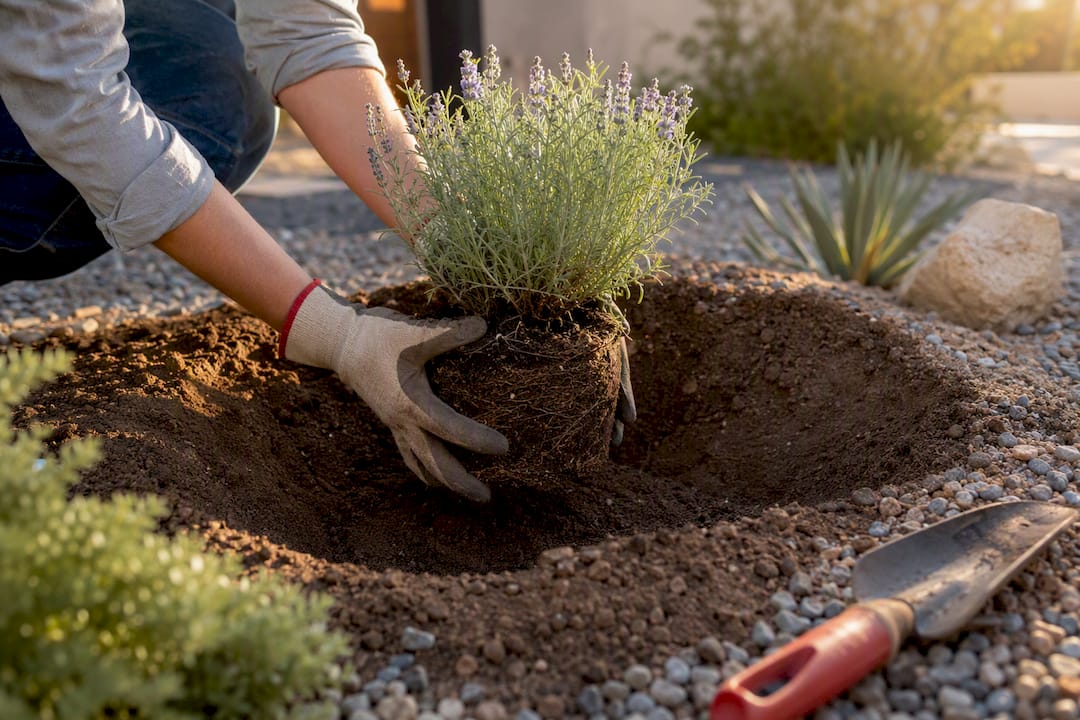
Check drainage before you plant anything permanent: fill the hole with water and see how long it takes to drain. If water still sits after 12 to 24 hours, you're likely dealing with caliche or hardpan, and you'll need to break through it or build a raised planting mound instead of fighting the clog.
Watering schedules make or break establishment. A rough timeline:
- Weeks 1 to 2: Water every 2 to 3 days to settle soil around roots.
- Weeks 3 to 4: Stretch to every 4 to 5 days.
- Weeks 5 to 8: Water once a week, soaking deeply rather than sprinkling often.
- Years 1 to 3: Taper to every 2 to 3 weeks in growing season, then let established plants rely mostly on rainfall.
Expect supplemental irrigation through this whole establishment window, typically one to three years, according to University of Arizona Extension. Inorganic mulch (gravel, decomposed granite) suits cacti and succulents best since it won't hold moisture against crowns; organic mulch works better under trees and perennials that appreciate some retained moisture. Stake young trees only if wind exposure is significant, and remove stakes within a year to force trunk strength.
Design Combos That Actually Work Together
Pairing plants by scale and texture keeps a desert bed from looking like a random collection of spiky things. A few combinations that hold up in real yards:
- Shade anchor: Desert willow + red yucca + penstemon + gravel groundcover, spaced so the tree canopy eventually shelters the perennials beneath it.
- Architectural corner: A large agave as the focal point, flanked by muhlenbergia grass for movement and a low lantana drift for color at the base.
- Screening border: Creosote bush backed against a fence line with prickly pear filling gaps, spaced 4 to 6 feet apart to allow mature spread.
- Entry accent: Ocotillo as a vertical exclamation point, surrounded by decomposed granite and a few clustered aloe for winter and spring bloom.
Mixing leaf textures, spiky against soft, fine against bold, does more for curb appeal than adding more flower color. Boulders and decomposed granite paths between plant groupings cut down on irrigated area while giving the whole bed a finished, intentional look.
Pro Tip: Contrast is what sells a desert bed visually. Pair one spiky, architectural plant (agave, yucca) with one soft, textured one (muhlenbergia, red yucca) in every grouping, and the whole design reads as designed rather than scattered.
Keeping Desert Plants Healthy Year to Year
A seasonal rhythm keeps maintenance light. Inspect for winter damage and prune dead growth in spring. Check irrigation lines and timer settings before peak summer heat. Clean up spent perennial growth in fall. Protect frost-sensitive succulents like aloe with frost cloth on the coldest winter nights.
Yellowing, mushy stems usually mean overwatering; wrinkled or grayish leaves point to drought stress. Adjust irrigation frequency rather than volume in either case. Prune trees for structure in late winter, shape shrubs lightly after bloom, and leave cacti alone except to remove damaged pads. For homes near wildland areas, keep dry grasses and dead plant material cleared away from structures as part of a defensible-space routine.
Pests and Diseases That Target Desert Plants
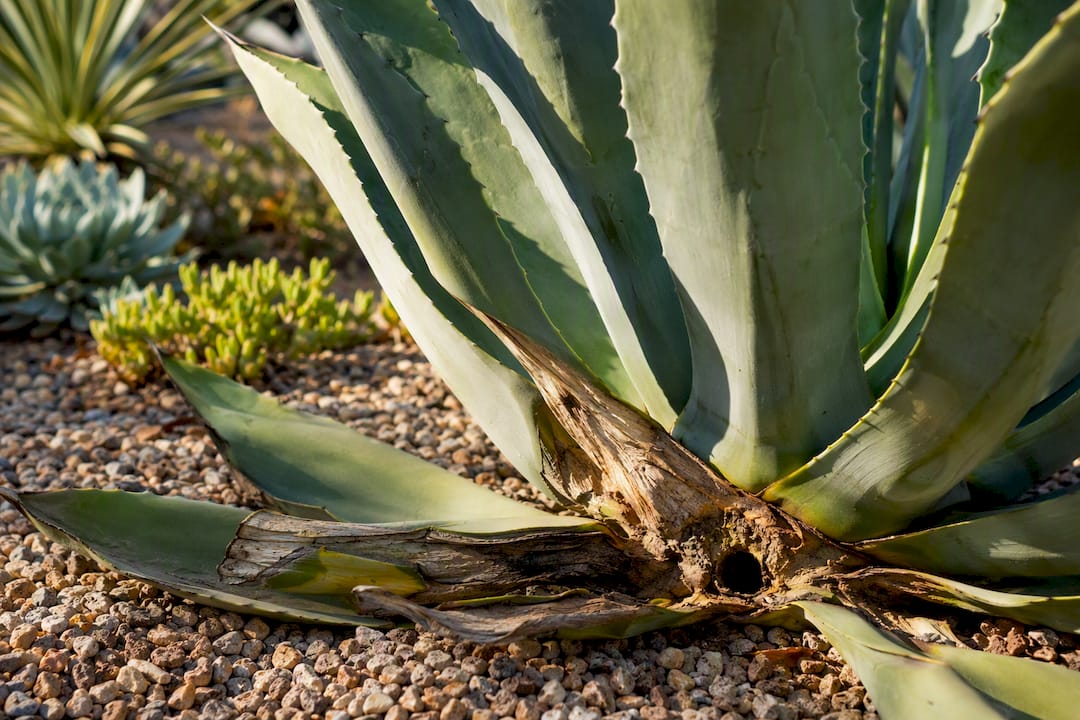
Desert plants deal with a narrower set of problems than typical landscape plants, but a few show up consistently. Agave snout weevils bore into the base of agave rosettes, causing sudden collapse; there's no reliable cure once infestation is advanced, so remove and destroy affected plants to protect neighbors. Scale insects and mealybugs cluster on cacti and succulents, appearing as white, cottony patches, usually knocked back with insecticidal soap or a strong water spray.
Root rot is the most common disease issue, almost always tied to poor drainage or overwatering rather than pathogens showing up on their own. Cacti and succulents planted in heavy, water-retentive soil are especially vulnerable; the fix is better drainage, not fungicide. Bacterial necrosis can affect prickly pear and other opuntias, showing up as dark, wet-looking lesions; cut out infected pads with a sterilized blade and let the wound callus in dry air.
Mesquite and desert willow occasionally attract borers, particularly in stressed or overwatered trees. A healthy, appropriately irrigated tree resists borers far better than one pushed with too much water and fertilizer. Aphids show up on new penstemon and lantana growth in spring; they're mostly cosmetic and rarely need treatment beyond a hose-down. The pattern across nearly every desert pest and disease problem: overwatering creates the vulnerability, and correct site selection prevents most of it before it starts.
The Environmental Payoff of Going Desert-Adapted
Landscape irrigation accounts for up to 30% of a typical household's yearly water use, according to EPA WaterSense. Swapping thirsty turf for a xeriscape palette of agave, penstemon, and native grasses cuts directly into that number, often the single biggest reduction a homeowner can make without touching indoor fixtures.
The benefits extend past the water bill. Desert-adapted plantings support pollinators and wildlife that turf simply can't. Penstemon and lantana draw hummingbirds and native bees; mesquite and desert willow provide nesting structure for birds; creosote bush anchors entire micro-ecosystems in undisturbed desert. Reducing mowed turf also cuts gas-powered equipment use and the runoff of fertilizers and pesticides that turf maintenance typically requires.
There's a resilience argument too. A desert landscape built on plants suited to local rainfall patterns handles drought years and water restrictions without the stress and die-off that lawns experience. Once established, most of the species on a desert plant list need only occasional deep watering, which means the landscape keeps functioning, and looking intentional, through dry stretches that would turn a traditional lawn brown or force a costly reseed.
Managing Heat Spikes, Cold Snaps, and Frost
Desert climates don't stay in one lane. A 100°F afternoon can be followed by a night that drops into the 40s, and winter can bring a hard freeze that catches unprotected succulents off guard. The plants on this list are chosen partly because they tolerate that swing better than most, but "tolerate" doesn't mean immune.
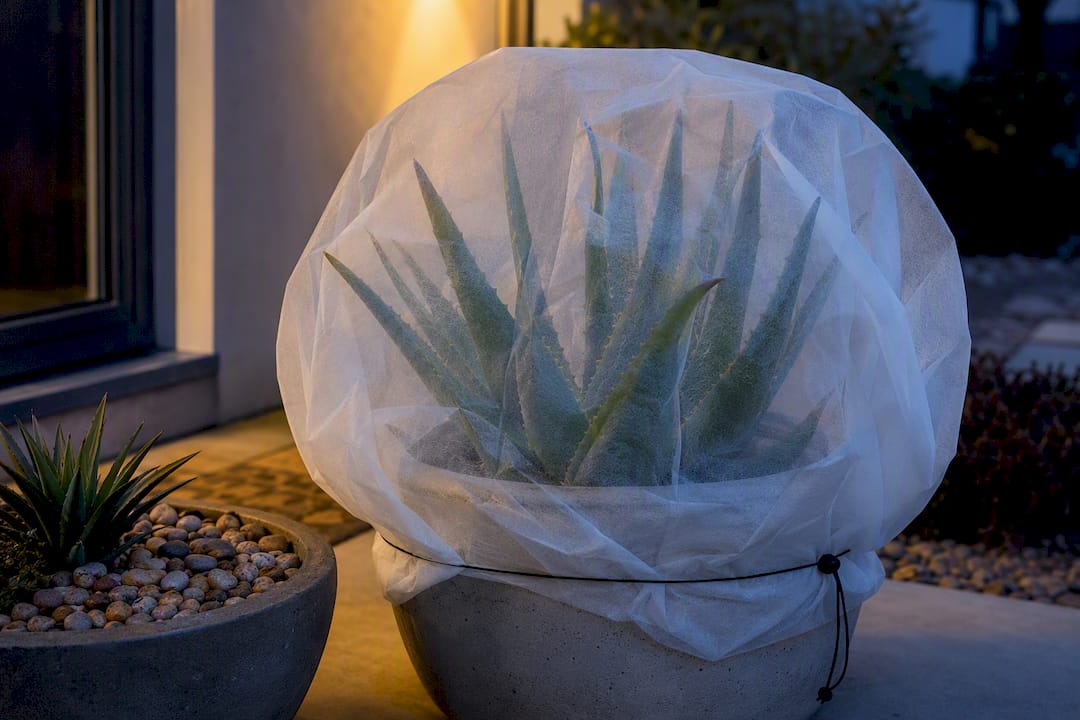
Frost is the bigger risk for tender succulents. Aloe species vary widely in cold hardiness. Cover exposed plants with frost cloth, not plastic, on nights when temperatures are forecast to dip toward freezing, and remove the cover the next morning so plants don't overheat or stay damp. Potted succulents can simply be moved to a garage or covered porch during a cold snap.
Heat stress shows up differently: scorched leaf edges, sunburned pads on cacti, and wilting during the hottest part of the afternoon even when soil moisture is adequate. Young plants are far more vulnerable than established ones, since mature root systems reach cooler, deeper soil moisture that seedlings haven't grown into yet. Shade cloth during the first summer after planting reduces stress considerably, and it's often the difference between a plant that establishes and one that fails in its first year.
Mulch plays a role on both ends. A few inches of gravel or decomposed granite insulates roots against both extreme heat and sudden cold, moderating soil temperature swings that stress a shallow root system. For trees and shrubs planted near structures, reflected heat off walls and pavement can push local temperatures 10 to 15 degrees above the open yard reading, so factor that into placement, especially for anything already borderline for your hardiness zone.
Getting the Site Right Before You Plant
Experienced contractors have found that plant selection is only half the job. The other half is what's under the plants: grading, drainage, and soil condition that either sets a desert landscape up to thrive or dooms it before the first agave goes in the ground.
- Compacted soil from construction or old sprinkler trenching blocks root penetration and traps water where it shouldn't sit.
- Poor grading sends runoff toward foundations or pools it in low spots that rot roots within a season.
- Retrofitting irrigation to match new hydrozones often means coordinating trenching with hardscape work already in the ground.
A single point of contact matters here, since regrading, drainage correction, and irrigation layout touch multiple trades at once. For larger jobs, anything involving major earthwork, integrated hardscape and planting, or a full yard regrade, bringing in a contractor who handles landscape earthwork and irrigation and sprinkler systems under one roof avoids the delays that come from managing separate crews for each phase. Companies experienced in this model have completed many projects using this approach.
Why Small Desert Beds Beat Big Ambitions
Don't overhaul the whole yard at once. Start with one demo bed, test three or four species against your specific microclimate, and expand from what actually survives. Check your local extension's plant list before buying, and if the site needs grading or drainage work first, get a professional evaluation before you plant anything.
— Jake
Where to Dig Deeper on Regional Plant Lists
For region-specific species and planting detail beyond this guide, Utah State University Extension's water-wise plant list covers high-desert hardiness. The AMWUA/Tucson landscape plants booklet groups low-water species by category, and Plant Select offers a searchable database tested for western climates.
Sources
- Water-wise plants | Utah State University Extension
- Landscape Plants for the Arizona Desert (AMWUA / Tucson booklet)
- Xeriscape principles and guidance | University of Arizona Extension (az1048.pdf)
FAQ
What Are the Best Desert Plants for Landscaping?
Agave, yucca, red yucca, prickly pear, desert willow, and mesquite consistently top extension and municipal plant lists for reliability and low water use once established.
What Are the Top Desert Plants for a Beginner Yard?
Start with red yucca, penstemon, and lantana for easy color, then add agave or prickly pear as low-maintenance structural anchors that need almost no attention after the first year.
What Plants Can Thrive in True Desert Environments?
Creosote bush, ocotillo, and mature agave handle the harshest low-desert conditions with essentially no supplemental water once their root systems are established, according to Plant Native.
What Plants Hold Up Best Under Extreme Desert Heat?
Mesquite, creosote bush, and agave tolerate sustained triple-digit heat without leaf scorch, largely because their root systems and leaf structures evolved specifically to limit water loss in those conditions.
How Long Does It Take Desert Plants to Establish?
Most desert-adapted plants need supplemental irrigation for one to three years while roots spread deep enough to rely on natural rainfall, per University of Arizona Extension.