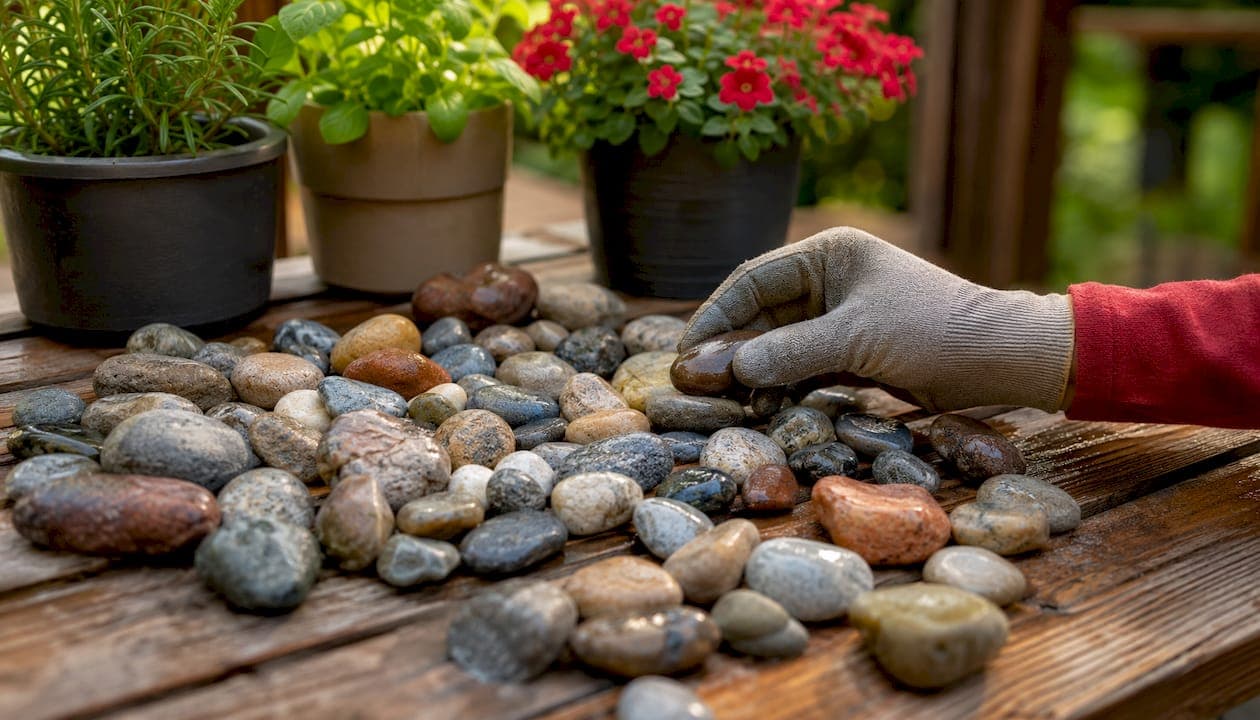
Utah river rock is the go-to decorative stone for homeowners and landscapers who want a permanent, low-maintenance ground cover that actually looks good year after year. Unlike wood mulch, which breaks down and needs replacing, natural river rock holds its texture, color, and depth through Utah's freeze-thaw cycles and summer heat without any upkeep.
Here is what makes it worth choosing:
- Naturally rounded and smooth, shaped by water over time, not cut or crushed
- Permanent ground cover that does not decompose, fade significantly, or attract pests
- Supports drainage by allowing water to pass through rather than pooling on the surface
- Available in multiple sizes and colors, from fine 1/2" Painted Desert gravel to large Decorative Cobble
- Key varieties include Pink Lemonade, Painted Desert 1/2", Desert White, Four Seasons 1", and Monsoon Gray
Table of Contents
- What Utah river rock products are available in sizes and colors?
- How do you use river rock in landscaping, and which type should you pick?
- Where can you buy Utah river rock locally?
- How A-to-zconstruction uses river rock in Utah hardscape projects
- What does Utah river rock cost?
- A-to-zconstruction handles your Utah hardscape from start to finish
- Key Takeaways
- FAQ
What Utah river rock products are available in sizes and colors?
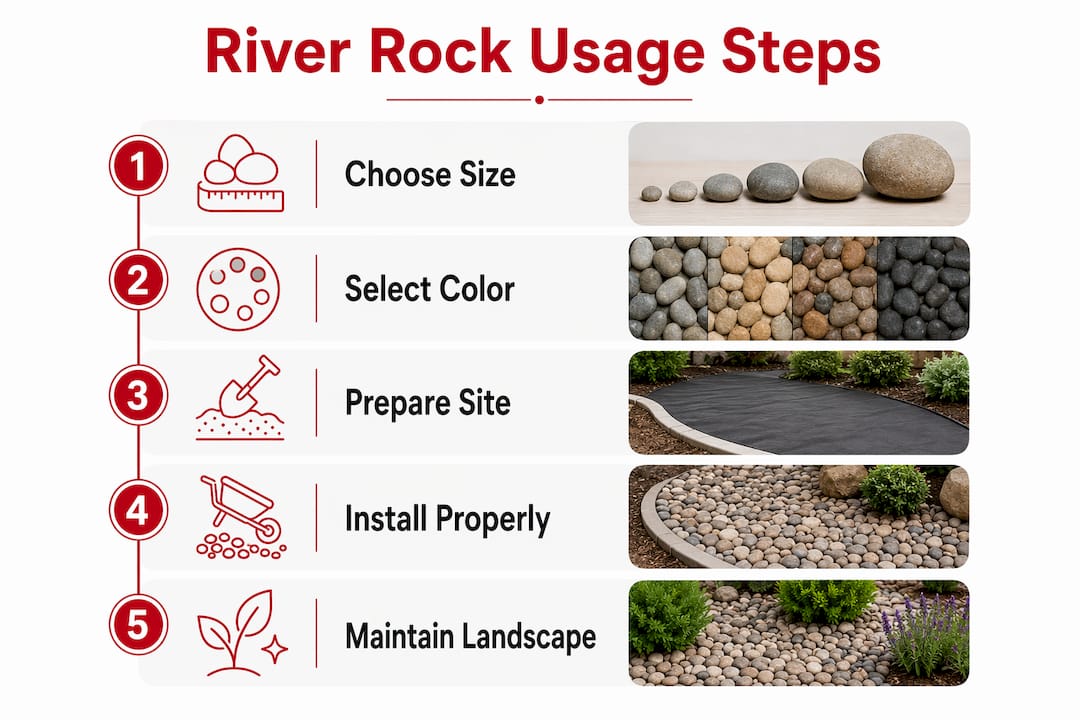
Utah suppliers stock a wide range of sizes and color palettes, and the right choice depends on where you are using it and what look you are after.
| Product | Size | Color Profile | Best Use | Price Range |
|---|---|---|---|---|
| Painted Desert 1/2" | 1/2" | Warm reds, oranges, tans | Pathways, tight garden beds | Varies by supplier |
| Four Seasons 1" | 1" | Mixed earth tones | Garden borders, general beds | Varies by supplier |
| Pink Lemonade | 1"–2" | Pink, cream, light rose | Decorative accents, water features | Varies by supplier |
| Desert White | 1"–3" | Bright white, off-white | Modern xeriscapes, contrast beds | Varies by supplier |
| Monsoon Gray | 1"–3" | Gray, blue-gray, charcoal | Dry creek beds, contemporary designs | Varies by supplier |
| Decorative Cobble | 2"–5" | Multi-toned brown, gray, tan | Dry creek beds, retaining accents | Varies by supplier |
Utah Landscaping Rock, based in Nephi, has supplied these varieties for many years, serving homeowners, contractors, and landscapers across Utah, Idaho, Wyoming, and Nevada. Their stock is mined from a quarry south of Nephi and screened for consistent sizing.
Key product notes:
- Screened rock means uniform sizing and better drainage performance; screened river rock avoids the debris-trapping issues that crushed angular stone creates in water features
- Smaller sizes (1/2"–1") suit tight spaces, pathways, and areas around plants
- Larger cobble (2"–5") works best where you need visual weight and structural presence
How do you use river rock in landscaping, and which type should you pick?
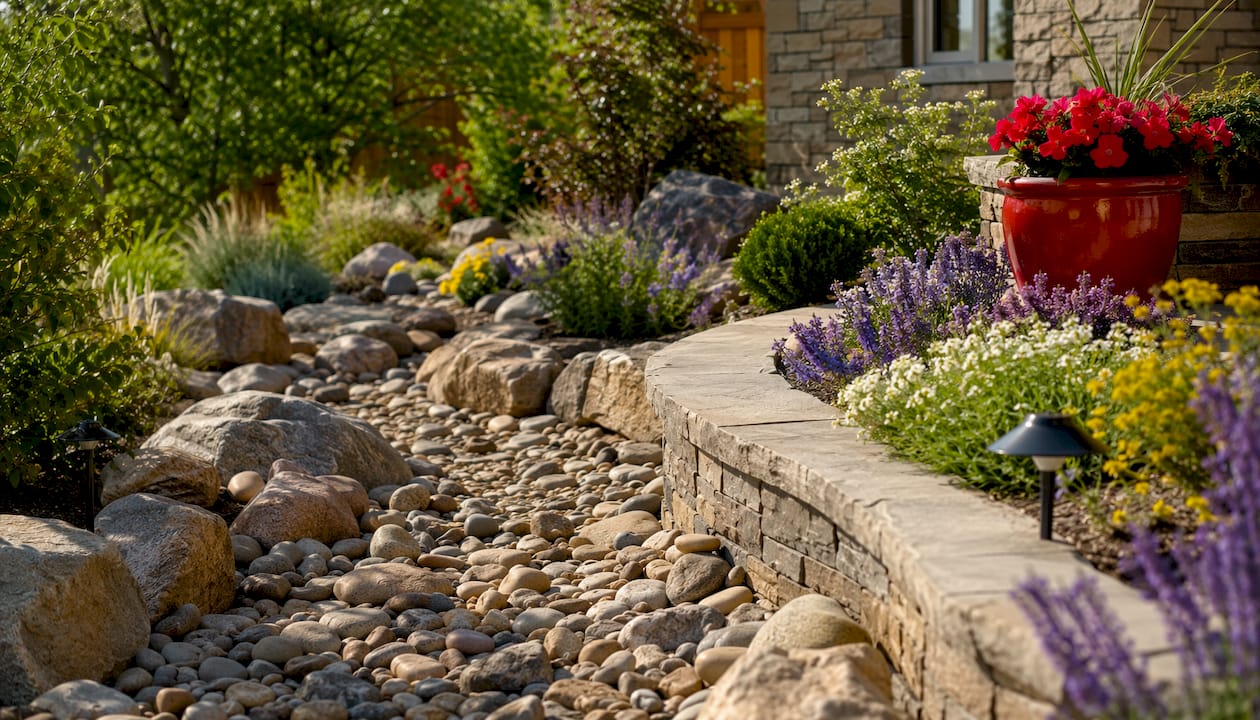
The most common applications for decorative river rock in Utah yards are dry creek beds, garden borders, xeriscaping, pathways, and water features. Each one calls for a different size.
Large stones in the 2–5" range suit dry creek beds where you want natural flow and visual drama. Smaller stones in the 1–1.5" range work better for pathways and tight garden spaces where you need a stable, walkable surface. Color matters too: a bright Desert White reads as modern and clean, while Monsoon Gray or Painted Desert blends into a more naturalistic setting.
- Dry creek beds: Decorative Cobble or Monsoon Gray (2"–5") for realistic water-flow appearance
- Pathways: Four Seasons 1" or Painted Desert 1/2" for a firm, attractive walking surface
- Garden borders: Pink Lemonade or Desert White for color contrast against green foliage
- Xeriscaping: Any size works; match color to your home's exterior palette
- Water features: Screened, rounded cobble only — angular crushed stone damages pond liners
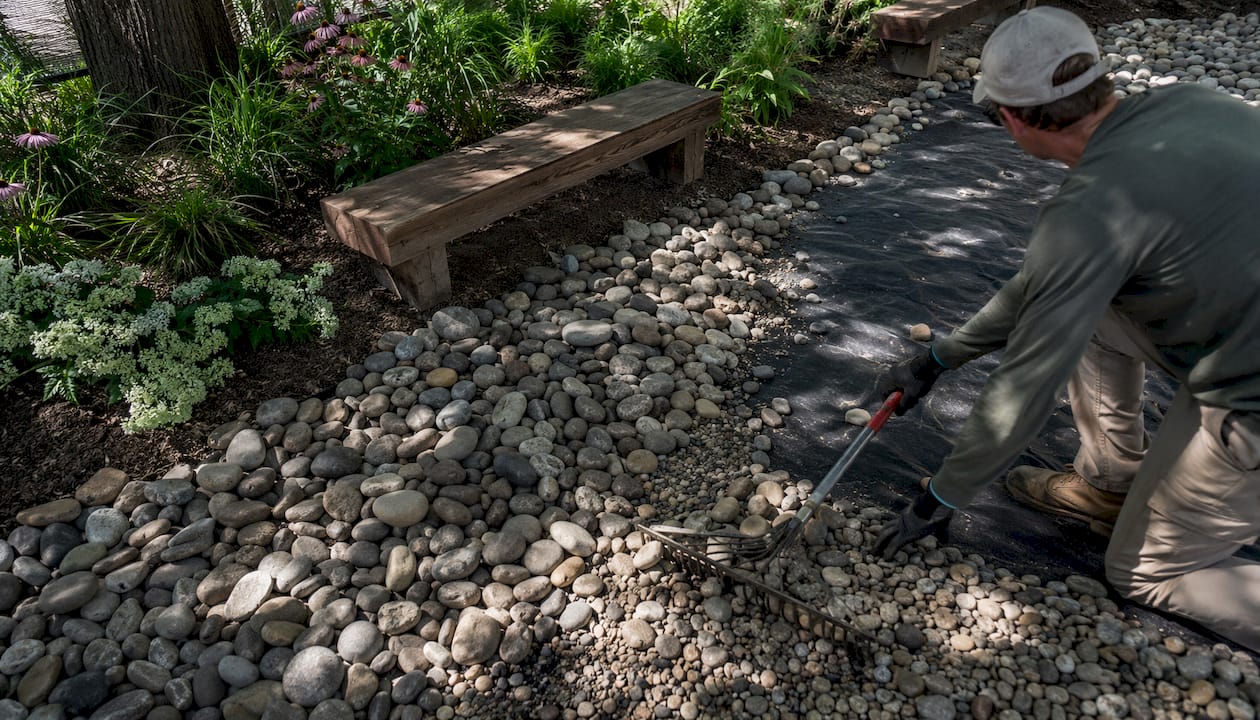
Pro Tip: Install river rock over a commercial-grade weed barrier and lay it at least 2 inches deep. The general rule is to go no shallower than twice the stone's diameter. Skimping on depth is the single most common reason weeds push through within a season.
River rock also handles Utah's drainage challenges well. Water moves freely between the stones rather than sitting on the surface, which protects plant roots and reduces erosion on slopes. For sites where runoff is a concern, river rock for erosion control outperforms grass or organic mulch in most conditions.
Where can you buy Utah river rock locally?
Most Utah suppliers sell by the ton or cubic yard, and those two units are not interchangeable. The weight of a cubic yard of river rock varies by stone type, so always confirm the unit with your supplier before ordering.
- Utah Landscaping Rock (Nephi, UT): (435) 623-2332 | 1250 North 200 West, Nephi, UT 84648 | Delivery statewide
- Utah Rock Yard (Salt Lake City area): Full selection of screened river rock with delivery; call (801) 210-7992
- Landscape Supply of Utah: Bagged and bulk options including 2"–3" River Cobble by the cubic yard
- RockN Yard: Salt Lake area delivery; pricing by ton and cubic yard with current sale options on select varieties
Ordering tips:
- Order extra volume to account for settling and installation loss
- Confirm whether pricing is per ton or per cubic yard before finalizing your order
- Ask if the product is screened; unscreened material includes fines that affect drainage and appearance
- Request delivery to your site rather than hauling bulk stone yourself — most suppliers serve the Wasatch Front and beyond
How A-to-zconstruction uses river rock in Utah hardscape projects
A-to-zconstruction is a licensed general contractor based in Cedar City, Utah, with over 500 completed projects across the state. Their crews handle masonry, earthwork, and landscaping under one roof, which means river rock installation gets coordinated with retaining walls, grading, and drainage from the start rather than as an afterthought.
Typical applications in their hardscape work include:
- Xeriscape accents around paver patios and outdoor kitchens
- Dry creek beds integrated into graded drainage swales
- Decorative borders alongside retaining walls and CMU block structures
- Water feature surrounds using screened cobble to protect pond liners
Their hardscape projects in Uintah and River Heights show how river rock transitions from a decorative material into a functional drainage and erosion-control element when installed correctly. Because A-to-zconstruction manages every phase in-house, the rock selection, weed barrier installation, and grading all happen in sequence without the delays that come from coordinating separate subcontractors.
What does Utah river rock cost?
Pricing varies by stone type, size, and supplier, but the general structure is consistent across Utah suppliers. Smaller, more refined stones tend to cost more per ton than larger cobble. Delivery adds to the total, especially for sites outside the Wasatch Front.
At RockN Yard, for example, Polar Dusk River Rock runs $111.54 per ton or $145 per cubic yard, while Canyonlands River Rock is currently on sale at $95 per cubic yard. Uinta River Rock from other suppliers lists at $150 per cubic yard. These figures give a realistic baseline, though prices shift with fuel costs and seasonal demand. Always get a current quote before budgeting a project.
A-to-zconstruction handles your Utah hardscape from start to finish
Sourcing the right decorative stone is one piece of the puzzle. Getting it graded, bordered, and installed so it stays put and drains properly is where most DIY projects fall short.

A-to-zconstruction brings licensed crews to every job, covering hardscape design and installation alongside masonry, earthwork, and landscaping. You get one point of contact, one schedule, and a finished yard that holds up through Utah winters. Whether you need a xeriscape conversion, a dry creek bed, or a full patio and retaining wall build, get a quote from A-to-zconstruction and skip the subcontractor shuffle.
Key Takeaways
Utah river rock outperforms organic mulch in every long-term metric: it does not decompose, it drains freely, and it holds its appearance through Utah's climate extremes without seasonal replacement.
| Point | Details |
|---|---|
| Size drives function | Use 2"–5" cobble for dry creek beds; 1"–1.5" stone for pathways and garden beds. |
| Install at proper depth | Lay river rock at least 2 inches deep over a commercial-grade weed barrier. |
| Order extra volume | Buy 5–10% more than your calculated need to cover settling and installation loss. |
| Confirm pricing units | Ton and cubic yard pricing are not interchangeable; always verify the unit before ordering. |
| A-to-zconstruction | Handles river rock installation as part of full hardscape and landscaping projects across Utah. |
FAQ
What is Utah river rock used for in landscaping?
Utah river rock works well for dry creek beds, garden borders, pathways, water features, and xeriscaping. Its rounded shape supports drainage and provides permanent ground cover without decomposing.
How deep should river rock be installed?
Install river rock at a minimum depth of 2 inches over a commercial-grade weed barrier. The general rule is to go no shallower than twice the diameter of the stone you are using; for example, use at least 4 inches of depth for a 2-inch cobble.
What are the most popular Utah river rock colors?
Pink Lemonade, Painted Desert, Desert White, Four Seasons, and Monsoon Gray are among the most widely stocked color varieties at Utah suppliers.
How much extra river rock should I order?
Order 5–10% more than your calculated volume to account for settling and material loss during installation. Confirm with your supplier whether pricing is per ton or per cubic yard before placing your order.
Can A-to-zconstruction install river rock as part of a larger project?
Yes. A-to-zconstruction integrates river rock into hardscape and landscaping projects across Utah, coordinating installation with grading, retaining walls, and drainage through a single in-house crew.