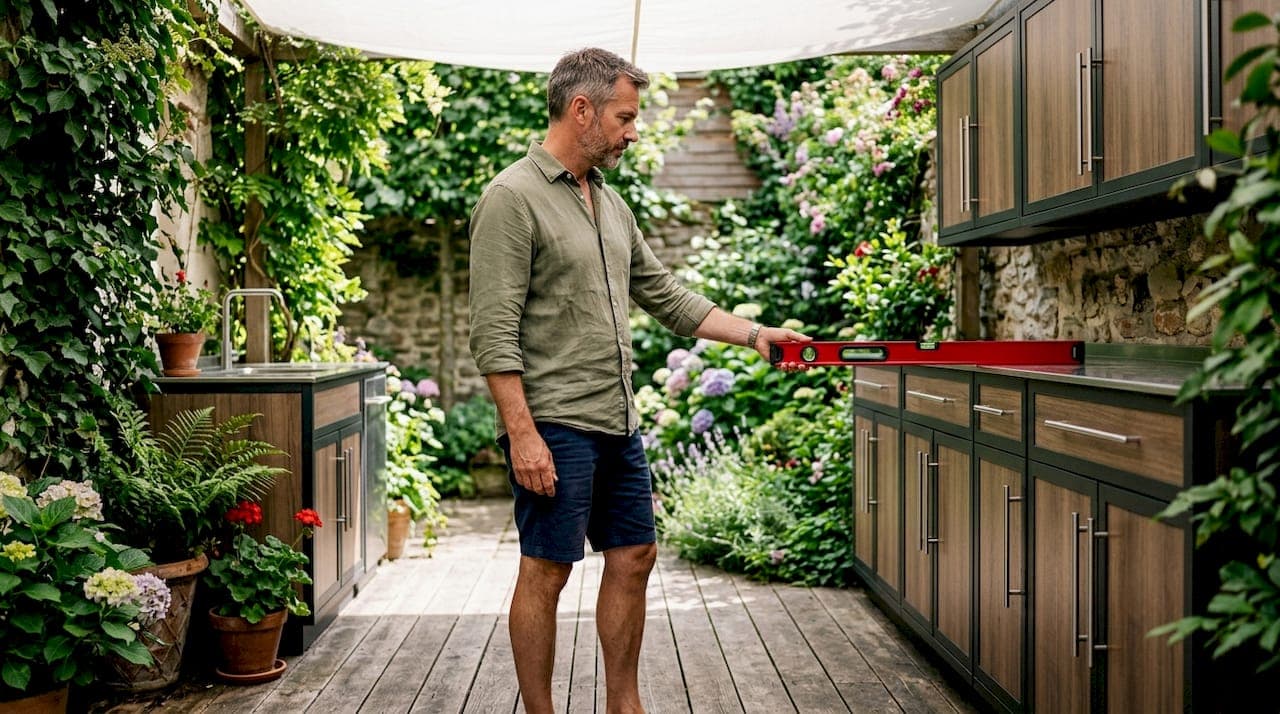
Outdoor kitchen cabinets are weatherproof storage units built specifically to handle humidity, UV exposure, and temperature swings that would destroy standard indoor cabinetry. Unlike interior cabinets made from MDF or melamine, purpose-built outdoor units rely on materials like grade 304 or 316 stainless steel, high-density polyethylene (HDPE), and powder-coated aluminum to survive year-round exposure. The right cabinet choice determines how long your outdoor kitchen lasts, how much maintenance you do each season, and how good the whole setup looks five years from now. Getting these decisions right from the start saves you from expensive retrofits and premature replacements.
What are the best materials for outdoor kitchen cabinets?
Material selection is the single most important decision you make for outdoor cabinetry. The wrong material in the wrong climate fails within a few seasons. The right one lasts decades with minimal effort.
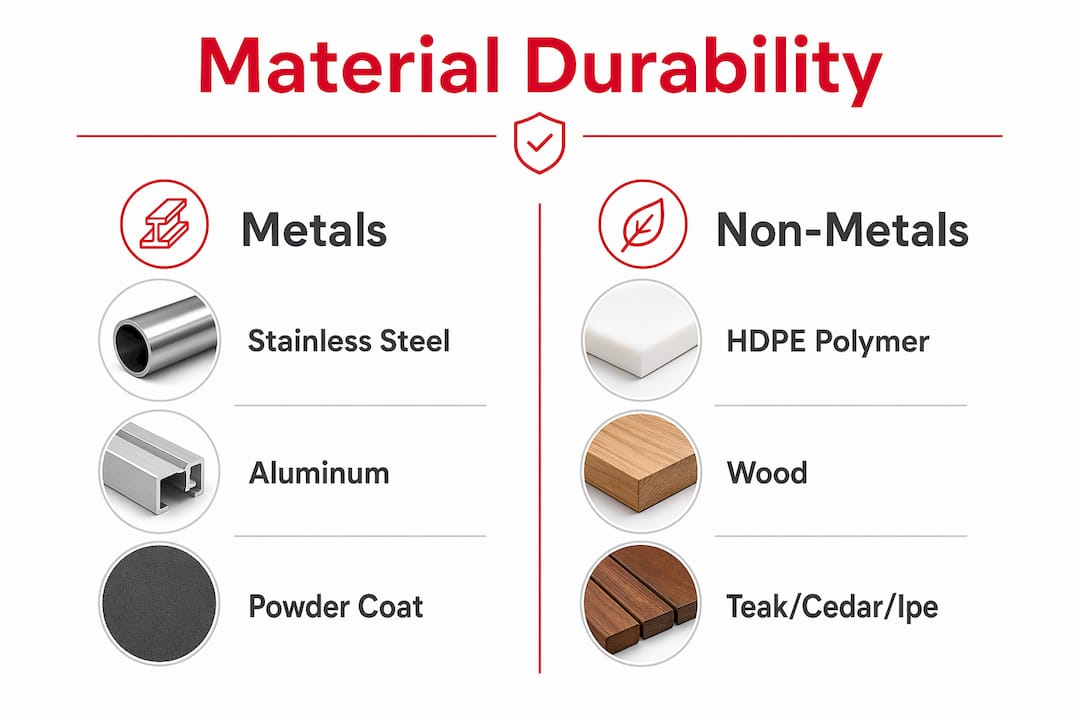
Stainless steel: grades 304 and 316
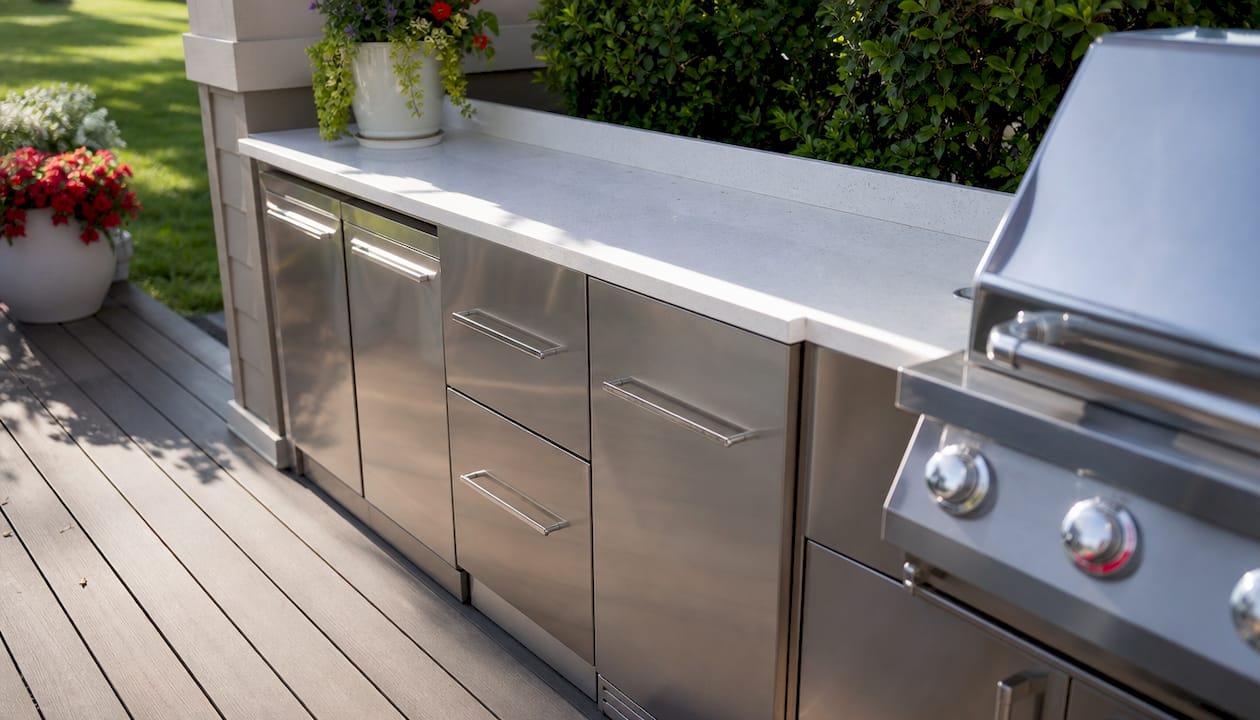
Stainless steel is the most widely used material for outdoor kitchen cabinets. Grade 304 works well for inland climates with moderate humidity. Grade 316 is the correct choice for coastal environments because it contains molybdenum, which resists salt-air corrosion far better than 304. That difference matters enormously within a mile of the ocean, where 304 steel will show rust staining within a year or two.
Powder-coated aluminum
Powder-coated aluminum is lighter than steel and resists corrosion well in most climates. The coating protects against UV rays, scratches, and weathering, and it comes in a wide range of colors and finishes. Aluminum cabinets suit contemporary outdoor kitchen design ideas where clean lines and color variety matter. They do require periodic cleaning to keep the finish looking sharp.
HDPE polymer
HDPE is a marine-grade plastic that resists water, mold, and UV fading. It requires near-zero maintenance, making it the top pick for homeowners who want outdoor storage solutions without seasonal upkeep. HDPE does not warp, rot, or absorb moisture. The tradeoff is a more utilitarian appearance compared to metal or wood options.
Wood: teak, cedar, and ipe
Wood cabinets deliver warmth and a natural aesthetic that metal cannot replicate. Teak is marketed as the premium choice because of its natural oils, but teak still requires yearly oiling and maintenance to preserve color and prevent degradation. Cedar and ipe follow similar patterns. Without annual sanding and sealant application, wood deteriorates rapidly under moisture and UV exposure.
| Material | Durability | Maintenance | Cost range | Best for |
|---|---|---|---|---|
| Grade 316 stainless steel | Excellent | Low (periodic cleaning) | High | Coastal and high-humidity climates |
| Powder-coated aluminum | Very good | Low (occasional cleaning) | Moderate | Contemporary designs, inland climates |
| HDPE polymer | Very good | Near zero | Moderate | High-humidity, low-maintenance builds |
| Teak or ipe wood | Good | High (annual treatment) | High | Warm, dry climates with aesthetic priority |
| Cedar | Moderate | High (annual treatment) | Moderate | Dry climates, budget-conscious builds |
Pro Tip: If you live within two miles of the ocean, specify grade 316 stainless steel on every quote you receive. Contractors sometimes substitute 304 to cut costs, and the difference is invisible until rust appears.
How are outdoor kitchen cabinets constructed to withstand extreme weather?
Material choice gets you halfway there. Construction quality determines whether those materials actually perform as promised. Two cabinets made from the same steel can have completely different lifespans depending on how they were assembled.
The most critical construction features include:
- UV-resistant powder coatings that prevent color fading and surface degradation from prolonged sun exposure
- Rust-resistant hardware including stainless steel hinges, drawer slides, and soft-close mechanisms that will not seize or corrode with seasonal moisture
- Rubber gaskets and weatherstripping on door frames that block water infiltration during rain
- Laser-fused edge banding that perfectly seals cabinet panels, preventing water from entering at seams and preserving finish integrity through repeated rain and temperature cycles
- Welded seams and expansion joints that allow the cabinet structure to flex slightly with temperature changes without cracking or warping
The most premature cabinet failures trace back to moisture infiltration at joints and edges, not to the face material itself. A stainless steel cabinet with poorly sealed edges will fail faster than a well-sealed aluminum cabinet. This is why exterior remodeling specialists who understand weatherproofing details matter more than general contractors who treat outdoor cabinets like indoor furniture.
Pro Tip: Ask your supplier or contractor to show you the edge banding method before you commit. Laser-fused banding leaves no visible seam. Glued banding peels within a few seasons outdoors.
What maintenance is required for outdoor kitchen cabinets?
Maintenance requirements vary significantly by material, and homeowners should honestly assess their willingness to maintain before selecting. Choosing a beautiful wood cabinet when you have no interest in annual sanding is a recipe for an eyesore within three years.
Here is a practical seasonal maintenance checklist organized by material type:
- HDPE polymer cabinets: Wipe down with mild soap and water once or twice a year. Check door hardware for any loosening. No sanding, sealing, or oiling required.
- Powder-coated aluminum or stainless steel cabinets: Clean surfaces with a stainless steel cleaner or mild detergent quarterly. Inspect hinges and drawer slides for corrosion annually. Lubricate moving hardware once per year.
- Wood cabinets (teak, cedar, ipe): Sand lightly each spring to remove surface weathering. Apply a UV-protective sealant or teak oil annually. Inspect for cracking, splitting, or mold growth after winter.
- All cabinet types before winter: Empty and dry the interior to prevent mold. Use fitted weatherproof covers if the kitchen is in an exposed location. Check that door seals and gaskets are intact before the wet season begins.
- All cabinet types in spring: Inspect all hardware for rust or corrosion. Tighten loose hinges and drawer pulls. Clean out any debris that accumulated over winter.
The near-zero maintenance advantage of HDPE and powder-coated metals is real. For most homeowners, those materials deliver the best long-term value because the upkeep cost in time and money stays predictable and low.
How to design and plan your outdoor kitchen cabinets for maximum functionality?
Planning is where most homeowners either set themselves up for success or create problems they will spend years working around. The layout decisions you make before a single cabinet is installed determine how well the finished kitchen actually functions.
Start with a professional design consultation. 3D renderings help homeowners coordinate layout, design, and utility lines before any installation begins. Seeing a scaled visual of your space reveals problems that are invisible on paper, like a cabinet door that swings into a grill handle, or a drawer that blocks the pathway to the dining area.
Key planning considerations include:
- Utility line coordination: Gas, water, and electrical lines must be mapped before cabinet placement is finalized. Moving them after installation is expensive and disruptive.
- Modular vs. custom cabinetry: Modular systems offer faster installation and lower cost. Custom outdoor cabinetry fits irregular spaces and specific appliance configurations precisely.
- Storage needs by use: Pull-out drawers work well for utensils and small tools. Deep base cabinets handle propane tanks and larger equipment. Waste centers keep trash contained and out of sight.
- Integrated features: Cabinets can accommodate built-in refrigerators, ice makers, and even outdoor TVs when planned from the start.
- Aesthetic alignment: Match cabinet color and finish to your patio materials, furniture, and home exterior. A stainless steel kitchen looks sharp against concrete or stone. Wood cabinets complement natural timber decking.
Homeowners planning outdoor kitchens in warm climates benefit from reviewing outdoor kitchen planning guides that address heat management and shade placement alongside cabinet selection. Those factors directly affect which materials hold up and which fade or warp prematurely. A-to-zconstruction handles custom outdoor kitchen builds in Utah, including full utility coordination and design consultation, so nothing gets overlooked between the planning phase and the finished product.
What are common pitfalls to avoid when selecting outdoor cabinets?
The most expensive mistakes in outdoor kitchen projects are almost always avoidable. They share a common cause: treating an outdoor build like an indoor remodel.
- Using indoor cabinet materials outdoors. MDF and melamine swell, delaminate, and mold within one wet season. They are not outdoor storage solutions under any circumstances.
- Ignoring climate-specific material requirements. A powder-coated aluminum cabinet that performs well in Utah's dry climate may not hold up in a Florida coastal environment. Match material to your specific conditions, not to a general recommendation.
- Skipping utility line coordination. Neglecting gas, water, and electrical planning during the design phase leads to expensive retrofits and unsafe installations. This is the most common costly error in outdoor kitchen projects.
- Underestimating hardware quality. Cheap hinges and drawer slides corrode and fail quickly outdoors. Stainless steel soft-close hardware costs more upfront and lasts far longer.
- Overlooking weatherproofing details. A cabinet with unsealed edges or missing door gaskets will fail regardless of how good the face material is. Hidden technical details like stainless steel grade and coating quality govern cabinet lifespan more than appearance does.
Key Takeaways
The best outdoor kitchen cabinets combine climate-appropriate materials, sealed construction, and coordinated utility planning to deliver lasting performance with minimal upkeep.
| Point | Details |
|---|---|
| Match material to climate | Use grade 316 stainless steel near the coast; HDPE or powder-coated aluminum works well inland. |
| Prioritize construction quality | Laser-fused edge banding and stainless steel hardware prevent the moisture infiltration that causes most early failures. |
| Plan utilities before cabinets | Coordinate gas, water, and electrical lines during design to avoid costly retrofits after installation. |
| Assess your maintenance tolerance | HDPE and powder-coated metals need minimal upkeep; wood requires annual sanding, sealing, and oiling. |
| Avoid indoor materials outdoors | MDF and melamine fail within one wet season and are never appropriate for outdoor cabinetry. |
What I've learned after years of outdoor kitchen builds
The question I hear most often is: "Which material is best?" The honest answer is that the best material is the one that matches how much time you are actually willing to spend maintaining it.
Homeowners consistently overestimate their maintenance commitment. They choose teak because it looks stunning in a showroom, then skip the annual oiling because life gets busy. Two years later, the wood is gray, cracked, and they are asking what went wrong. Nothing went wrong with the material. The mismatch was between the material's requirements and the owner's realistic habits.
The detail I see underestimated most often is hardware quality. Homeowners spend serious money on cabinet faces and then accept whatever hinges the contractor specifies. Cheap hinges corrode, seize, and eventually pull out of the cabinet frame. That failure is not a material problem. It is a hardware problem that a better spec sheet would have prevented.
My strongest advice: invest in a proper design consultation before you buy a single cabinet. The masonry and structural work that supports an outdoor kitchen needs to be planned alongside the cabinetry, not after it. Getting those two elements coordinated from the start is what separates a kitchen that functions well for 20 years from one that needs a rebuild in five.
— Jake
A-to-zconstruction builds outdoor kitchens that last
Planning an outdoor kitchen is one of the most rewarding home improvement projects you can take on. Getting the cabinet selection, utility coordination, and structural work right from the start makes all the difference in how the finished space performs and how long it holds up.
A-to-zconstruction is a licensed general contractor in Cedar City, Utah, with over 500 completed projects across hardscape, masonry, and remodeling. The team handles every phase of an outdoor kitchen build under one roof, from design consultation and material selection to structural installation and utility coordination. You get one point of contact, no subcontractor delays, and a finished kitchen built to last in Utah's climate. Request a free estimate and get your outdoor kitchen project moving.
FAQ
What materials are best for outdoor kitchen cabinets?
Grade 316 stainless steel, HDPE polymer, and powder-coated aluminum are the top choices for weatherproof kitchen cabinets. The best option depends on your climate, budget, and how much maintenance you are willing to do.
How do I know if I need grade 304 or 316 stainless steel?
Use grade 316 stainless steel if your home is within a few miles of the ocean or in a high-salt-air environment. Grade 316 contains molybdenum, which resists salt-air corrosion that grade 304 cannot handle long-term.
Can I use regular indoor cabinets outside?
No. Indoor cabinet materials like MDF and melamine absorb moisture, swell, and delaminate within one wet season outdoors. Only purpose-built weatherproof cabinets with sealed construction are appropriate for outdoor use.
How often do outdoor kitchen cabinets need maintenance?
HDPE cabinets need only occasional cleaning. Powder-coated metal cabinets require quarterly cleaning and annual hardware inspection. Wood cabinets need annual sanding, sealing, and oiling to prevent deterioration.
Why should I hire a professional for outdoor cabinet installation?
Utility line coordination for gas, water, and electrical connections requires professional planning to meet building codes and avoid unsafe or expensive retrofits. Professional design consultations also use 3D renderings to catch layout problems before installation begins.