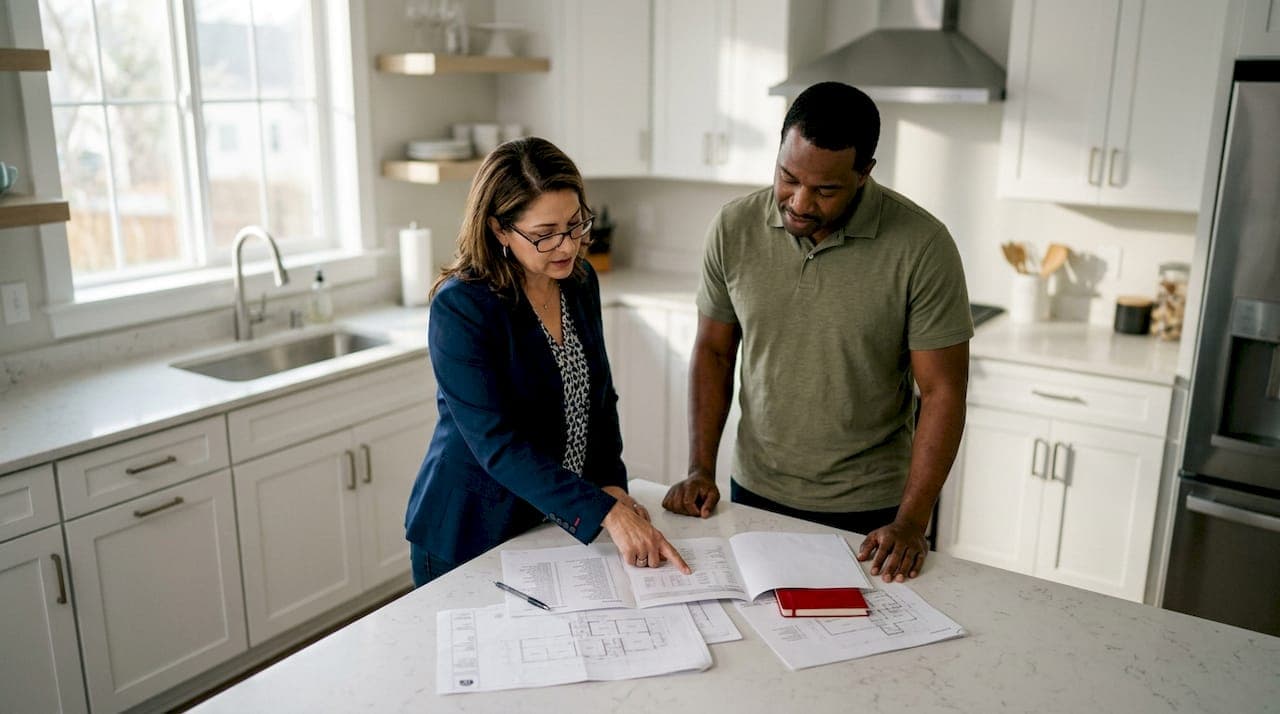
Finding a reliable building contractor is the single most important decision you make before any construction project begins. The industry term is "general contractor," and knowing how to find a building contractor who is licensed, insured, and experienced protects your home, your budget, and your legal standing. This guide walks you through every step, from understanding contractor roles to verifying credentials and comparing bids, so you hire with confidence and avoid the mistakes that cost homeowners thousands.
What's the difference between a general contractor and a project manager?
General contractors and project managers are not the same role, and confusing them leads to costly hiring mistakes. A general contractor manages the physical construction work. They hire and supervise subcontractors, coordinate daily site operations, and take legal responsibility for the build. A project manager, by contrast, represents the owner's interests. They oversee planning, budgeting, scheduling, and quality control without swinging a hammer themselves.
The cost difference is real and worth knowing before you budget. General contractors typically charge 10%–20% of total project cost or $300–$500 per day. Project managers add another 5%–10% on top of that. That added cost makes sense only on large, complex projects where an independent advocate protects you from scope creep and contractor disputes.
Here is when each role fits best:
- General contractor: New construction, full remodels, additions, and any project requiring trade coordination (plumbing, electrical, framing)
- Project manager: Large commercial builds, multi-phase residential developments, or any project where you need independent budget and schedule oversight
- Both together: Major renovations where the owner wants a neutral party verifying the contractor's work and billing
Pro Tip: If your project involves more than three subcontractor trades, seriously consider hiring a project manager alongside your general contractor. The oversight pays for itself in avoided change orders.
Hiring a project manager protects your budget and schedule but adds management cost. Weigh that cost against the complexity and dollar value of your project before deciding.
Where to find qualified building contractors near you
Personal referrals are the gold standard for finding a reputable general contractor. Ask friends, neighbors, and local material suppliers who they have used and trusted. Personal referrals from trusted sources consistently outperform online directories because the person giving the recommendation has direct experience with the contractor's work quality and reliability.
That said, referrals alone are not always enough, especially if you are new to an area. These sources give you a solid starting list:
- State licensing boards: Search your state's contractor license database to find licensed professionals in your area. This also lets you verify credentials before you even make a call.
- Local home builder associations: Members typically agree to a code of conduct and carry required insurance.
- Better Business Bureau (BBB): Search by zip code to find rated contractors and read complaint histories.
- Online directories: Platforms like Google Business Profile and local review sites provide starting points, but treat them as leads, not endorsements.
Online reviews require independent verification. A contractor with 50 five-star reviews is not automatically trustworthy. Online directories and reviews should be starting points, not final decisions. Cross-reference every candidate against your state licensing board and BBB before scheduling a meeting.
Pro Tip: Call your local building supply store and ask which contractors they see buying quality materials consistently. Suppliers know who runs serious operations and who cuts corners.

When searching for a general contractor for remodeling specifically, ask candidates for photos of completed projects similar in scope to yours. A contractor who specializes in concrete and masonry work, for example, brings different strengths than one focused on framing and drywall.
How do you verify a contractor's license and insurance?
License and insurance verification is non-negotiable. State licensing requirements vary across US jurisdictions, but most states legally require a license for prime construction contracts. Licensed contractors must demonstrate experience, financial solvency, and pass trade exams. A license is not just a piece of paper. It is proof the contractor met a minimum competency standard set by your state.
Follow these steps before signing anything:
- Search your state's contractor license database. Most states have a free online lookup tool. Confirm the license is active, not expired or suspended.
- Request a certificate of insurance (COI). Ask for proof of general liability insurance and workers' compensation coverage.
- Call the insurer directly. Certificates of insurance can lapse between the time they are issued and when work begins. Call the insurer listed on the COI to confirm the policy is active.
- Confirm coverage minimums. General liability insurance should carry a minimum of $1 million in coverage. Workers' compensation protects you if a worker is injured on your property.
- Check for permit compliance. Ask how the contractor handles permits for your project type.
A contractor who discourages pulling permits or claims that licensing is unnecessary is a serious red flag. Stopping negotiations immediately in those situations protects you from legal liability, failed inspections, and potential fines that fall on the homeowner, not the contractor.
Permit refusal is one of the clearest warning signs you will encounter. Reputable contractors welcome permits because they protect everyone involved. If you want to understand how skipping this step can cost you, the site prep mistakes that Cedar City homeowners make often trace back to unlicensed work done without proper permits.
How to get and compare bids the right way
Getting at least three written bids is the standard recommendation for any construction project. Soliciting three bids gives you enough data to compare price, scope, and approach without wasting your time or discouraging quality contractors. Going beyond five bids signals to contractors that you are shopping purely on price. More than five bids often causes top contractors to decline bidding because they do not want to compete in a race to the bottom.
Every written estimate should include these elements:
- Full scope of work with specific materials listed by brand or grade
- Project timeline with start and completion dates
- Payment schedule tied to project milestones, not arbitrary dates
- Permit responsibilities clearly assigned
- Warranty terms for labor and materials
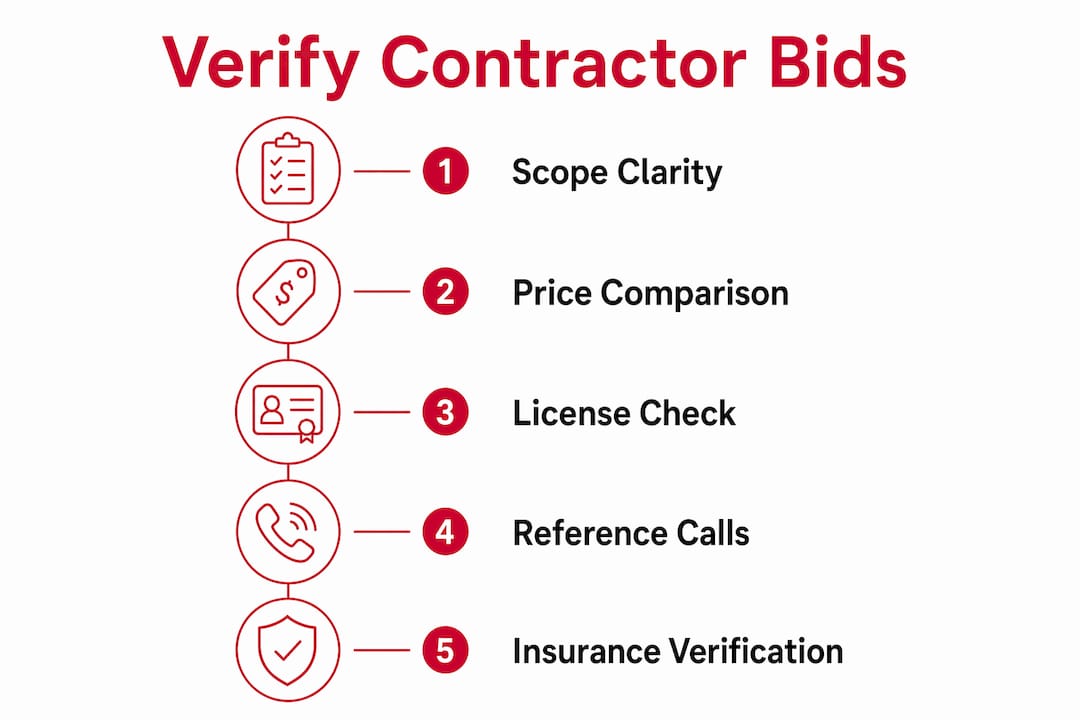
Use this framework when comparing bids side by side:
| Evaluation factor | What to look for |
|---|---|
| Scope clarity | Detailed line items, not vague descriptions like "labor and materials" |
| Material specifications | Named brands or grades, not generic terms |
| Timeline realism | Milestones tied to work phases, not just a final date |
| Payment structure | Milestone-based payments, not large upfront deposits |
| Contractor reputation | License status, insurance, and reference quality |
The lowest bid is rarely the best bid. A contractor who bids 30% below the others is either missing scope, planning to use inferior materials, or intending to add change orders once work begins. Choose the bid that best balances price, detail, and the contractor's verified track record.
How do you check a contractor's references effectively?
References provided by a contractor are curated. Every contractor gives you the names of clients who will say good things. Reference lists from contractors are positively selected, which means independent research is necessary to uncover the full picture.
When you call provided references, ask these specific questions:
- Did the project finish on time and within the original budget?
- How did the contractor handle unexpected problems or changes?
- Was the job site kept clean and safe throughout the project?
- Would you hire this contractor again without hesitation?
Go beyond the provided list. Search the contractor's business name in Google reviews, Yelp, and your local BBB profile. BBB profiles reveal complaint histories and show how the contractor responded to disputes. Also check your local building department's records. Complaints, stop-work orders, or failed inspections are public record in most jurisdictions and tell you more than any reference call will.
A contractor with a clean license history, active insurance, strong independent reviews, and references who answer your questions without hesitation is the contractor worth hiring.
Key Takeaways
Hiring a trustworthy building contractor requires verifying licenses and insurance, sourcing candidates from reliable channels, and comparing at least three detailed written bids before signing any contract.
| Point | Details |
|---|---|
| Know the roles | General contractors manage construction; project managers protect owner interests and budget. |
| Start with referrals | Personal referrals from neighbors and suppliers outperform online directories for finding reliable contractors. |
| Verify before you hire | Confirm active license status and call the insurer directly to validate the COI before work starts. |
| Get three to five bids | Three bids give enough comparison data; more than five discourages quality contractors from participating. |
| Research independently | Supplement provided references with BBB profiles, Google reviews, and local building department records. |
What I've learned after watching homeowners hire the wrong contractor
The most expensive mistake I see homeowners make is choosing a contractor based on price alone. A low bid feels like a win until the project stalls, the materials are wrong, or the contractor disappears after the first payment clears. I have watched that scenario play out more times than I care to count, and it always costs more to fix than the original project would have.
The second mistake is skipping the insurance call. Homeowners accept a certificate of insurance at face value, but policies lapse. If a worker gets injured on your property under an expired policy, you carry the liability. That one phone call to the insurer takes five minutes and can save you from a lawsuit.
The vetting process feels slow when you are excited to start a project. But the contractors worth hiring expect you to ask hard questions. They have clean license records, current insurance, and references who pick up the phone. If a contractor gets defensive when you ask for verification, that reaction tells you everything you need to know. Take the extra week to vet properly. The project will go better, finish cleaner, and cost what you expected.
— Jake
A-to-zconstruction handles your project from start to finish
A-to-zconstruction is a licensed general contractor based in Cedar City, Utah, with over 500 completed projects across residential and commercial work. Whether you need structural remodeling or full-scale masonry installation, A-to-zconstruction manages every phase under one roof. That means no juggling multiple subcontractors, no communication gaps, and no surprises on your timeline. You get one point of contact from the first estimate to the final walkthrough. Request your free project estimate and see what a fully vetted, licensed contractor looks like in practice.
FAQ
What does a general contractor actually do?
A general contractor manages the physical construction of a project, hiring and supervising subcontractors and coordinating daily site operations. They hold legal responsibility for the build and typically charge 10%–20% of total project cost.
How many bids should I get for a construction project?
Get at least three written bids and no more than five. More than five bids signals a price-only focus and discourages experienced contractors from participating.
What insurance should a contractor carry?
Contractors should carry general liability insurance with at least $1 million in coverage and active workers' compensation insurance. Always call the insurer directly to confirm the policy is current before work begins.
How do I find a reputable general contractor in my area?
Start with personal referrals from neighbors, friends, and local material suppliers, then cross-reference candidates against your state licensing board and BBB profiles. Online directories are useful starting points but require independent verification.
What are the biggest red flags when hiring a contractor?
A contractor who discourages pulling permits, resists showing proof of insurance, or provides only a verbal estimate rather than a written one is a serious warning sign. Walk away from any contractor who claims licensing is unnecessary for your project.